
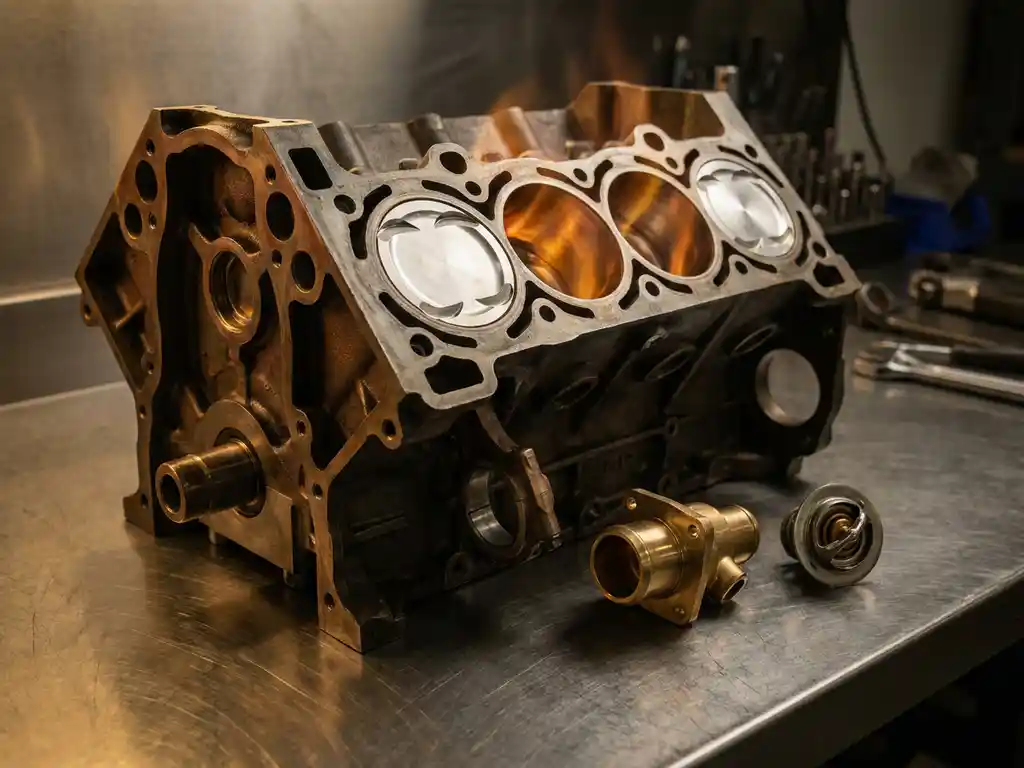
The compression ratio directly determines how much mechanical energy an engine extracts from its fuel. A higher compression ratio means the air-fuel mixture is squeezed into a smaller space before ignition, which increases the temperature and pressure during combustion and converts more heat energy into useful work. In short, higher compression generally means better thermal efficiency. The sections below unpack the key questions engineers and designers ask when optimising compression ratio for real-world performance.
How does a higher compression ratio improve combustion efficiency?
A higher compression ratio improves combustion efficiency by raising the peak pressure and temperature inside the cylinder at the moment of ignition. When the air-fuel mixture is more tightly compressed, the combustion event releases energy more rapidly and completely, leaving less unburned fuel in the exhaust. This is the core thermodynamic reason why high compression ratio engines tend to produce more power per unit of fuel consumed.
The underlying principle comes from the ideal Otto cycle. Thermal efficiency in a spark-ignition engine rises as a function of the compression ratio, meaning each incremental increase in compression squeezes more work out of the same quantity of fuel. In practical terms, this translates to better fuel efficiency, stronger torque at lower engine speeds, and reduced hydrocarbon emissions because combustion is more complete.
For engineers designing powertrains, even modest increases in compression ratio can deliver measurable gains in fuel economy without changing the engine’s displacement or architecture. That is why compression ratio is one of the first levers considered when optimising an engine for efficiency targets.
What are the limits of increasing compression ratio?
The primary limit on compression ratio is engine knock, also called detonation. When the compression ratio rises too high, the air-fuel mixture can self-ignite before the spark plug fires, creating a sharp pressure spike that damages pistons, bearings, and cylinder walls. The fuel’s octane rating sets the practical ceiling: higher-octane fuels resist self-ignition and therefore allow higher compression ratios without knock.
Beyond fuel quality, mechanical and thermal limits also constrain how far compression ratio can be pushed. Higher compression generates more heat and stress on every component in the combustion chamber, including piston crowns, rings, and head gaskets. Materials and manufacturing tolerances must be matched to the operating conditions, which adds cost and complexity.
There is also a point of diminishing returns. The efficiency gains from increasing compression ratio become smaller at very high values, while the engineering challenges grow larger. Most modern naturally aspirated petrol engines sit in the range of 10:1 to 13:1, a range that balances efficiency, durability, and fuel compatibility.
How does engine temperature affect compression ratio performance?
Engine temperature has a direct influence on how effectively a given compression ratio performs. When an engine is cold, the air entering the cylinder is denser, which effectively raises the charge density and can increase the tendency toward knock. As the engine warms to its optimal operating temperature, combustion becomes more stable and predictable, and the compression ratio works as designed.
Thermal management is therefore not a secondary concern but a core part of compression ratio optimisation. An engine that runs too cold wastes fuel because combustion is incomplete and friction losses are higher. An engine that runs too hot risks detonation and accelerated component wear. Precise coolant temperature control keeps the engine in the narrow band where its compression ratio delivers peak efficiency.
This is where thermostat components play a critical engineering role. A well-calibrated thermostat holds the coolant at the exact temperature where the compression ratio performs best, protecting efficiency gains across varying load and ambient conditions. Poor thermal regulation can effectively negate the benefits of a carefully chosen compression ratio.
What’s the difference between static and dynamic compression ratio?
The static compression ratio is a fixed geometric measurement: the ratio of the cylinder volume when the piston is at the bottom of its stroke to the volume when it is at the top. The dynamic compression ratio, by contrast, accounts for the actual pressure present in the cylinder at the point of ignition, which is influenced by valve timing, intake pressure, and engine speed.
Static compression ratio
Static compression ratio is calculated purely from engine geometry and does not change during operation. It is the number most commonly cited in engine specifications and provides a useful baseline for comparing engine designs. However, it does not fully represent what is happening inside the cylinder during real combustion events.
Dynamic compression ratio
Dynamic compression ratio reflects the effective pressure the mixture experiences just before ignition. Late intake valve closing, for example, allows some mixture to escape back into the intake port, reducing the effective compression even though the geometric ratio is unchanged. Variable valve timing systems exploit this principle to adjust the dynamic compression ratio on the fly, optimising efficiency across a wide range of operating conditions.
Understanding both values matters for engineers tuning an engine for a specific application, because the dynamic ratio is what actually governs knock behaviour and combustion quality at any given moment.
Which engine types use the highest compression ratios?
Diesel engines consistently use the highest compression ratios of any common engine type, typically ranging from 14:1 to 25:1. Diesel combustion relies entirely on compression ignition: the air is compressed so intensely that its temperature rises high enough to ignite the injected fuel without a spark. This approach demands extremely high compression but delivers excellent thermal efficiency and strong low-speed torque.
Among petrol engines, naturally aspirated high-performance and motorsport engines often push toward 13:1 or higher, enabled by premium fuel and precision engineering. Atkinson-cycle and Miller-cycle engines, widely used in hybrid powertrains, use geometric compression ratios that are higher than their effective dynamic ratios, allowing efficient expansion of combustion gases while controlling knock risk.
Hydrogen combustion engines represent an emerging category where very high compression ratios are being explored, since hydrogen’s wide flammability range and fast flame speed allow combustion strategies that differ significantly from conventional petrol or diesel. As powertrain diversity grows in 2026, the range of compression ratio strategies in production engines is wider than at any previous point in automotive history.
How does compression ratio interact with turbocharging and engine efficiency?
Turbocharged engines typically use lower static compression ratios than naturally aspirated engines of comparable output. The reason is straightforward: a turbocharger forces more air into the cylinder under pressure, which effectively raises the dynamic compression ratio during boosted operation. If the static compression ratio were left at naturally aspirated levels, the combined effect would push cylinder pressure into knock territory under boost.
Modern turbocharged engines compensate by pairing a lower base compression ratio with sophisticated engine management that adjusts ignition timing, boost pressure, and sometimes variable valve timing in real time. The result is an engine that operates efficiently across a broad range of conditions, using boost to deliver high power when demanded and falling back on lower effective compression during light-load cruising.
Thermal management becomes especially important in turbocharged applications. Charge air coolers reduce the temperature of compressed intake air, lowering the risk of knock and allowing the engine to run closer to its efficiency optimum. Coolant circuits that serve both the engine block and the turbocharger itself must be precisely controlled to maintain the temperatures where the chosen compression ratio performs best. You can learn more about our engineering background and how thermal precision supports these demands.
How BTT Solutions supports engine thermal management
Getting the most from a carefully engineered compression ratio depends on keeping every part of the engine within its optimal temperature range, and that is exactly where we focus our expertise. At BTT Solutions, we supply high-precision thermostat components that give powertrain engineers the thermal control they need to protect and maximise the efficiency gains that compression ratio design delivers.
Our product advisory service helps customers select the right thermostat components for their specific application, whether that means:
- Wax elements calibrated to open and close at the precise temperatures your engine’s compression ratio requires
- Thermostat inserts designed for tight tolerance and long service life in high-stress turbocharged or high-compression environments
- Engineered housings that integrate cleanly into existing coolant circuit architectures across automotive and industrial platforms
We work directly with technical decision-makers, procurement leads, and development engineers to match component specifications to real operating conditions. As a focused, mid-size specialist, we offer the kind of individual attention and fast response that larger suppliers rarely provide. If you are working on a project where thermostat components need to match demanding compression ratio or turbocharging requirements, we would be glad to help. Get in touch with our team to discuss your application.
Related Articles
- What temperature range does a wax element material typically operate in?
- Can a cracked thermostat housing cause engine overheating?
- What is parasitic drag and how does it steal engine power?
- What are the consequences of thermal cycling on engine durability?
- What are the signs that you need a new thermostat?


