
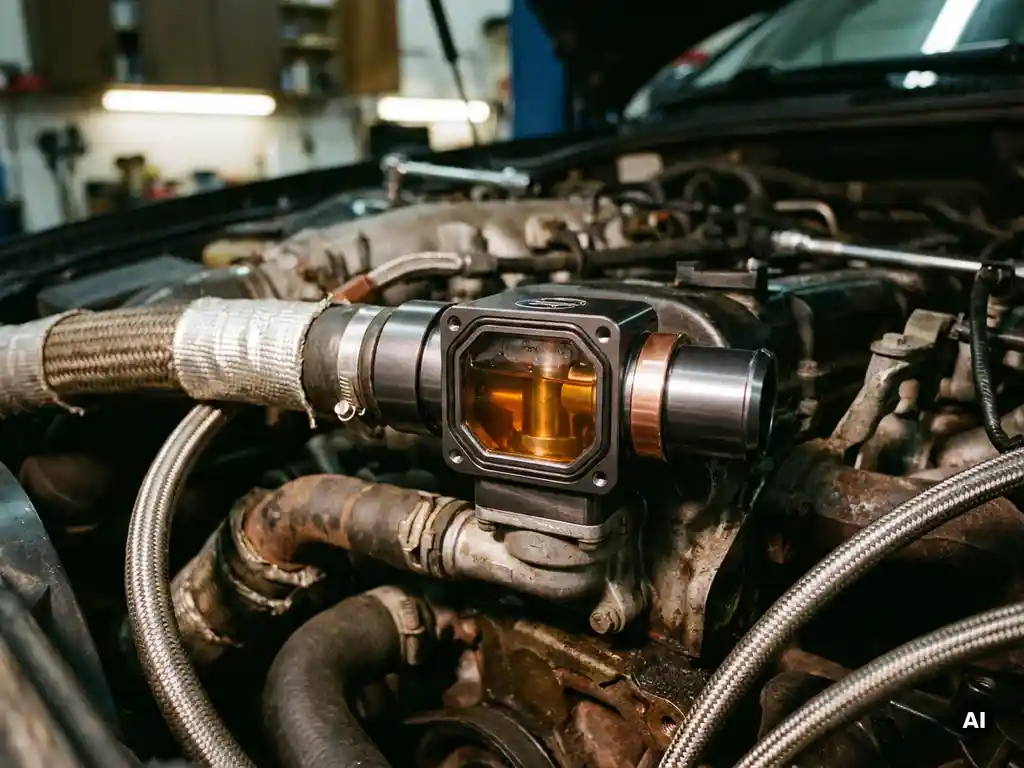
A thermostat housing is the component that physically contains and connects the thermostat to the engine’s cooling circuit. It acts as a junction point where coolant is directed either back into the engine or out toward the radiator, depending on engine temperature. Understanding how it works helps engineers and procurement teams make better decisions about materials, design, and maintenance.
What components does a thermostat housing connect to?
The thermostat housing connects to several critical parts of the cooling system: the engine block or cylinder head, the upper radiator hose, the heater core circuit, and often a coolant temperature sensor port. Together, these connections allow the housing to serve as the central routing point for coolant flow throughout the engine bay.
On most internal combustion engines, the housing sits at the outlet of the engine’s water jacket, which is where heated coolant exits. From there, it branches in two directions. When the thermostat is closed, coolant is redirected back into the engine through a bypass circuit. When the thermostat opens, coolant flows outward toward the radiator. Some housings also integrate a port for a coolant temperature sensor, which feeds data to the engine control unit to help regulate fuel injection and ignition timing.
In more complex engine architectures, particularly in modern turbocharged or hybrid powertrains, the housing may also connect to an oil cooler circuit or a separate cooling loop for the transmission. This makes the housing far more than a simple bracket. It is genuinely a central node in the thermal management network.
How does coolant flow change when the thermostat opens?
When the thermostat opens, coolant flow shifts from a closed internal loop to a full circuit that includes the radiator. Before opening, coolant circulates only within the engine to reach operating temperature faster. Once the thermostat’s wax element reaches its rated temperature, it expands and pushes the valve open, allowing hot coolant to flow out to the radiator for cooling.
The transition is not instantaneous. Most thermostats begin to open at a set temperature, typically between 80°C and 95°C depending on the application, and reach full opening a few degrees higher. During this range, the thermostat modulates flow, mixing cooled coolant from the radiator with hot coolant from the engine to maintain a stable operating temperature.
This modulation is where precision engineering matters most. A thermostat that opens too early keeps the engine running cool, which increases fuel consumption and wear. One that opens too late risks overheating. The housing plays a supporting role here by ensuring a leak-free, well-sealed environment so that pressure and flow behave exactly as the thermostat’s calibration intends. You can explore the full range of thermostat components that support this kind of precision flow control.
What materials are thermostat housings made from?
Thermostat housings are most commonly made from aluminum, brass, or engineering plastics, each with distinct advantages depending on the application. Aluminum thermostat housings dominate modern automotive use because of their light weight and good thermal conductivity. Brass thermostat housings are preferred in heavy-duty, marine, and industrial applications where corrosion resistance and long service life are the priority.
Aluminum thermostat housings
An aluminum thermostat housing is lightweight, easy to cast into complex shapes, and dissipates heat effectively. These properties make it the material of choice for passenger vehicles and performance engines where weight reduction supports fuel efficiency targets. However, aluminum can corrode when coolant chemistry is poorly maintained, and it is more vulnerable to cracking under thermal cycling stress than brass.
Brass thermostat housings
A brass thermostat housing offers superior corrosion resistance, particularly in systems using water without modern inhibited coolants, which is common in marine engines and older industrial equipment. Brass is denser than aluminum, but it holds up exceptionally well over long service intervals and resists the kind of electrochemical corrosion that can pit aluminum housings in aggressive environments. For applications where reliability over decades matters more than weight, brass remains the professional choice.
Why does a thermostat housing leak or crack?
Thermostat housing leaks and cracks are most often caused by thermal fatigue, corrosion, overtightening during installation, or degraded gaskets and O-rings. Each heat cycle expands and contracts the housing slightly, and over time this stress can cause micro-fractures, especially in aluminum housings or those made from plastic composites.
Corrosion is another common culprit, particularly when coolant is not changed at recommended intervals. Old coolant loses its inhibitor package and becomes acidic, which attacks metal surfaces from the inside. Aluminum housings are especially susceptible to this kind of internal pitting. Brass housings resist this process far better, which is one reason they remain popular in industrial and marine contexts where maintenance schedules may be less predictable.
Improper installation is also a frequent cause of failure. Overtightening the housing bolts can warp the sealing surface, making it impossible for the gasket to seat correctly. This is a particularly common issue during field repairs when technicians replace a thermostat without inspecting the housing itself. A housing that has been overtightened or that shows surface warping should always be replaced rather than reused.
How does thermostat housing design affect fuel efficiency and emissions?
Thermostat housing design directly influences how quickly and accurately the engine reaches its optimal operating temperature, which has a measurable impact on both fuel consumption and exhaust emissions. A well-designed housing minimizes coolant dead zones, supports precise thermostat modulation, and integrates cleanly with temperature sensors to give the engine control unit accurate data.
Engines burn fuel most efficiently within a narrow temperature window. If the cooling system allows the engine to run too cool, incomplete combustion increases hydrocarbon emissions and fuel consumption. If the engine runs too hot, knock protection strategies in the ECU retard ignition timing, which also reduces efficiency. The thermostat and its housing are the primary hardware responsible for keeping the engine inside that optimal window.
Modern housing designs increasingly integrate multiple functions into a single component, combining the thermostat seat, sensor ports, and bypass valve geometry in one precision-cast part. This reduces the number of potential leak points and allows tighter control over coolant routing. For manufacturers targeting Euro 7 or equivalent emissions standards in 2026, this kind of integrated thermal management design is no longer optional. It is a baseline engineering requirement.
How BTT Solutions supports your thermostat housing needs
At BTT Solutions, we design and manufacture high-precision thermostat housings and thermal management components for automotive, industrial, and marine applications. Whether you need an aluminum thermostat housing optimized for weight-sensitive passenger vehicles or a brass thermostat housing built for long-term reliability in demanding environments, we have the engineering expertise and production capability to deliver.
Here is what working with us looks like in practice:
- Material flexibility: We produce both aluminum and brass thermostat housings, selected and specified to match your application’s thermal, chemical, and mechanical requirements.
- Precision engineering: Our components are manufactured to tight tolerances, ensuring reliable sealing, accurate thermostat modulation, and consistent performance across the full service life.
- End-to-end solutions: We supply complete thermostat assemblies, not just housings, so you get matched components that are tested and validated together.
- Responsive partnership: As a focused, mid-sized organization, we give our B2B customers direct access to our engineering teams and fast turnaround on technical questions and custom requirements.
- Cross-industry expertise: Beyond automotive, we support industrial cooling systems, marine applications, and building technology, bringing the same precision standards to every sector.
If you are evaluating thermostat housing suppliers or looking to improve the thermal management performance of your product, we would be glad to talk through your requirements. Get in touch with our team and let us find the right solution together.

