
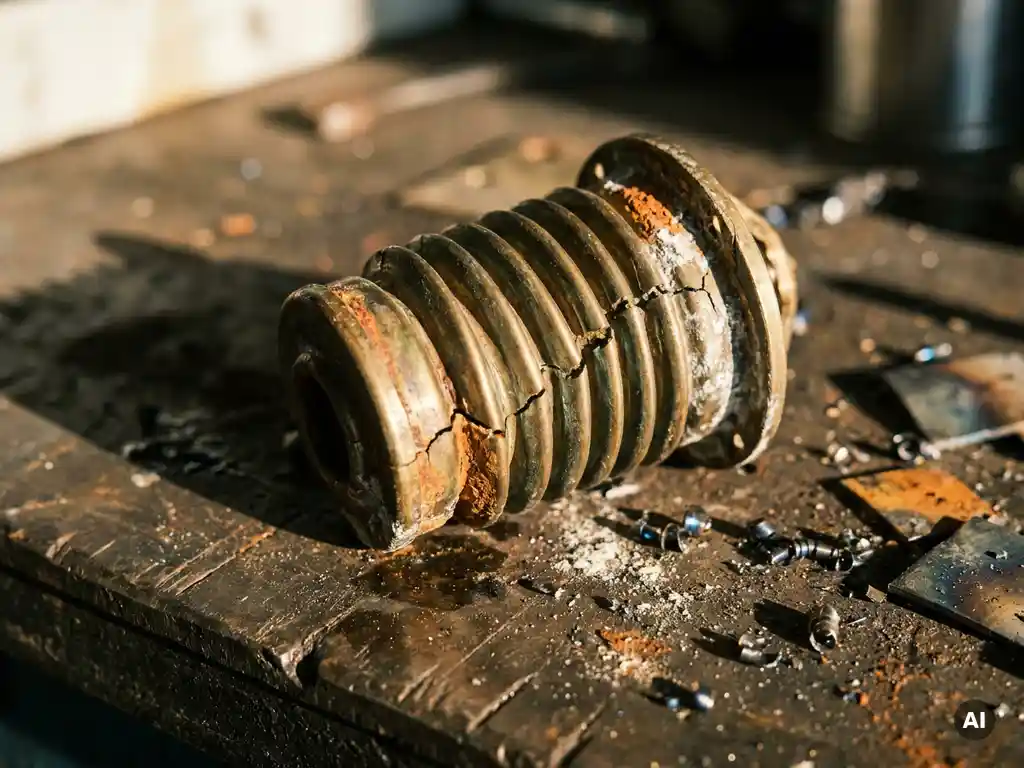
A thermostat bellows fails prematurely when it is exposed to conditions it was not designed to withstand, most often a combination of thermal fatigue, coolant contamination, and mechanical stress. While some wear is inevitable over time, early failure almost always points to a specific root cause that could have been prevented. The questions below break down each failure mode so you know exactly what to look for and what to do about it.
What are the most common signs of a failing thermostat bellows?
The most common signs of a failing thermostat bellows include engine overheating, erratic temperature gauge readings, poor fuel economy, and heater performance that feels inconsistent. These symptoms appear because the bellows can no longer expand and contract reliably, which means the thermostat valve stops regulating coolant flow the way it should.
In a healthy system, the bellows responds to temperature changes with precision, opening and closing the thermostat valve at exactly the right moment. When the bellows is compromised, that response becomes sluggish or fails entirely. You might notice the engine taking unusually long to reach operating temperature, or swinging between too hot and too cold without settling. In some cases, coolant leaks near the thermostat housing are the first visible clue that something has ruptured inside the thermostat mechanism.
Catching these warning signs early matters because a failed bellows does not just affect comfort, it puts the entire cooling system under strain and can lead to costly downstream damage.
How does thermal fatigue weaken bellows material over time?
Thermal fatigue weakens thermostat bellows material through repeated cycles of expansion and contraction. Every time the engine heats up and cools down, the bellows stretches and compresses. Over thousands of cycles, this mechanical stress causes microscopic cracks to form in the material, gradually reducing its elasticity and structural integrity until it can no longer function correctly.
The bellows in a thermostat mechanism is engineered to handle a defined number of these cycles within a specific temperature range. Problems arise when operating conditions push beyond those design limits, for example, engines that run unusually hot due to cooling system inefficiencies, or vehicles used in stop-and-go conditions that create rapid, frequent temperature swings. Each of those extra cycles adds cumulative stress that shortens the bellows lifespan.
Material choice also plays a role. High-quality bellows are made from alloys or polymers selected specifically for thermal resilience. Lower-grade materials reach their fatigue threshold much sooner, which is why component quality is not something worth cutting corners on.
What role does coolant contamination play in bellows degradation?
Coolant contamination is one of the leading causes of premature bellows degradation. When coolant becomes acidic, carries debris, or is mixed with incompatible fluid types, it attacks the bellows material from the outside in. This chemical aggression weakens the surface, causes pitting or corrosion, and accelerates the cracking that thermal fatigue would otherwise take much longer to produce.
Old coolant that has not been flushed on schedule loses its corrosion inhibitors. Once those inhibitors are depleted, the fluid becomes increasingly corrosive to metal components throughout the cooling circuit, including the bellows housing and the thermostat valve seat. Hard water scale deposits can also build up around the bellows, restricting its movement and creating uneven stress points.
Keeping coolant fresh and using the correct specification for your system is one of the simplest and most effective ways to extend the life of every component inside the thermostat mechanism, including the bellows.
Can overpressure events cause sudden bellows rupture?
Yes, overpressure events can cause sudden and complete thermostat bellows rupture. If pressure inside the cooling system spikes beyond the bellows design rating, due to a blocked radiator, a failing pressure cap, or a coolant boil, the bellows can burst rather than gradually degrade. This type of failure is typically immediate and dramatic, rather than the slow deterioration caused by fatigue or contamination.
A pressure cap that is no longer holding its rated value is a surprisingly common culprit. When the cap fails to vent excess pressure correctly, the entire cooling circuit is exposed to pressure spikes that components like the bellows were never meant to absorb. Similarly, air pockets trapped in the system can create localized pressure surges that concentrate force on the bellows at the worst possible moment.
Routine pressure testing of the cooling system is the most reliable way to catch these risks before they cause a rupture. If your system has recently experienced overheating or a coolant loss event, inspecting the thermostat bellows as part of the follow-up check is always a sound idea.
How does installation error contribute to early bellows failure?
Installation errors are a significant and often overlooked cause of early thermostat bellows failure. If the thermostat is fitted incorrectly, oriented the wrong way, overtightened, or seated improperly in its housing, the bellows is placed under mechanical stress from the very first moment the engine runs. That stress compounds with normal operating loads and dramatically shortens service life.
Common installation mistakes include:
- Installing the thermostat upside down or in the wrong orientation, which misaligns the bellows with the coolant flow direction
- Overtightening the housing bolts, which can deform the thermostat body and pinch the bellows
- Using an incompatible gasket or sealant that restricts the thermostat valve from seating correctly
- Failing to clean the housing seating surface, leaving debris that creates uneven contact pressure
Even a small misalignment can cause the bellows to flex asymmetrically, concentrating stress on one side. Over time, that uneven loading produces cracks and failures far earlier than the component’s design life would suggest. Following manufacturer specifications precisely during installation is not optional, it is the foundation of reliable long-term performance.
When should a thermostat bellows be replaced rather than repaired?
A thermostat bellows should be replaced rather than repaired in almost every case. The bellows is a precision component that relies on exact material properties and dimensional accuracy to function correctly. Once it has cracked, corroded, or lost its elasticity, no field repair can restore those properties reliably. Attempting to patch or reseal a damaged bellows introduces new failure points and risks a more serious breakdown later.
Replacement is clearly the right call when:
- Visible cracks, pitting, or corrosion are present on the bellows surface
- The thermostat valve no longer opens or closes within its specified temperature range
- The engine has experienced an overheating event or a pressure surge
- The thermostat has been in service beyond the manufacturer’s recommended interval
- Coolant contamination has been identified and the system is being flushed and serviced
Because the thermostat bellows is integral to the broader thermostat valve assembly, replacing the complete thermostat unit rather than just the bellows in isolation is often the more practical and cost-effective approach. It ensures that all interacting components are in known condition and eliminates the risk of a second failure shortly after the first.
How BTT Solutions supports reliable thermostat bellows performance
At BTT Solutions, we design and manufacture thermostat bellows and complete thermostat assemblies built to handle the full range of conditions described above, from thermal fatigue and coolant exposure to pressure variations and the demands of precise installation. Our components are developed with the kind of material precision and quality control that makes the difference between a part that lasts and one that fails ahead of schedule.
Here is what we bring to the table for our B2B partners:
- Patented thermostat mechanisms engineered for high-cycle durability across automotive, industrial, and HVAC applications
- Precision-matched bellows and valve assemblies that eliminate the misalignment risks associated with mixing components from different suppliers
- End-to-end technical support to help your engineering and procurement teams specify the right solution for your specific operating conditions
- Flexible supply partnerships backed by the responsiveness of a focused, mid-sized organization, not the slow turnaround of a large conglomerate
Whether you are sourcing components for a new platform or troubleshooting early failures in an existing system, we are here to help you find the right answer. Get in touch with our team to discuss your requirements, or explore our product range to see how our thermostat solutions are built to perform.
Related Articles
- What is brass thermostat housing used for in automotive applications?
- How does corrosion resistance factor into thermostat material selection?
- Why is engine warm-up time a key factor in fuel consumption?
- How to implement thermal management in large-scale industrial operations?
- How does thermal management reduce emissions?


