
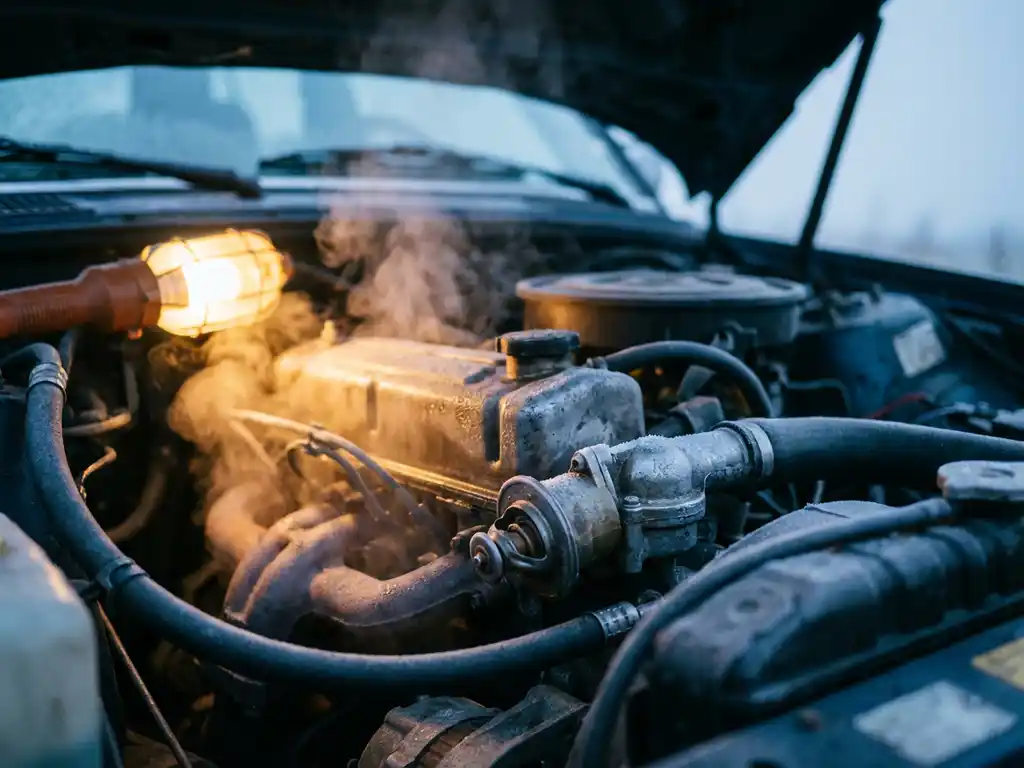
Every time you start your car on a cold morning, your engine faces a significant challenge that directly affects how much fuel it consumes. During those first few minutes of operation, your engine can use up to 50% more fuel than when it’s fully warmed up. This dramatic difference in fuel consumption occurs because cold engines operate far less efficiently than their warm counterparts, making warm-up time a critical factor in overall fuel economy.
Understanding the relationship between engine temperature and fuel efficiency helps explain why modern thermal management systems have become so important in automotive design. The faster your engine reaches its optimal operating temperature, the sooner it can deliver peak performance while minimizing fuel waste and harmful emissions.
How Cold Engine Starts Impact Fuel Economy
Cold engines face multiple challenges that force them to consume significantly more fuel during startup and initial operation. When engine temperatures drop below optimal levels, the combustion process becomes less efficient, requiring additional fuel to maintain proper engine function and performance.
The primary culprit behind increased fuel consumption during cold starts is incomplete fuel combustion. Cold cylinder walls cause fuel droplets to condense before they can properly vaporize and burn, leading to wasted fuel and reduced power output. Your engine compensates by injecting more fuel into the combustion chambers, creating a rich fuel mixture that ensures reliable ignition but dramatically increases consumption.
Additionally, cold engine oil becomes thicker and more viscous, increasing friction throughout the engine’s moving parts. This added resistance forces your engine to work harder to overcome internal friction, consuming more energy and fuel in the process. Modern engines also run at higher idle speeds during cold starts to prevent stalling, further contributing to increased fuel use during the warm-up period.
What Happens During Engine Warm-up Cycles
The engine warm-up process involves a complex series of thermal and mechanical changes that gradually bring all engine components to their optimal operating temperatures. During this critical phase, your engine management system continuously adjusts fuel delivery, ignition timing, and airflow to maintain smooth operation as temperatures rise.
Initially, your engine operates in what’s called “open-loop” mode, where the fuel injection system relies on predetermined maps rather than real-time feedback from oxygen sensors. This approach ensures reliable operation but results in richer fuel mixtures and higher consumption. As temperatures rise, various engine fluids begin flowing more freely, reducing internal friction and allowing components to operate more efficiently.
The thermostat plays a crucial role during this warm-up cycle by controlling coolant flow and heat distribution throughout the engine. A properly functioning thermostat restricts coolant circulation until the engine reaches the appropriate temperature (typically around 85-95°C or 185-203°F), allowing for faster and more uniform heating. Once optimal temperatures are achieved, the thermostat opens to maintain consistent operating conditions and prevent overheating.
Why Faster Warm-up Reduces Emissions and Consumption
Accelerating the warm-up process delivers immediate benefits for both fuel economy and environmental impact. When engines reach their optimal operating temperature more quickly, they can switch to more efficient combustion strategies and reduce the time spent in high-consumption cold-start mode.
Faster warm-up cycles allow catalytic converters to reach their effective operating temperature (approximately 260-315°C or 500-600°F) sooner, dramatically improving their ability to process harmful emissions. Cold catalytic converters operate at reduced efficiency, allowing more pollutants to escape through the exhaust system. By reducing warm-up time, engines can minimize the period of elevated emissions that occurs during cold starts.
The fuel economy benefits of faster warm-up extend beyond the initial startup period. Engines that reach optimal temperatures quickly can maintain more consistent operating conditions throughout their duty cycle, reducing the need for temperature-related fuel mixture adjustments. This consistency translates to improved overall efficiency and reduced fuel consumption across all driving conditions.
Advanced Thermostat Technology for Optimal Engine Performance
Modern thermostat technology has evolved far beyond simple temperature-activated valves, becoming sophisticated engine temperature control systems. These advanced components use precise engineering to optimize warm-up cycles while maintaining ideal operating temperatures under varying load conditions.
Contemporary thermostats incorporate multiple temperature-sensitive elements and improved flow characteristics that enable more responsive temperature control. These improvements allow engines to warm up more efficiently while preventing temperature overshoots that could damage engine components or reduce performance. Advanced designs also feature enhanced durability and reliability, ensuring consistent performance throughout the component’s service life.
Electronic thermostats represent the latest advancement in engine temperature management, offering variable opening characteristics based on real-time engine conditions. These intelligent systems can adjust their behaviour based on factors such as engine load, ambient temperature, and driving conditions, providing optimal temperature control for maximum efficiency and performance across all operating scenarios.
How BTT Solutions Helps with Engine Temperature Management
We specialise in developing high-precision thermal management components that directly address the challenges of engine warm-up time and fuel consumption. Our advanced thermostat technology helps automotive manufacturers optimise their engines for faster warm-up cycles and improved fuel economy.
Our comprehensive solutions include:
- Precision-engineered thermostats designed for rapid response and accurate temperature control
- Temperature sensors that provide real-time feedback for optimal engine management
- Customised thermal management systems tailored to specific engine requirements
- End-to-end solutions that integrate seamlessly with modern engine control systems
With our proven track record in automotive thermal management and our focus on fuel efficiency and emissions reduction, we can help you develop engine systems that deliver superior performance from the moment they start. Contact our engineering team to discuss how our thermal management solutions can optimise your engine’s warm-up performance and fuel economy.
Related Articles
- How do you test whether a wax pellet thermostat is working correctly?
- What is the role of a test bench in thermostat performance evaluation?
- How does engine wear reduction impact total cost of ownership?
- What is the relationship between warm-up strategy and long-term engine reliability?
- What is a map-controlled thermostat and how does it improve performance?


