
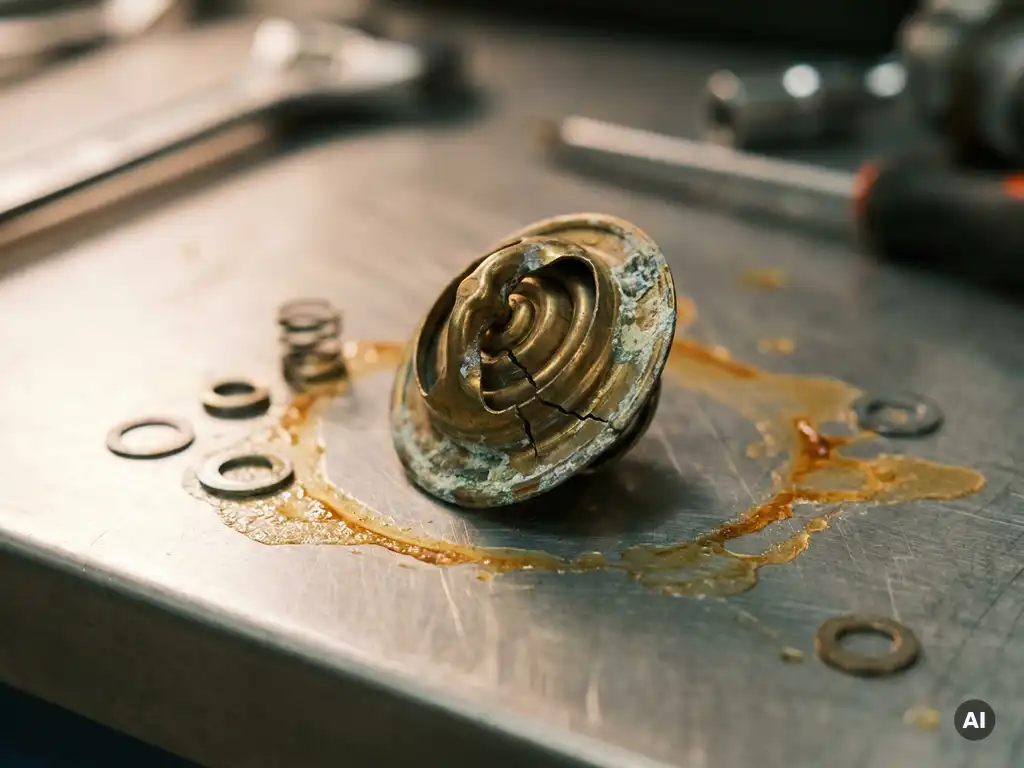
A wax pellet thermostat fails primarily because the wax element material inside it degrades, hardens, or becomes contaminated over time, preventing it from expanding and contracting correctly. When that happens, the thermostat either stays stuck open or locked shut, and neither outcome is good for your engine or system. The sections below walk through the most common causes, warning signs, and practical ways to prevent early failure.
What are the most common causes of wax pellet thermostat failure?
The most common causes of wax pellet thermostat failure are coolant contamination, thermal fatigue, age-related hardening of the wax element material, and physical damage to the valve or housing. Because the entire operating principle relies on the precise expansion and contraction of a wax compound, anything that interferes with that cycle can cause the component to malfunction.
Wax thermal expansion is a beautifully simple mechanism: as coolant temperature rises, the wax inside the pellet expands, pushing a piston that opens the valve. When temperatures drop, the wax contracts and the valve closes. Over thousands of heating and cooling cycles, however, the wax element material can lose its elasticity. The compound gradually hardens, meaning it no longer expands as fully or contracts as cleanly as it once did.
Beyond natural wear, external factors speed up the process considerably. Poor-quality coolant, infrequent fluid changes, and mixing incompatible antifreeze types all introduce chemical stressors that attack the wax and the surrounding seals. Mechanical stress from pressure surges or vibration can also crack the housing, letting contaminants in and allowing the wax to leak out.
How does coolant contamination accelerate thermostat wear?
Coolant contamination accelerates wax pellet thermostat wear by introducing abrasive particles, acidic compounds, and sludge that attack the wax element material and corrode the valve seat. Contaminated fluid changes the chemical environment the thermostat operates in, causing seals to swell or crack and the wax compound to degrade faster than normal wear would predict.
Old coolant that has not been flushed on schedule becomes acidic as its inhibitor package breaks down. That acidic environment attacks rubber seals around the wax pellet thermostat and gradually breaks down the wax element material itself. Rust particles and scale from corroded pipes act as abrasives, scoring the valve seat and preventing a clean seal.
Oil contamination, which often signals a head gasket problem, is particularly damaging. Oil coats the wax pellet and insulates it from coolant temperature changes, so the thermostat reads conditions incorrectly and opens or closes at the wrong time. Keeping coolant clean and replacing it at manufacturer-recommended intervals is one of the most straightforward ways to protect thermostat longevity.
What are the warning signs that a wax pellet thermostat is failing?
The clearest warning signs that a wax pellet thermostat is failing are an engine that takes unusually long to reach operating temperature, a temperature gauge that swings erratically, poor cabin heating output, and a dashboard warning light for overheating. These symptoms appear because the thermostat is no longer regulating coolant flow accurately.
Here are the most common indicators to watch for:
- Slow warm-up: The engine takes far longer than usual to reach normal operating temperature, often a sign the thermostat is stuck open and coolant is circulating before the engine is warm.
- Overheating: Temperature climbs quickly and the gauge enters the red zone, typically indicating the thermostat is stuck closed and hot coolant cannot reach the radiator.
- Erratic temperature readings: The gauge fluctuates between cold and hot without a clear pattern, suggesting the valve is opening and closing inconsistently.
- Poor heater performance: Cabin heat depends on hot coolant passing through the heater core, so a stuck-open thermostat often results in weak or cold air from the vents.
- Increased fuel consumption: An engine that never reaches proper operating temperature runs rich and burns more fuel than necessary.
If you notice any combination of these signs, having the thermostat tested sooner rather than later avoids more expensive downstream damage. You can learn more about precision thermostat components and how they are designed to deliver reliable temperature signals across a wide operating range.
How does a stuck-open thermostat differ from a stuck-closed one?
A stuck-open thermostat allows coolant to circulate continuously through the radiator regardless of engine temperature, keeping the engine chronically cold. A stuck-closed thermostat blocks coolant from reaching the radiator, causing the engine to overheat rapidly. Both failure modes stem from the wax element material losing its ability to drive correct wax thermal expansion, but they carry very different risks.
Stuck open: the cold-running engine
When the thermostat is stuck in the open position, the engine never builds up enough heat to reach its optimal operating temperature. Combustion efficiency drops, fuel consumption rises, and the engine produces more emissions than it should. In cold climates, passengers also lose effective cabin heating. While this failure mode is less immediately catastrophic than overheating, the long-term effects on engine wear and fuel economy are significant.
Stuck closed: the overheating risk
A thermostat stuck in the closed position is the more dangerous of the two scenarios. Coolant cannot flow to the radiator, so heat builds rapidly inside the engine block. Left unchecked, this leads to coolant boiling, head gasket failure, or warped cylinder heads. Overheating damage is expensive and, in severe cases, can write off an engine entirely. If the temperature gauge spikes suddenly, stopping the vehicle promptly and investigating the cooling system is essential.
How can wax pellet thermostat failure be prevented?
Wax pellet thermostat failure can be prevented through regular coolant maintenance, using the correct fluid specification, avoiding coolant mixing, and replacing the thermostat proactively at the intervals recommended for your application. Because the wax element material has a finite service life, treating it as a wear item rather than a lifetime component is the most effective mindset.
Practical prevention steps include:
- Flush and replace coolant on schedule. Fresh coolant maintains the correct pH and inhibitor levels that protect the thermostat’s seals and wax compound.
- Use the correct coolant specification. Different engine designs require different antifreeze chemistry. Mixing types degrades inhibitor effectiveness and can damage the wax element material.
- Inspect the cooling system when servicing other components. Replacing a water pump or radiator hose is a natural moment to check thermostat condition and replace it if it is near the end of its expected service life.
- Address leaks promptly. Even small leaks allow air into the system, which causes hot spots and uneven thermal cycling that stress the wax pellet thermostat disproportionately.
- Avoid prolonged idling in extreme temperatures. Extended idling in very cold or very hot conditions puts repeated thermal stress on the thermostat without the airflow that helps regulate overall system temperature.
Good maintenance habits not only extend thermostat life but also protect the broader cooling system, reducing the risk of costly repairs down the line.
When should a wax pellet thermostat be replaced rather than repaired?
A wax pellet thermostat should be replaced rather than repaired in virtually every case. Because the wax element material is sealed within the pellet and the expansion mechanism is precision-engineered, there is no practical way to restore a worn or contaminated wax compound in the field. Replacement is the only reliable solution once failure has been confirmed.
The economics also favour replacement. Thermostats are relatively low-cost components compared to the labour and parts involved in repairing overheating damage or a failed head gasket. Attempting to clean or manually reset a faulty thermostat may produce temporary results, but the underlying degradation of the wax element material means the problem will return quickly.
As a general rule, consider proactive replacement in these situations:
- The vehicle or system has reached the manufacturer’s recommended replacement interval
- The coolant system has experienced severe contamination or overheating
- The thermostat is being accessed during a related repair, such as a water pump replacement
- Any of the warning signs described above have appeared, even intermittently
Choosing a high-quality replacement that matches the original specification for wax thermal expansion range and valve opening temperature is just as important as the decision to replace. A substandard component may fail sooner and cause the same problems all over again.
How BTT Solutions supports reliable thermostat performance
We at BTT Solutions have spent decades engineering wax pellet thermostats and thermal management components that are built to resist exactly the failure modes described in this article. Our expertise covers the full picture, from the formulation of the wax element material to the precision tolerances of the valve seat, and we apply that knowledge across automotive, industrial, and building technology applications.
Here is what working with us looks like in practice:
- High-precision wax element components designed for consistent wax thermal expansion across wide temperature ranges and demanding duty cycles
- End-to-end thermostat solutions that include temperature sensors and control units, so every part of the thermal management system works together
- Application-specific engineering support to help you select the right specification for your coolant environment, operating temperatures, and system pressure
- Flexible, responsive service from a focused team of 600 specialists who give your project direct attention, not a queue number
Whether you are sourcing replacement components, designing a new cooling system, or looking to improve fuel efficiency and reduce emissions in your fleet or product line, we are ready to help. Explore our full product range or get in touch with our team to discuss your specific requirements. You can also find out more about BTT Solutions and the engineering heritage behind our components.
Related Articles
- How do emission regulations like Euro 7 impact powertrain development?
- What is engine efficiency and why should businesses care
- How do electric vehicle thermostats differ from gas engines?
- What are the main components of automotive thermostats?
- What thermostats are used in wind turbines and power generation?


