
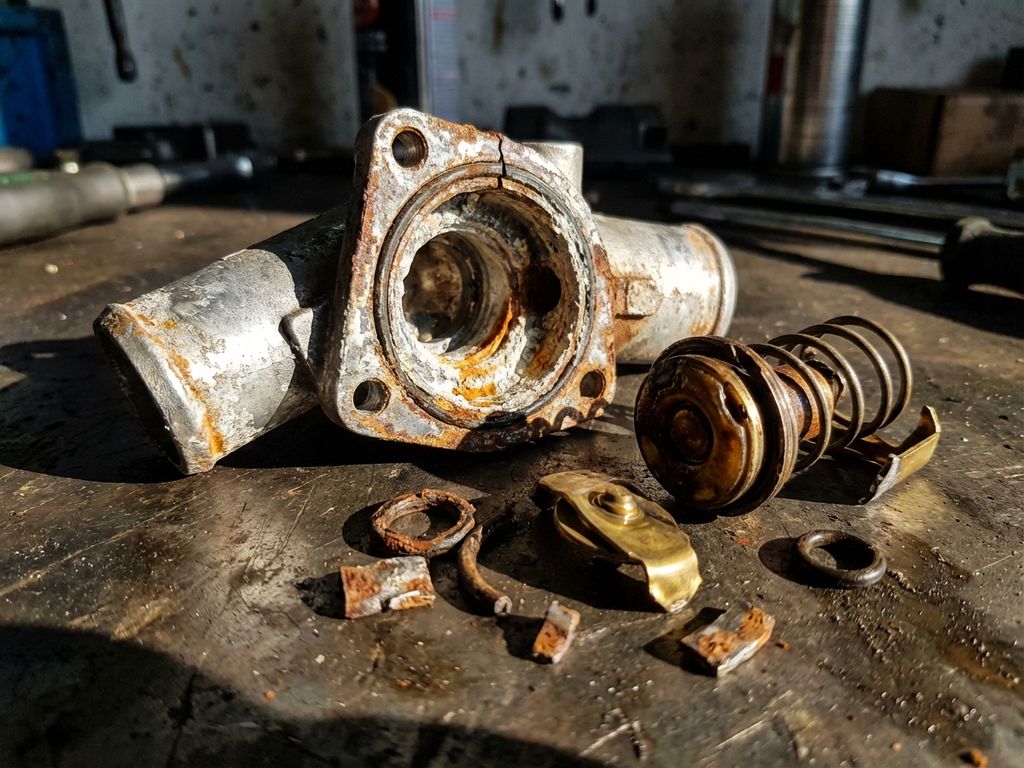
Automotive thermostat component failures typically occur due to valve malfunctions, corrosion damage, housing cracks, and gasket deterioration. The most common issues include stuck valves from wax element degradation, coolant contamination causing internal corrosion, and thermal cycling leading to housing stress fractures. Understanding these failure modes helps identify early warning signs and prevent costly engine damage through proper maintenance and high-quality component selection.
What are the warning signs of a failing automotive thermostat?
Engine temperature fluctuations, overheating episodes, poor heater performance, and visible coolant leaks are the primary indicators of thermostat component failure. These symptoms often appear gradually, making early detection crucial for preventing severe engine damage.
Temperature gauge irregularities represent the most obvious warning sign. A functioning thermostat maintains a consistent engine operating temperature, typically between 88–105°C. When components begin failing, you may notice the temperature needle swinging between normal and hot positions, or remaining consistently low even after extended driving periods.
Overheating episodes occur when thermostat valves become stuck in the closed position, preventing coolant circulation. The engine temperature rises rapidly, steam may emerge from under the bonnet, and the cooling fans may run continuously. This situation requires immediate attention to avoid catastrophic engine damage.
Poor cabin heating performance indicates potential valve problems. When automotive thermostats fail to regulate coolant flow properly, insufficient hot coolant reaches the heater core. You may experience weak warm air output or a complete absence of heat, even when the engine reaches normal operating temperature.
Coolant leaks around the thermostat housing suggest gasket failure or housing cracks. Look for puddles under the vehicle, white residue on engine components, or sweet-smelling coolant odours. These leaks often start small but worsen rapidly due to system pressure and thermal stress.
Why do automotive thermostat valves get stuck open or closed?
Thermostat valves become stuck due to corrosion buildup, wax element degradation, spring fatigue, and debris contamination. These mechanical failures prevent proper valve operation, disrupting coolant flow regulation and causing temperature control problems throughout the cooling system.
Corrosion represents the leading cause of valve malfunction in automotive thermostats. When coolant becomes acidic or contaminated with metal particles, corrosive deposits accumulate on valve surfaces and seating areas. These deposits create rough surfaces that prevent smooth valve movement, eventually causing complete seizure in either the open or closed position.
Wax element degradation occurs naturally over time but accelerates under extreme temperature conditions. The thermostatic wax expands and contracts to operate the valve mechanism. Repeated thermal cycling causes the wax to lose its expansion properties, reducing valve response sensitivity. Eventually, the element fails completely, leaving the valve stuck in its last position.
Spring fatigue develops after thousands of heating and cooling cycles. The return spring mechanism loses tension over time, failing to close the valve properly when engine temperatures drop. Weak springs also contribute to sluggish valve response, causing delayed opening when temperatures rise.
Debris contamination occurs when cooling system particles lodge in valve mechanisms. Rust flakes, gasket material, and external contaminants can jam valve components. Regular coolant changes help prevent debris accumulation, but older systems with deteriorating components remain vulnerable to contamination-related failures.
How do coolant contamination and corrosion damage thermostat components?
Poor coolant maintenance, chemical contamination, and electrolytic corrosion progressively damage thermostat housings, seals, and internal mechanisms. Contaminated coolant becomes acidic, attacking metal surfaces and rubber components while depositing corrosive particles that interfere with valve operation.
Chemical contamination occurs when coolant loses its protective properties through age, dilution, or mixing incompatible formulations. Fresh coolant contains corrosion inhibitors and pH buffers that protect system components. As these additives deplete, the coolant becomes aggressive, attacking aluminium housings, brass valve components, and rubber seals.
Electrolytic corrosion develops when different metals in the cooling system create galvanic reactions. Automotive thermostats often combine aluminium housings with brass or steel valve components. Without proper coolant protection, these dissimilar metals form electrical cells, causing accelerated corrosion of the more reactive material.
Acidic coolant conditions particularly damage rubber seals and gaskets. The elastomer materials swell, crack, and lose their sealing properties when exposed to contaminated coolant. This degradation leads to external leaks and allows further contamination to enter the thermostat assembly.
Scale formation represents another contamination effect, particularly in hard water areas. Mineral deposits accumulate on internal surfaces, creating rough textures that prevent proper valve sealing. These deposits also insulate the wax element from coolant temperature changes, reducing thermostat sensitivity and response accuracy.
What causes automotive thermostat housing and gasket failures?
Housing crack development, gasket deterioration, bolt torque issues, and thermal cycling effects create the primary failure modes for thermostat housings and sealing systems. These problems result in coolant leaks, system pressure loss, and potential engine overheating if not addressed promptly.
Thermal cycling stress represents the most significant factor in housing failures. Automotive thermostats experience repeated heating and cooling cycles throughout their service life. Aluminium housings expand and contract at different rates than surrounding engine components, creating stress concentrations at mounting points and sealing surfaces.
Housing crack development typically begins at stress concentration points such as bolt holes, corners, and thin-walled sections. Repeated thermal expansion cycles cause microscopic cracks that gradually propagate through the housing material. These cracks often remain invisible until they penetrate completely, causing sudden coolant loss.
Gasket deterioration occurs through multiple mechanisms, including thermal degradation, chemical attack, and mechanical wear. High-temperature exposure causes rubber and composite gasket materials to harden and lose elasticity. The gaskets can no longer conform to sealing surfaces, allowing coolant to leak past the seal.
Incorrect bolt torque application contributes significantly to housing and gasket failures. Over-tightening creates excessive stress concentrations that can crack housings immediately or create failure initiation points. Under-tightening allows gasket movement and fretting, leading to premature seal degradation and leakage.
Corrosion around sealing surfaces compounds gasket problems by creating uneven surfaces that prevent proper sealing. Pitted or corroded housing faces cannot provide the smooth, flat surfaces required for effective gasket sealing, resulting in persistent leaks even after gasket replacement.
How does BTT Solutions help prevent automotive thermostat component failures?
We provide advanced thermostat technology, precision manufacturing processes, and comprehensive quality control systems that directly address the most common automotive thermostat failure modes. Our solutions focus on preventing valve malfunctions, corrosion damage, and housing failures through superior materials and engineering.
Our advanced thermostat technology includes several key innovations that prevent common failure modes:
- Enhanced wax element formulations that maintain consistent expansion properties throughout an extended service life
- Corrosion-resistant valve materials and coatings that prevent sticking and seizure
- Precision-machined sealing surfaces that ensure proper gasket performance
- Optimised housing designs that minimise thermal stress concentrations
- High-quality spring materials that maintain proper tension over thousands of cycles
Our manufacturing processes ensure consistent quality and reliability across all automotive thermostat applications. We employ rigorous testing protocols that simulate real-world operating conditions, including thermal cycling, pressure testing, and contamination resistance evaluation.
Our quality control systems verify that each component meets strict performance standards before delivery. This comprehensive approach significantly reduces the likelihood of premature failures and extends service life in demanding automotive applications.
Contact our technical team to discuss how our precision-engineered automotive thermostats can improve reliability and reduce maintenance costs in your applications.
Related Articles
- How does wax thermal expansion contribute to fuel efficiency in engines?
- How do you document thermostat test results for regulatory approval?
- How to select thermal management systems for industrial use?
- What happens when an engine thermostat opens and closes?
- How does thermal expansion control temperature?


