
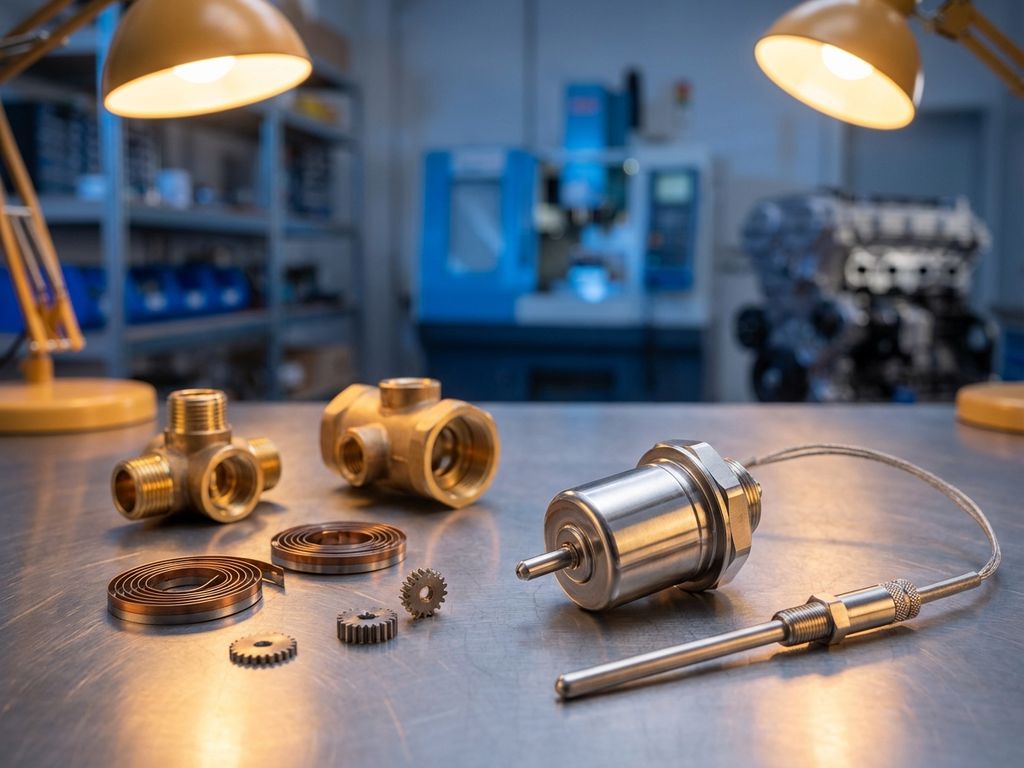
Choosing the right thermostat supplier requires careful evaluation of multiple factors that directly impact product quality, delivery reliability, and long-term partnership success. OEMs must assess quality standards, manufacturing capabilities, innovation capacity, supply chain stability, and cost-effectiveness to ensure optimal thermal management solutions. The selection process involves comprehensive supplier qualification that balances technical requirements with business objectives.
What are the most critical quality standards OEMs should evaluate in thermostat suppliers?
Quality standards form the foundation of successful OEM thermostat supplier selection, with ISO 9001 certification and automotive-specific IATF 16949 compliance serving as baseline requirements. Reliable suppliers demonstrate consistent manufacturing processes through rigorous testing protocols and precision measurement capabilities that ensure every component meets exact specifications.
Manufacturing standards evaluation should focus on temperature accuracy tolerances, typically within ±2°C for automotive applications, and pressure resistance capabilities. Suppliers must provide comprehensive documentation of their quality management systems, including statistical process control methods and failure mode analysis procedures.
Testing protocols represent another crucial aspect of quality assessment. Leading thermostat suppliers maintain in-house testing facilities capable of performing thermal cycling tests, pressure tests, and durability assessments that simulate real-world operating conditions. These capabilities ensure products perform reliably throughout their intended service life.
Precision requirements vary significantly across applications, making it essential to verify that potential suppliers can achieve the specific tolerances your products demand. This includes evaluating their measurement equipment calibration procedures and quality control sampling methods.
How do OEMs assess a thermostat supplier’s manufacturing capabilities and capacity?
Manufacturing capability assessment begins with production capacity evaluation to ensure suppliers can meet current and future volume requirements without compromising quality or delivery schedules. This involves reviewing annual production volumes, available equipment capacity, and scalability potential for growing demand.
Facility audits provide valuable insights into manufacturing technology sophistication and operational efficiency. During these assessments, evaluate automation levels, equipment maintenance practices, and workforce training programs that directly impact product consistency and production reliability.
Scalability assessment requires understanding how suppliers plan to accommodate volume increases. This includes reviewing their capital investment strategies, facility expansion capabilities, and ability to add production lines or shifts when demand grows.
Manufacturing technology review should encompass both current capabilities and future development plans. Modern thermostat production requires precision machining, automated assembly processes, and advanced testing equipment. Suppliers investing in Industry 4.0 technologies often provide better long-term partnership value through improved efficiency and quality monitoring.
What role does innovation and R&D capability play in thermostat supplier selection?
Innovation capability directly impacts long-term partnership success, as thermal management requirements continue evolving with new automotive technologies and efficiency standards. Suppliers with robust R&D programs can adapt to changing market demands and contribute valuable technical expertise to product development initiatives.
Research and development investment assessment involves reviewing suppliers’ annual R&D spending, engineering team size, and collaboration history with OEM partners. Suppliers dedicating significant resources to innovation typically offer more advanced solutions and better technical support throughout the partnership.
Patent portfolios indicate a supplier’s commitment to innovation and technical leadership. Reviewing patent applications and granted patents provides insights into their technological focus areas and ability to develop proprietary solutions that provide competitive advantages.
Future-proofing considerations become increasingly important as automotive electrification and industrial automation create new thermal management challenges. Suppliers actively researching next-generation technologies, such as smart thermostats with integrated sensors or advanced materials, offer better long-term value for forward-thinking OEMs.
Why is supply chain reliability crucial when choosing thermostat suppliers?
Supply chain reliability ensures consistent production schedules and helps avoid costly manufacturing disruptions that can impact customer relationships and revenue. Delivery consistency evaluation involves reviewing suppliers’ on-time delivery performance, inventory management practices, and contingency planning capabilities.
Supply chain risk assessment should examine suppliers’ raw material sourcing strategies, particularly for critical components like temperature-sensitive elements and precision springs. Suppliers with diversified sourcing strategies and strategic inventory buffers typically provide more stable delivery performance.
Geographic distribution advantages become apparent when suppliers maintain multiple manufacturing locations or regional distribution centers. This geographic diversity reduces risks associated with natural disasters, transportation disruptions, or regional economic challenges that could impact supply continuity.
Contingency planning evaluation reveals how suppliers prepare for potential disruptions. Reliable partners maintain detailed business continuity plans, alternative sourcing arrangements, and communication protocols that ensure minimal impact on OEM operations during unexpected events.
How do cost considerations balance with quality in OEM thermostat supplier decisions?
Cost considerations must balance initial pricing with total cost of ownership, including quality-related costs such as warranty claims, field failures, and customer satisfaction impacts. The lowest initial price rarely represents the best value when quality issues create downstream costs and reputation risks.
Total cost of ownership evaluation encompasses purchase price, incoming inspection costs, inventory carrying costs, and potential failure-related expenses. Suppliers offering slightly higher unit costs but superior quality often provide better overall value through reduced total ownership costs.
Value engineering opportunities emerge through collaborative partnerships with suppliers who contribute technical expertise to cost reduction initiatives. These partnerships can identify material optimizations, design improvements, or manufacturing process enhancements that reduce costs without compromising performance.
Long-term pricing stability becomes crucial for accurate financial planning and competitive positioning. Suppliers with transparent pricing methodologies and a commitment to reasonable price increases typically offer better partnership value than those with unpredictable pricing strategies.
How BTT Solutions helps with OEM thermostat supplier selection
We provide comprehensive solutions that address all critical aspects of OEM thermostat supplier evaluation, combining proven quality standards with innovative manufacturing capabilities and reliable supply chain management. Our approach focuses on building long-term partnerships that deliver consistent value through superior thermal management solutions.
- Quality Excellence: ISO 9001 and IATF 16949 certified manufacturing processes with precision temperature control within ±1°C tolerances
- Manufacturing Capability: Advanced production facilities across eight global locations with scalable capacity and Industry 4.0 technologies
- Innovation Leadership: Dedicated R&D programs developing next-generation thermal management solutions with an extensive patent portfolio
- Supply Chain Reliability: Geographic distribution advantages with robust contingency planning and proven delivery performance
- Value Partnership: Collaborative approach to cost optimization through value engineering and long-term pricing stability
Contact our technical team today to discuss how our thermal management expertise can support your OEM requirements and contribute to your product success through reliable, innovative thermostat solutions.
Related Articles
- Can wax element material be used in industrial thermostat applications?
- How do you budget for engine maintenance in commercial operations
- What causes fuel consumption to increase during cold starts?
- What certifications should an automotive thermostat manufacturer have?
- How do you optimize thermal management for emissions reduction?


