
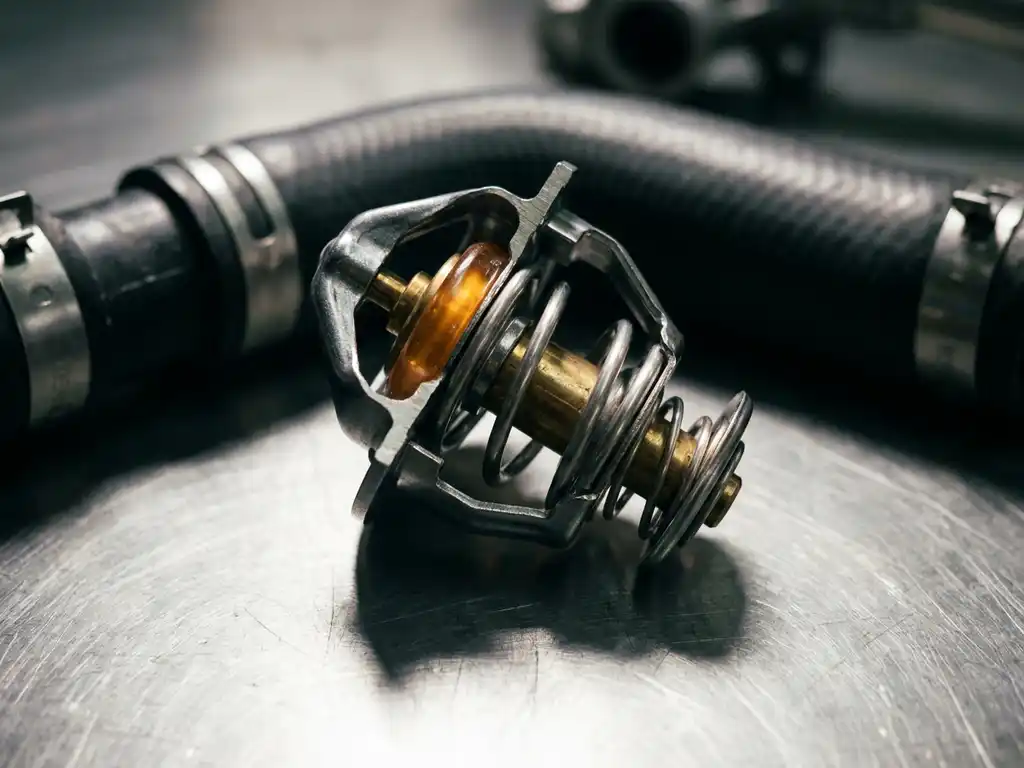
Yes, thermostat component design has a direct and measurable impact on response time. The geometry of the wax element, the thermal conductivity of the housing material, and the mechanical stroke of the valve all determine how quickly a thermostat can react to temperature changes. For engineers and procurement teams specifying temperature control components, understanding these design variables is the difference between a system that performs precisely and one that lags behind demand.
The sections below break down the key design factors one by one, so you can evaluate what matters most for your specific application.
Which design factors have the greatest impact on thermostat response time?
The three design factors with the greatest impact on thermostat response time are wax element geometry, housing material thermal conductivity, and valve stroke length. Each one influences a different stage of the thermal response cycle: heat absorption, heat transfer, and mechanical actuation. No single factor works in isolation, and optimizing all three together produces the fastest and most consistent response.
Beyond these three primary factors, secondary considerations also play a role. The type of wax compound used inside the element affects the temperature at which expansion begins and how sharply the transition occurs. Seal quality and internal friction within the valve assembly can add mechanical delay even after the wax has already expanded. And the overall thermal mass of the surrounding components determines how quickly heat reaches the sensing element in the first place.
For engineers working on thermomanagement components, the practical takeaway is that response time is a system-level outcome. Changing one design variable without considering the others often produces diminishing returns or unintended trade-offs.
How does wax element geometry affect thermal response speed?
Wax element geometry affects thermal response speed primarily through surface area. A wax element with a larger surface-area-to-volume ratio absorbs heat from the surrounding fluid more quickly, which means the wax reaches its activation temperature faster and begins expanding sooner. Thinner, elongated element shapes generally outperform compact, bulky designs when rapid response is the priority.
The relationship between geometry and response speed comes down to basic heat transfer principles. Heat must travel from the fluid, through the element casing, and into the wax core before any mechanical movement can occur. The thinner the wall and the greater the exposed surface, the shorter that heat transfer path becomes.
However, geometry is not purely about making elements as thin as possible. Structural integrity, manufacturing tolerances, and long-term durability all constrain how aggressively the geometry can be optimized. A wax element designed for fast response must still survive repeated thermal cycles without deformation or leakage. This is why precision manufacturing matters as much as the design intent itself. The best-designed element on paper will underperform if the tolerances are inconsistent across production batches.
What role does housing material play in thermostat performance?
Housing material plays a significant role in thermostat performance because it governs how efficiently heat transfers from the working fluid to the wax sensing element. Materials with high thermal conductivity, such as brass or aluminum alloys, transfer heat faster than lower-conductivity options like certain plastics or stainless steel. The faster the housing conducts heat, the shorter the lag between a fluid temperature change and the thermostat’s mechanical response.
Material selection also involves trade-offs beyond conductivity. Corrosion resistance, weight, cost, and compatibility with specific coolants or oils all factor into the final choice. Aluminum, for example, offers excellent conductivity and low weight but may require surface treatment in aggressive chemical environments. Brass provides strong conductivity and good corrosion resistance but adds more mass, which can slow response in applications where thermal mass is a concern.
For industrial and automotive applications operating across a wide temperature range, the housing material must also maintain dimensional stability. A material that expands significantly with heat can alter the precision fit of internal components, introducing mechanical play that degrades both response speed and repeatability over time. This is why material selection for thermostat component design is rarely a simple cost-optimization decision.
How does valve stroke length influence opening and closing speed?
Valve stroke length directly influences how quickly a thermostat can fully open or close. A shorter stroke requires less wax expansion to achieve full valve travel, which means the thermostat reaches its fully open or fully closed state faster after activation. Longer strokes allow for greater flow modulation but inherently take more time to complete the full range of motion.
The relationship between stroke and response speed is most relevant in applications that require rapid switching between flow states. In engine cooling systems, for instance, a thermostat that opens slowly during a sudden load increase can allow coolant temperatures to spike before the valve has fully traveled. In contrast, a well-calibrated short-stroke design can begin delivering meaningful flow much earlier in the thermal event.
That said, stroke length cannot be minimized without consequence. The stroke must be long enough to provide adequate flow capacity at full open and sufficient sealing at full close. Reducing stroke to improve speed while compromising flow area simply shifts the performance problem elsewhere. The engineering challenge is finding the stroke length that balances actuation speed, flow capacity, and sealing reliability for the specific duty cycle of the application.
It is also worth noting that stroke length interacts directly with wax element geometry. A shorter stroke can be achieved either by reducing the total travel distance or by using a wax formulation that expands more sharply within a narrow temperature band. Both approaches are used in practice, and the best solution depends on the temperature range and precision requirements of the system. For a closer look at how these components come together, the full product range covers a variety of configurations designed for different application demands.
Can thermostat response time be optimized without changing the core design?
Yes, thermostat response time can often be improved without redesigning the core component. The most effective non-design optimizations involve improving the thermal environment around the thermostat: increasing fluid velocity past the sensing element, reducing thermal insulation between the fluid and the element, and minimizing the dead volume of stagnant fluid near the thermostat housing. These changes accelerate heat delivery to the wax element without touching the component itself.
System-level integration decisions also matter. Where the thermostat is mounted within the circuit, how close it sits to the heat source, and whether it is exposed to representative fluid temperatures rather than mixed or stratified flow all affect how quickly the element sees the true system temperature. A well-designed thermostat installed in a poorly considered location will always underperform relative to its specification.
Calibration is another lever. If a thermostat is specified with an opening temperature that is too conservative for the application, it will appear slow simply because it is waiting longer than necessary before activating. Selecting a component with an opening temperature that more closely matches the actual operating target can deliver a meaningful improvement in apparent response speed without any hardware change to the thermostat itself.
Finally, maintenance and fluid quality should not be overlooked. Deposits on the housing surface act as insulation, slowing heat transfer to the wax element. In high-cycle industrial applications, periodic inspection and cleaning of thermostat housings is a straightforward way to preserve the response characteristics the component was designed to deliver.
How BTT Solutions supports thermostat component selection
Getting response time right starts with choosing the right component for the application, and that is exactly where we can help. At BTT Solutions, we work directly with engineers, procurement teams, and technical decision-makers to match the right thermostat configuration to the demands of their system. Our product advisory covers the full range of design variables discussed in this article, including wax element geometry, housing material selection, and valve stroke specifications.
When you work with us, you get:
- Application-specific component recommendations based on your operating temperature range, fluid type, and response requirements
- Access to precision-manufactured wax elements, thermostat inserts, and engineered housings built for reliability across automotive, industrial, and building technology applications
- Direct technical support from a team that understands thermomanagement at a component level, not just a catalog level
- Flexible, responsive service from a focused organization that can adapt quickly to your project timeline and specification changes
We are a global specialist in high-precision thermomanagement components, and we take pride in giving every customer the individual attention their application deserves. If you are evaluating thermostat components for a new design or looking to improve performance in an existing system, get in touch with our team and we will help you find the right solution.


