
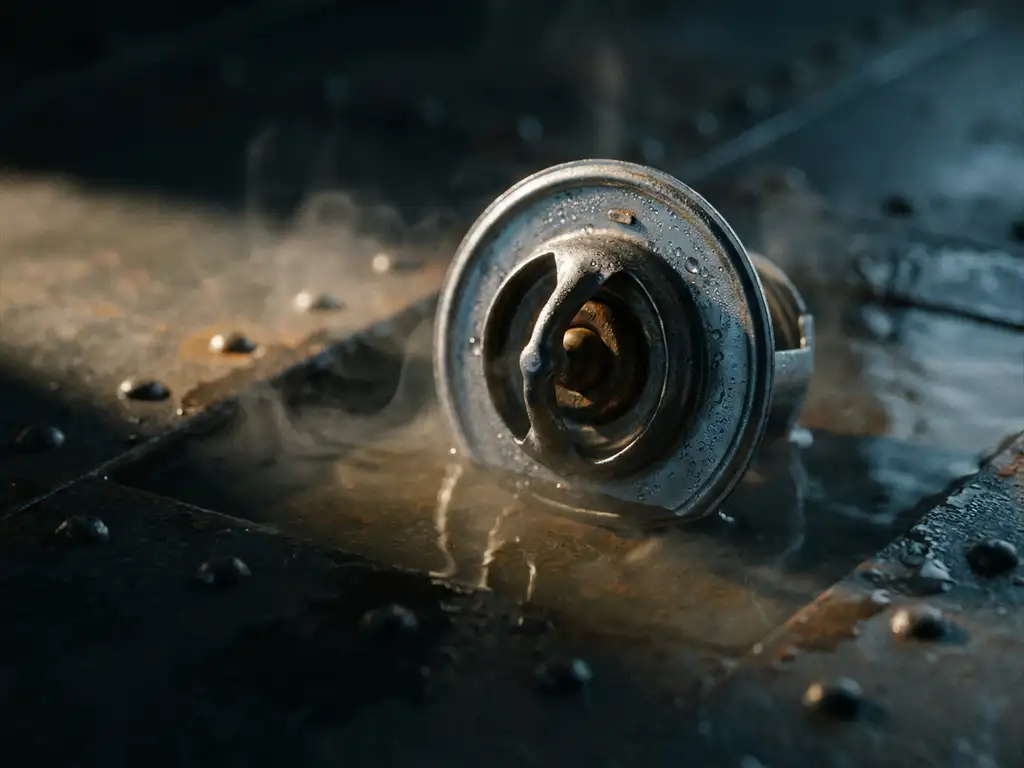
Thermostat components do behave differently in wet or humid environments, and these changes can meaningfully affect performance, accuracy, and service life. Moisture introduces a range of challenges that vary depending on the materials used, the application, and how well the component was designed for its operating conditions. The sections below break down exactly what happens, why it matters, and what can be done about it.
What makes thermostat components vulnerable to moisture?
Thermostat components are vulnerable to moisture primarily because they combine metal housings, rubber seals, electrical contacts, and wax-based actuators in close proximity. Each of these materials responds to water and humidity in different ways, and when one element degrades, it tends to accelerate stress on the others.
Metal parts, particularly those made from steel or copper alloys, are susceptible to oxidation when exposed to water or condensation. Rubber seals can swell, crack, or lose elasticity in persistently humid conditions, which allows moisture to reach internal components that were never designed to handle it. Electrical contacts, where present in electronic thermostats, are especially sensitive because even a thin film of water can disrupt signal transmission or cause short circuits.
The wax element at the heart of many thermostat designs is another point of concern. While the wax itself is largely inert, the housing and sleeve that contain it rely on tight tolerances. If moisture causes corrosion or dimensional changes in those surrounding parts, the precision of the wax element’s expansion and contraction can be compromised. Learn more about the range of thermostat products designed to address these vulnerabilities.
How does humidity affect thermostat accuracy and response time?
Humidity affects thermostat accuracy and response time by introducing thermal interference and mechanical friction that the component was not calibrated to account for. When moisture accumulates inside a thermostat housing, it can act as an unintended heat sink or insulator, causing the component to read temperatures slightly off from actual conditions.
For wax element thermostats, the issue is often mechanical. Corrosion or swelling caused by moisture can increase friction on the piston or sleeve, meaning the wax has to expand further before the valve actually moves. This delays the response and shifts the opening temperature away from the designed setpoint. In precision applications, even a few degrees of drift can affect system efficiency or emissions performance.
Electronic temperature sensors integrated into modern thermomanagement systems face a different kind of problem. Humidity can cause resistive drift in sensing elements, which means the reported temperature diverges from the actual temperature over time. This is particularly relevant in applications where the thermostat is part of a closed-loop control system, because even small inaccuracies compound into larger performance issues.
What types of corrosion occur in thermostat components exposed to moisture?
The most common types of corrosion in thermostat components exposed to moisture are galvanic corrosion, crevice corrosion, and general surface oxidation. Each type tends to occur in different parts of the component and causes different kinds of damage.
- Galvanic corrosion happens when two dissimilar metals are in contact in the presence of an electrolyte, such as water. In thermostat housings that combine aluminum, steel, and brass fittings, moisture can act as that electrolyte and accelerate the degradation of the less noble metal.
- Crevice corrosion develops in tight gaps and recesses where moisture becomes trapped and oxygen is depleted. The area around seals, threads, and press-fit joints is particularly prone to this, and it can be difficult to detect visually until the damage is already significant.
- Surface oxidation is the most visible form and typically affects steel components first. While a thin oxide layer can sometimes act as a partial barrier, in wet environments it tends to be porous and continues to allow moisture to reach fresh metal beneath.
In industrial applications where thermostat components are exposed to coolants, cleaning agents, or outdoor humidity, corrosion can progress faster than in sealed automotive environments. The combination of thermal cycling and moisture is particularly aggressive because expansion and contraction repeatedly stress any protective coatings or oxide layers that form.
Do automotive and industrial thermostats behave differently in wet conditions?
Yes, automotive and industrial thermostats do behave differently in wet conditions, largely because they are designed for different environments, pressure ranges, and levels of sealing. Automotive thermostats typically operate within a sealed cooling circuit, while many industrial thermostats are exposed to ambient humidity or splash conditions as part of normal operation.
Automotive thermostats in wet conditions
In automotive applications, the thermostat sits inside the engine’s cooling circuit and is constantly in contact with coolant. This means the component is engineered to handle fluid exposure from the start. The real moisture risk for automotive thermostats comes from condensation during cold starts, where temperature differentials can cause water to form on internal surfaces before the system reaches operating temperature. Over many cycles, this can contribute to corrosion at sealing surfaces or around the wax element housing.
Industrial thermostats in wet conditions
Industrial thermostats often face more variable and unpredictable moisture exposure. They may be installed in outdoor equipment, near washing stations, or in environments with high ambient humidity. Unlike automotive units, which benefit from the protection of a closed, pressurized circuit, industrial thermostats are frequently exposed to condensation, splashing, or even submersion in some applications. This means the sealing standards and material choices need to be more robust, and inspection intervals tend to be shorter. For applications in shipping systems, heating infrastructure, or outdoor industrial equipment, the design requirements around thermostat moisture resistance are considerably more demanding.
How are thermostat components designed to resist moisture damage?
Thermostat components resist moisture damage through a combination of material selection, protective coatings, precision sealing, and design geometry. The goal is to prevent moisture from reaching sensitive internal elements while maintaining the thermal responsiveness the component needs to function correctly.
Common design strategies include:
- Corrosion-resistant alloys such as stainless steel or anodized aluminum for housings exposed to humid or wet conditions
- EPDM or silicone rubber seals that maintain elasticity across a wide temperature range and resist swelling in the presence of water or coolant
- Protective coatings on metal surfaces, including zinc plating, nickel plating, or polymer coatings that act as barriers against oxidation
- Tight dimensional tolerances that minimize crevice gaps where moisture could accumulate and cause localized corrosion
- Drainage geometry in housings designed to prevent water pooling near critical interfaces
For wax element thermostats specifically, the quality of the sleeve and piston fit is critical. If tolerances are maintained precisely, moisture is much less likely to penetrate the actuator core. This is one reason why precision manufacturing plays such a central role in thermostat reliability across all applications, from engine cooling to building heating systems.
When should thermostat components be replaced due to moisture exposure?
Thermostat components should be replaced when moisture exposure has caused visible corrosion on sealing surfaces, measurable drift in opening temperature, sluggish valve response, or physical damage to seals and housings. Waiting for complete failure is not advisable, because a degraded thermostat can cause downstream problems in the system it controls.
Some practical indicators that moisture damage has progressed to a replacement-worthy level include:
- Coolant temperature running consistently higher or lower than expected without other system faults
- Visible rust, pitting, or white deposits on the thermostat housing or valve seat
- Seals that appear cracked, compressed flat, or visibly swollen
- Sluggish engine warm-up in automotive applications, suggesting a delayed opening response
- Inconsistent temperature readings in systems with integrated sensors, pointing to resistive drift
In industrial and building applications, where thermostats may operate for years without routine inspection, it is worth building moisture-related checks into scheduled maintenance cycles rather than waiting for symptoms to appear. The cost of replacing a thermostat component proactively is almost always lower than the cost of diagnosing and repairing a system failure caused by a degraded component.
How BTT Solutions supports thermostat reliability in demanding environments
At BTT Solutions, we work directly with engineers and procurement teams to identify the right thermostat components for environments where moisture, humidity, or harsh operating conditions are a real concern. Our product advisory service covers the full range of thermomanagement components, including wax element thermostats, thermostat inserts, and engineered housings, all designed with precision tolerances and material choices that hold up under demanding conditions.
When you work with us, you can expect:
- Component recommendations tailored to your specific application, whether that is automotive cooling, industrial fluid management, or building heating infrastructure
- Guidance on sealing standards, material options, and coating choices relevant to your humidity or moisture exposure levels
- Access to our full product range, developed with the precision manufacturing standards that BTT Solutions has built over decades in the thermomanagement industry
- Responsive support from a team that gives individual attention to each customer, without the delays of a large corporate structure
If you are specifying thermostat components for a wet or humid environment and want to make sure you are choosing the right solution from the start, we are happy to help. Get in touch with our team and let us know what your application requires.


