
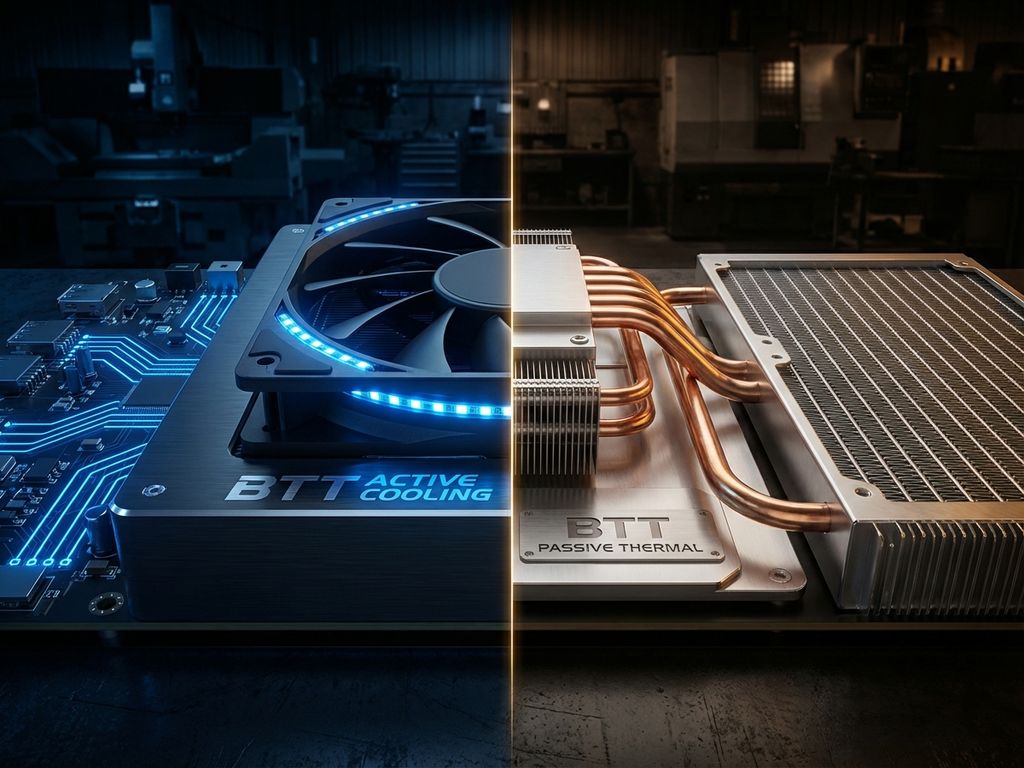
Active thermal management uses powered components like fans and pumps to control temperature, while passive thermal management relies on natural heat transfer through materials and design. Active systems provide precise temperature control and can handle variable loads, making them ideal for high-performance applications. Passive systems offer reliability and maintenance-free operation through heat sinks, thermal pads, and natural convection. Understanding when to use each approach depends on your specific cooling requirements, power constraints, and performance needs.
What is the difference between active and passive thermal management?
Active thermal management systems use external power to drive cooling components such as fans, pumps, or thermoelectric coolers. These systems actively move heat away from sources through forced convection, liquid circulation, or electronic cooling methods. They can respond dynamically to changing thermal conditions and provide precise temperature regulation.
Passive thermal management relies entirely on natural heat transfer mechanisms without requiring external power. These systems use heat dissipation through conduction, natural convection, and radiation. Common passive components include heat sinks, thermal interface materials, heat pipes, and thermosiphons that transfer heat through material properties and design geometry.
The fundamental operational difference lies in control capability. Active systems can adjust their cooling performance in real time based on temperature feedback, while passive systems provide consistent thermal performance based on their physical design and ambient conditions. Active solutions excel in variable-load environments, whereas passive approaches work best in steady-state thermal conditions.
When should you use active thermal management systems?
Active thermal management systems are most effective in high-performance applications requiring precise temperature control, variable load conditions, and rapid thermal response. These systems excel when passive cooling alone cannot meet thermal requirements or when temperature regulation must adapt to changing operational demands.
High-power electronics, automotive engines, and industrial machinery benefit significantly from active thermal control. Applications with fluctuating heat loads require active systems to maintain optimal operating temperatures. Data centers, gaming computers, and electric vehicle battery packs rely on active cooling to prevent overheating during peak performance periods.
Consider active thermal management when:
- Temperature precision within narrow ranges is critical
- Heat generation varies significantly during operation
- Ambient temperatures exceed passive cooling capabilities
- Space constraints limit passive heat sink sizing
- Rapid thermal response times are essential
Active systems also prove valuable in harsh environments where passive cooling cannot provide adequate thermal protection or when system performance directly depends on maintaining specific temperature ranges.
What are the advantages of passive thermal management?
Passive thermal management offers exceptional reliability, cost-effectiveness, and maintenance-free operation throughout the system’s lifetime. These systems have no moving parts to fail, consume zero power, and operate silently while providing consistent heat dissipation performance. They are particularly advantageous in applications prioritizing long-term dependability over dynamic control.
The primary benefits include lower total cost of ownership, as passive systems require no ongoing energy consumption or maintenance schedules. They are inherently more reliable because there are no pumps, fans, or electronic components that can malfunction. This makes them ideal for remote installations, aerospace applications, or any situation where maintenance access is limited.
Passive thermal solutions excel in:
- Steady-state thermal loads with predictable heat generation
- Applications requiring silent operation
- Environments where power consumption must be minimized
- Systems designed for extended operational life
- Cost-sensitive applications with adequate space for heat sinks
These systems also provide inherent fail-safe operation, as they continue functioning even during power outages or control system failures, making them excellent choices for critical safety applications.
How do you choose between active and passive thermal management?
Choosing between active and passive thermal management requires evaluating power requirements, space constraints, cost considerations, reliability needs, and performance specifications. The decision framework should balance thermal performance requirements against system constraints, operational environment, and long-term maintenance considerations.
Start by calculating your maximum heat dissipation requirements and comparing them against available space for passive cooling solutions. If passive heat sinks cannot handle the thermal load within your size constraints, active thermal management becomes necessary. Consider the ambient operating temperature range, as high ambient temperatures may overwhelm passive systems.
Key evaluation factors include:
- Power budget: Can you allocate power for cooling system operation?
- Space limitations: Is there sufficient room for adequate passive heat sinks?
- Temperature precision: Do you need tight temperature control or general heat removal?
- Reliability requirements: Is maintenance-free operation essential?
- Cost sensitivity: Are initial costs more important than operating expenses?
Many successful thermal solutions combine both approaches, using passive components for baseline cooling with active systems handling peak loads or providing fine temperature control when needed.
What are the common challenges with each thermal management approach?
Active thermal management faces challenges including power consumption, complexity, potential component failures, and noise generation. These systems require ongoing energy input, control electronics, and regular maintenance to ensure reliable operation. Fan bearings wear out, pumps can fail, and electronic controllers may malfunction, creating potential reliability concerns.
Passive thermal management limitations include size constraints, limited heat dissipation capacity, and inability to adapt to changing thermal loads. Large heat sinks may not fit within compact designs, and passive systems cannot increase their cooling capacity when heat generation exceeds design parameters.
Common active system challenges:
- Ongoing power consumption increases operating costs
- Moving parts require maintenance and eventual replacement
- Control complexity can introduce failure points
- Noise from fans or pumps may be problematic
Passive system limitations:
- Fixed cooling capacity cannot adapt to varying loads
- Large physical size requirements for adequate heat dissipation
- Performance depends heavily on ambient temperature conditions
- Limited effectiveness in high-power-density applications
Understanding these trade-offs helps engineers select the most appropriate thermal solution for their specific application requirements and operational constraints.
How BTT Solutions helps with thermal management optimization
We provide comprehensive thermal management solutions combining both active and passive approaches through our precision thermostat technology and advanced thermal solutions. Our expertise spans automotive, industrial, and household applications, delivering optimized temperature regulation systems that balance performance, efficiency, and reliability requirements.
Our thermal management capabilities include:
- High-precision thermostats for accurate temperature control in variable load conditions
- Advanced temperature sensors providing real-time thermal monitoring and feedback
- Passive thermal components including heat sinks and thermal interface materials
- Active cooling system integration for dynamic thermal response
- Custom thermal solutions designed for specific application requirements
- Comprehensive system optimization balancing active and passive approaches
Whether you need precise engine temperature control, industrial process thermal management, or household heating system regulation, our engineering team develops tailored solutions that optimize thermal performance while minimizing energy consumption and maintenance requirements. Contact us today to discuss how our thermal management expertise can enhance your system’s performance and reliability.


