
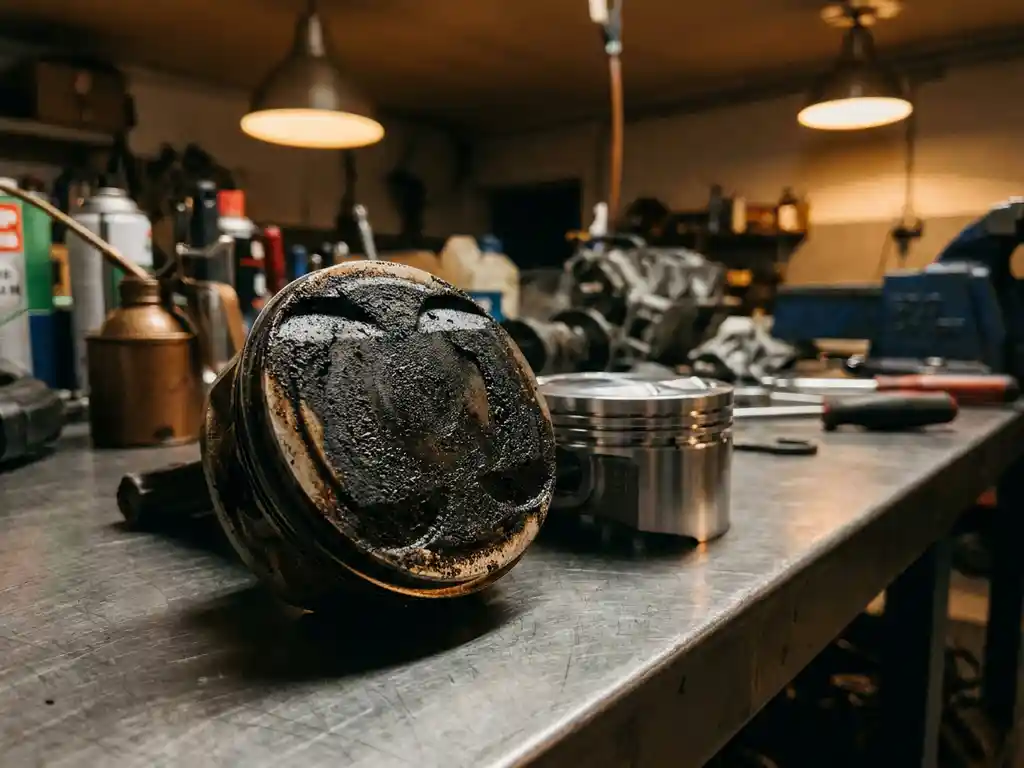
Carbon buildup has a significant and measurable impact on long-term engine efficiency. As deposits accumulate on intake valves, injectors, and combustion chamber surfaces, they disrupt fuel atomization, heat transfer, and airflow — all of which degrade performance over time. The sections below break down exactly how this process unfolds and what you can do about it.
How does carbon buildup form inside an engine over time?
Carbon buildup forms when unburned fuel, oil vapors, and combustion byproducts accumulate on internal engine surfaces. Over thousands of operating hours, these residues bake onto metal components, hardening into thick deposits that resist normal cleaning. The process is gradual, which is why many drivers only notice a problem once performance has already declined noticeably.
Modern direct injection engines are particularly prone to this issue. In port-injected engines, fuel washes over the intake valves with every cycle, naturally keeping deposits in check. Direct injection bypasses this self-cleaning mechanism entirely, so oil vapors from the crankcase ventilation system collect on valve surfaces without anything to rinse them away. Over time, even a thin layer of carbon can restrict airflow enough to affect how the engine breathes.
Driving habits also play a role. Short trips that never allow the engine to reach full operating temperature leave more unburned residues behind. City driving, frequent idling, and low-quality fuel all accelerate the rate at which deposits form.
What effect does carbon buildup have on combustion efficiency?
Carbon deposits directly reduce combustion efficiency by disrupting the precise fuel-air mixture that modern engines depend on. When deposits coat injector tips, fuel spray patterns become irregular, leading to incomplete combustion. Deposits on intake valves restrict airflow, and deposits inside the combustion chamber absorb heat that should be driving the piston. The result is less energy extracted from each combustion event.
There is also a secondary effect worth understanding. Carbon deposits retain heat between combustion cycles, which can cause the air-fuel mixture to ignite prematurely — a condition known as pre-ignition or engine knock. Modern engine management systems detect this and retard ignition timing to protect the engine, but that adjustment itself costs power and efficiency. So the engine is simultaneously burning fuel less completely and producing less output from what it does burn.
How does carbon buildup affect engine temperature regulation?
Carbon deposits act as an insulating layer on combustion chamber walls and valve seats, interfering with the engine’s ability to transfer heat efficiently. This disrupts the thermal balance that thermostat components and cooling systems are designed to maintain, forcing the engine to operate outside its optimal temperature window.
When heat cannot move through metal surfaces as intended, coolant absorbs less of it, and the combustion chamber runs hotter than designed. This places additional stress on the cooling circuit, seals, and gaskets. At the same time, oil that contacts heavily deposited surfaces degrades faster, reducing its ability to lubricate and carry heat away from critical components. Over time, this thermal imbalance compounds the mechanical wear already caused by the deposits themselves.
Precise temperature regulation is fundamental to engine longevity. Even small deviations from the designed operating range accelerate wear on components that were engineered to function within tight thermal tolerances.
What are the long-term symptoms of carbon buildup in an engine?
The long-term symptoms of carbon buildup include rough idling, hesitation during acceleration, reduced power output, increased fuel consumption, and occasional misfires. These symptoms typically develop gradually, making them easy to attribute to other causes until the underlying carbon deposits are identified and addressed.
Here is a practical breakdown of what to watch for as deposits accumulate:
- Rough or unstable idle: Deposits on intake valves disrupt airflow at low RPM, causing the engine to hunt for a stable idle speed.
- Hesitation under load: Restricted injectors or valves cannot deliver fuel and air fast enough when you accelerate, creating a noticeable lag.
- Engine misfires: Incomplete combustion caused by poor fuel atomization triggers misfires, which modern engine control units log as fault codes.
- Increased oil consumption: Deposits can damage valve stem seals over time, allowing more oil into the combustion chamber.
- Hard cold starts: Heavy deposits reduce compression slightly and make it harder for the engine to fire reliably from cold.
Most of these symptoms become noticeable only after significant accumulation, which is why preventive maintenance matters far more than reactive repairs.
How much does carbon buildup reduce fuel efficiency over time?
Carbon buildup can meaningfully reduce fuel efficiency, though the exact amount depends on engine design, driving conditions, and how long deposits have been allowed to accumulate. What is well established is the mechanism: restricted airflow, degraded combustion quality, and ignition timing retardation all force the engine to consume more fuel to produce the same output.
The relationship between carbon deposits and engine fuel efficiency is not linear. Early-stage deposits cause modest losses that are easy to overlook. But as layers thicken and begin affecting multiple systems simultaneously — injectors, valves, and the combustion chamber at once — the cumulative impact on fuel economy becomes much more significant. Engines operating with heavy deposits are working harder than they need to, and that extra effort shows up directly at the fuel pump.
Regular maintenance intervals exist precisely to prevent this compounding effect. Addressing deposits early costs far less than recovering from the performance degradation of years of neglect.
What are the most effective ways to prevent carbon buildup?
The most effective ways to prevent carbon buildup are using high-quality fuel, maintaining correct engine oil change intervals, allowing the engine to reach full operating temperature regularly, and using fuel system cleaning additives at appropriate service intervals. For direct injection engines, periodic professional intake valve cleaning is also recommended.
A few practical habits make a real difference over the long term:
- Avoid excessive short trips: Engines that rarely reach full operating temperature leave more residues behind with every cycle. Regular longer drives help burn off light deposits before they harden.
- Use quality fuel: Top-tier fuels contain detergent additives that slow deposit formation on injectors and valves.
- Change oil on schedule: Degraded oil contributes directly to carbon formation. Fresh oil with the correct viscosity reduces the volume of residues entering the combustion system.
- Consider fuel system cleaners: Added to the fuel tank at regular intervals, quality detergent additives help keep injectors clean and combustion surfaces clearer.
- Follow manufacturer service schedules: Spark plug condition, air filter quality, and PCV system function all influence how quickly deposits form.
For direct injection engines specifically, walnut blasting or chemical intake valve cleaning every few years is worth considering, especially if the vehicle is used primarily for short urban trips.
How BTT Solutions supports engine thermal efficiency
Carbon buildup does not just harm combustion — it throws off the entire thermal balance of an engine. That is exactly the domain where we at BTT Solutions focus our work. Precise temperature regulation is the foundation of long-term engine performance, and when deposits interfere with heat transfer, the cooling and thermostat systems have to compensate for conditions they were never designed to handle.
We help industrial and automotive customers maintain that thermal precision through our range of high-quality thermostat components. Our product advisory service covers:
- Wax elements engineered for accurate and repeatable thermal response across a wide operating range
- Thermostat inserts designed to maintain optimal coolant flow even under elevated thermal stress
- Engineered housings built for durability in demanding automotive and industrial environments
Whether you are sourcing components for a new design or reviewing an existing thermal management system, we offer individual guidance tailored to your application. Get in touch with our team to discuss your specific requirements and find out how the right thermostat components can help protect long-term engine efficiency.
Related Articles
- Can engine efficiency be improved by upgrading the intake manifold?
- What is the cost impact of poor thermal management on fleet fuel bills?
- Can a faulty thermostat cause transmission overheating in modern cars?
- What is meant by thermal management in industrial applications?
- How does a wax element thermostat work?


