
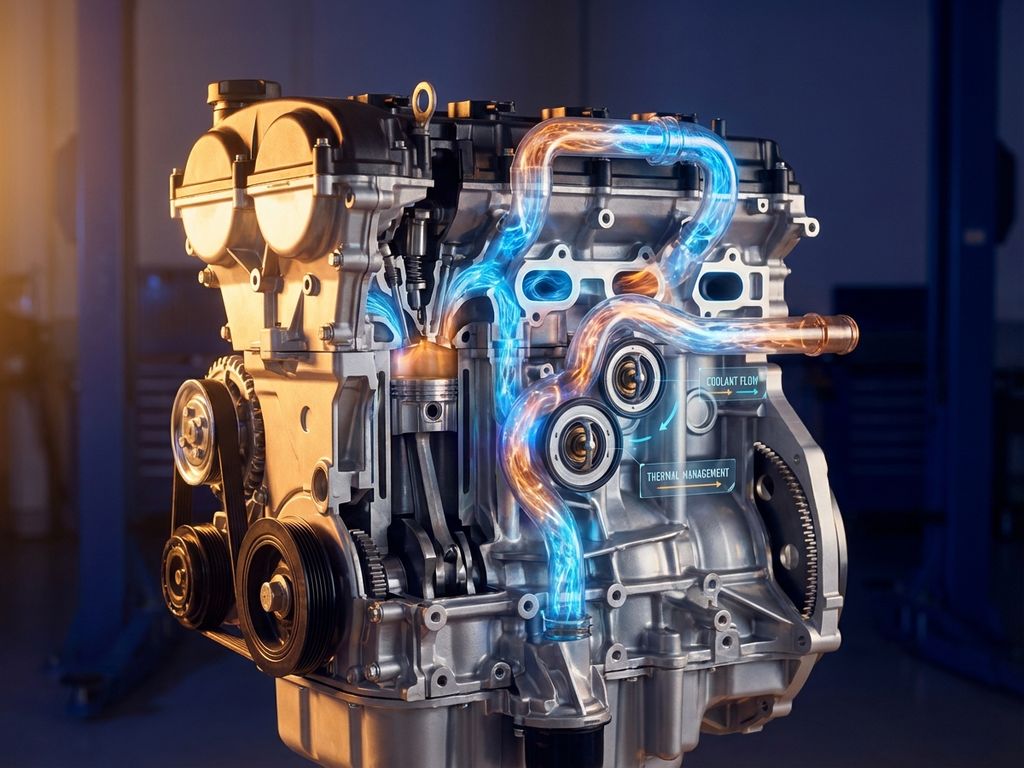
Thermal management directly impacts fuel efficiency by controlling engine temperature for optimal combustion. Proper temperature control reduces energy waste, improves fuel economy, and lowers emissions. When engines operate at ideal temperatures, they burn fuel more completely and require less energy to overcome friction. Understanding how thermal management systems work helps drivers recognize their importance for both performance and environmental benefits.
What is thermal management and why does it affect fuel consumption?
Thermal management in automotive applications involves controlling engine temperature through coordinated systems that regulate heat flow. This process directly affects fuel consumption because engines perform most efficiently within specific temperature ranges, typically between 85–105°C. When temperatures stay within this optimal zone, fuel combusts more completely and engine components operate with reduced friction.
The relationship between heat control and energy waste becomes clear when considering how engines function. Cold engines require richer fuel mixtures to run properly, which means more fuel per combustion cycle. Meanwhile, overheated engines lose efficiency through increased friction and potential knock, forcing the engine management system to adjust timing and fuel delivery in ways that reduce power while increasing consumption.
Effective thermal management ensures engines reach operating temperature quickly and maintain it consistently. This coordination between cooling systems, thermostats, and control units prevents the energy waste that occurs when engines run too hot or too cold for extended periods.
How does poor thermal management waste fuel in your engine?
Poor thermal management wastes fuel through incomplete combustion, increased friction, and inefficient engine operation. When engines run too cold, fuel does not vaporize properly, leading to incomplete burning and higher consumption. Conversely, excessive heat causes engine knock and forces protective measures that reduce efficiency while increasing fuel usage.
Cold engines present several fuel-wasting mechanisms. The fuel injection system compensates for poor vaporization by delivering richer mixtures, using more fuel than necessary. Oil remains thicker at low temperatures, creating additional friction that the engine must overcome. These conditions can increase fuel consumption by 15–25% during warm-up periods.
Overheating creates different but equally wasteful problems. High temperatures cause fuel to pre-ignite or knock, forcing the engine management system to retard ignition timing and enrich mixtures for cooling. This protective response reduces power output while maintaining or increasing fuel consumption. Additionally, excessive heat increases component wear, leading to reduced compression and further efficiency losses over time.
What are the main components that control engine temperature for better fuel efficiency?
Key thermal management components include thermostats, temperature sensors, cooling system pumps, and electronic control units. Thermostats regulate coolant flow to maintain optimal engine temperature, while sensors provide real-time data for precise control. Water pumps circulate coolant efficiently, and control units coordinate all systems for maximum fuel economy.
Thermostats serve as the primary temperature control mechanism, opening and closing to regulate coolant flow through the radiator. Modern thermostat technology uses precise calibration to maintain narrow temperature ranges, ensuring engines operate in their most efficient zones. These components directly influence fuel economy by preventing both overcooling and overheating conditions.
Temperature sensors throughout the engine provide crucial data for fuel injection and ignition timing decisions. Coolant temperature sensors inform the engine management system when to adjust fuel mixtures during warm-up. Oil temperature monitoring helps optimize viscosity for reduced friction. Electronic control units process this information to coordinate cooling fans, variable water pumps, and other thermal management products for optimal automotive efficiency.
How much fuel can proper thermal management actually save?
Proper thermal management can improve fuel efficiency by 5–15% depending on driving conditions and engine design. The greatest savings occur during cold starts and short trips, where poor temperature control traditionally causes the highest fuel consumption. Factors influencing savings potential include climate, journey length, and engine technology.
Real-world impact varies significantly based on usage patterns. Urban driving with frequent cold starts benefits most from optimized thermal management, as engines spend more time reaching operating temperature. Highway driving shows smaller but consistent improvements through maintained optimal temperatures and reduced cooling system parasitic losses.
The relationship between thermal optimization and emission reduction amplifies fuel economy benefits. Engines operating at proper temperatures produce fewer emissions, allowing engine management systems to run leaner fuel mixtures without exceeding emission limits. This coordination between temperature control and combustion efficiency creates measurable improvements in both fuel economy and environmental performance.
What happens when thermal management systems fail in modern vehicles?
Thermal management system failures immediately impact fuel efficiency through poor temperature control, leading to increased consumption and emissions. Common failures include stuck thermostats, faulty sensors, and cooling system leaks. These problems cause engines to run too hot or too cold, forcing compensatory measures that waste fuel and reduce performance.
Immediate effects include increased fuel consumption, rough idling, and poor cold-weather performance. Failed thermostats that stick closed cause overheating, triggering protective modes that reduce power while increasing fuel usage. Thermostats stuck open prevent proper warm-up, leading to extended periods of inefficient operation with rich fuel mixtures.
Long-term consequences extend beyond fuel efficiency to engine durability and emission reduction capability. Persistent temperature problems accelerate component wear, reduce compression ratios, and compromise catalytic converter efficiency. Warning signs include longer warm-up times, temperature gauge fluctuations, reduced fuel economy, and increased emissions during testing. Modern vehicles may display diagnostic codes related to engine temperature control when thermal management systems malfunction.
How BTT solutions help with thermal management optimization
We provide comprehensive thermal management solutions designed to maximize fuel efficiency through precise temperature control. Our advanced thermostat technology and integrated control systems ensure engines operate within optimal temperature ranges, reducing energy consumption while improving performance and emission control.
Our thermal management solutions include:
- High-precision thermostats with tight temperature tolerances for consistent engine operation
- Advanced temperature sensors providing accurate real-time data for optimal fuel injection timing
- Integrated control systems that coordinate cooling components for maximum efficiency
- Custom thermal management solutions for specific automotive and industrial applications
- End-to-end system design ensuring all components work together seamlessly
Our patented thermal management technologies reduce fuel consumption through efficient temperature control, helping manufacturers meet increasingly strict efficiency and emission standards. Whether you are developing new vehicles or upgrading existing systems, we provide the expertise and components needed for optimal thermal management performance.
Contact us today to discuss how our thermal management solutions can improve your fuel efficiency and emission performance while reducing operational costs.
Related Articles
- How are thermostat components manufactured at scale?
- How do fleet operators measure fuel efficiency improvements?
- What thermal management components are required for oil temperature control?
- What are the signs of a failing thermostat in a vehicle?
- How do you optimize thermal management for emissions reduction?


