
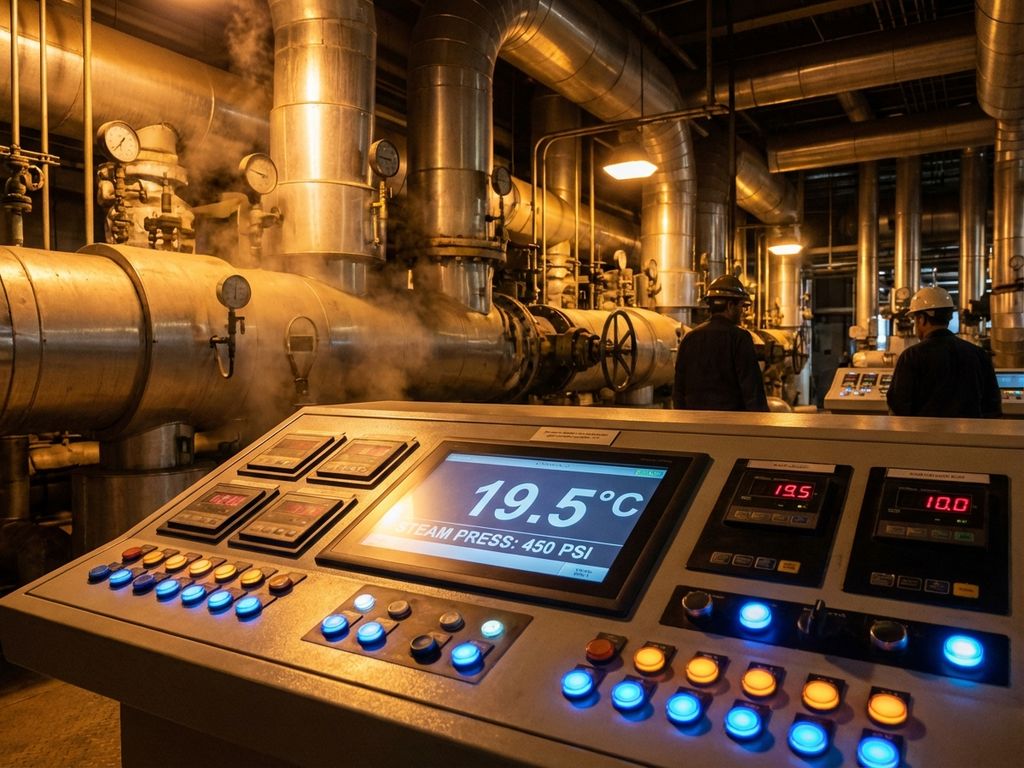
Industrial thermostats control temperature by constantly sensing the thermal state of a system and switching heating or cooling equipment on or off to hold a pre-set target, known as the setpoint. Unlike residential units, industrial versions have to cope with extreme ranges, tight tolerances, and integration with automated process control networks. That is the core of industrial thermostat temperature regulation: a sensor, a comparison against the setpoint, and a quick, reliable response. If you have ever wondered how thermostats regulate temperature on a factory floor, the principle is simple, but the engineering behind it is anything but.
What is a thermostat and how does it function in industrial environments?
A device that regulates temperature in industrial settings is fundamentally different from a residential thermostat. Industrial thermostat control systems are precision-engineered devices that automatically manage heating and cooling equipment in manufacturing and processing environments. They keep watch over ambient temperatures, process heat levels, and equipment thermal conditions, then trigger the right response to hold a setpoint with very little deviation. Modern factory temperature control systems can handle multiple zones at once, and many offer data logging and remote monitoring that industrial automation depends on.
It helps to look at what actually happens inside these devices. Bimetallic strips are the foundation of mechanical temperature control: they expand and contract with thermal changes, which creates a dependable switching action in traditional units. Electronic versions use thermocouples, resistance temperature detectors, and thermistors to deliver accurate digital readings that trigger automated responses. These sensors can detect variations as small as 0.01°C, which is the kind of resolution sensitive processes such as pharmaceutical production or semiconductor fabrication require.
The gap between residential and industrial units comes down to engineering specifications. Industrial units withstand ranges from -40°C to 300°C or higher, while a typical home thermostat covers a modest 10°C to 35°C. They deliver accuracy within ±0.1°C rather than the ±1°C tolerance of residential models. They also come with sealed enclosures, corrosion-resistant materials, and electromagnetic interference protection, because a standard thermostat would fail within days in a chemical plant, steel mill, or food processing facility.
Industrial devices also tie into building management systems and process control networks, so temperature can be monitored and adjusted centrally across an entire facility. Their durability keeps them running in dusty environments, high humidity, and chemically aggressive atmospheres where conventional units would quickly deteriorate. For facility managers, this means adjusting temperatures from a central control room, cutting labor costs and reacting faster to variations that could affect product quality or equipment performance.
How do different types of industrial thermostats control temperature?
Different thermostat designs reach the same goal in different ways. Mechanical thermostats use the physical expansion of specialized materials, while electronic versions rely on digital sensors and programmable logic controllers. Which one fits depends on the accuracy you need, the environment, how it has to integrate with other systems, and the budget. Plenty of modern facilities combine several types to get the best control in each production zone.
Mechanical thermostats rely on bimetallic elements or gas-filled bulbs that expand with heat. When temperatures rise above the setpoint, these components physically move a switch to activate cooling. As temperatures drop, contraction reverses the process and heating equipment takes over. These units work without external electrical power, but they offer limited precision.
Electronic thermostats connect temperature sensors to microprocessors that continuously compare actual readings against programmed setpoints. They are far more accurate and make complex programming schedules possible, which matters for industrial automation thermal control. Digital displays show live temperature data and system status, and multiple sensor inputs let you watch several production zones at once. These systems can log data for quality control documentation, send alerts when conditions drift from specification, and link up with enterprise resource planning systems for broader facility management.
Modern electronic temperature controllers also go beyond simple setpoint management, acting as connected nodes within Industry 4.0 architectures. Through Modbus, PROFIBUS, or OPC-UA communication protocols, a smart industrial thermostat can stream real-time temperature data to SCADA systems, cloud platforms, and enterprise dashboards. That lets plant managers keep an eye on thermal conditions across an entire facility from a single interface, which is where IIoT temperature monitoring really earns its keep. The same connectivity supports predictive maintenance: by analyzing temperature trends over time, operations teams can spot sensor drift or equipment degradation weeks before a failure occurs, which sharply reduces unplanned downtime. For many plants, this kind of Industry 4.0 temperature control is now a deciding factor when choosing new equipment.
Programmable systems add scheduling on top of that. Operators can set different temperature profiles for production shifts, weekend operations, maintenance periods, or seasonal requirements. Setpoints adjust automatically with the production schedule, which cuts energy use during idle hours and ensures a quick recovery when operations resume. Non-programmable units hold a constant setpoint and need manual adjustment when the process changes, so they suit stable applications like storage areas or simple heating tasks.
Specialized thermostat types serve specific industrial needs:
- Capillary thermostats use liquid-filled sensing tubes for remote temperature monitoring in hazardous locations
- Gas-filled units provide explosion-proof operation in volatile environments
- Digital thermostats integrate with facility networks for centralized process temperature control
What are the key benefits of proper thermostat control in industrial systems?
Good temperature control pays off in energy efficiency, equipment protection, and consistent output across a facility. Well-calibrated regulation can reduce energy consumption by 15 to 25 percent, while preventing costly damage from thermal stress and keeping product quality steady. Real-time monitoring also makes predictive maintenance possible, which means fewer surprise shutdowns and longer equipment life. In the end, these gains show up in profit margins and in how competitive a plant can be.
Energy efficiency is the most immediate and measurable benefit. Precise thermostats avoid unnecessary heating and cooling cycles, holding the right temperature without overshooting the setpoint. That removes the waste from excessive thermal cycling, which can account for 20 to 30 percent of total facility energy costs. Programmable systems go a step further by adjusting temperatures to the production schedule, saving energy during idle hours while ensuring a fast recovery when work restarts.
Equipment protection comes from preventing overheating and overcooling damage. Industrial machinery, electronic components, and process equipment all operate within specific temperature ranges. Thermostats safeguard these investments by keeping thermal conditions where they belong, which extends equipment lifespan and reduces replacement costs.
Process consistency protects product quality and manufacturing reliability. Many industrial processes need stable temperatures for chemical reactions, material processing, or quality control. Accurate thermostat control removes the variations that could compromise product specifications or cause batch failures.
Maintenance costs fall for several reasons:
- Reduced thermal stress on equipment components
- Prevention of condensation-related corrosion
- Elimination of temperature-induced material fatigue
- Decreased frequency of emergency repairs
Compliance with industrial safety standards also becomes easier to demonstrate with documented temperature control. Many regulations require specific thermal conditions for worker safety, environmental protection, or product safety, and properly functioning thermostats provide the control and monitoring needed to meet them.
Why do industrial thermostats fail and how can you prevent temperature control issues?
Industrial thermostats fail mainly because of calibration drift, sensor degradation, mechanical wear, and environmental factors. The good news is that most of these problems can be prevented with regular calibration checks, protective housing maintenance, sensor cleaning, and environmental monitoring.
Calibration drift creeps in gradually as sensors age or go through repeated thermal cycling. Readings become inaccurate, which leads to improper heating or cooling responses and affects process temperature control and energy efficiency throughout the plant. To prevent it, verify calibration quarterly with certified reference thermometers and arrange a professional recalibration once a year.
Sensor degradation happens through corrosion, contamination, or physical damage in demanding environments. Chemical exposure, moisture ingress, or vibration can compromise accuracy and undermine how well the system holds its conditions. Regular inspection and cleaning prevent most of these issues, and sensors showing physical damage or persistent calibration problems should be replaced to keep industrial temperature monitoring reliable.
Mechanical wear affects the moving parts in traditional thermostats. Bimetallic strips fatigue, switch contacts corrode, and linkages work loose over time in continuous operation. These failures cause erratic behavior or a complete shutdown, which disrupts critical factory temperature control. Preventive maintenance means systematic inspection schedules, lubrication where specified, and replacing components before they give out:
- Annual inspection of mechanical components
- Contact cleaning and adjustment
- Lubrication of moving parts where specified
- Replacement of worn components before failure
Environmental factors speed up wear on sensitive components. Excessive humidity, temperature extremes, dust accumulation, and chemical exposure all take their toll. Choosing the right enclosure, cleaning regularly, and monitoring the environment keep these impacts small.
When something does go wrong, troubleshoot systematically by testing sensor accuracy, electrical connections, and mechanical operation. Document temperature readings, system responses, and maintenance activities so that patterns pointing to an impending failure become visible. That lets you replace parts proactively before a critical system is disrupted.
How BTT Solutions helps with industrial temperature control systems
We specialize in precision thermal management components designed for demanding industrial applications. Our advanced thermostat technology optimizes thermal performance across manufacturing, processing, and automation systems through patented solutions that improve energy efficiency and operational reliability.
Our industrial temperature control solutions include:
- High-precision thermostat components with accuracy ratings exceeding standard industrial requirements
- Patented thermal management technology that reduces energy consumption through efficient fluid control
- Customized temperature sensors designed for specific industrial environments and applications
- Integrated control systems that connect with existing facility automation networks
- Robust construction engineered to withstand harsh industrial conditions while maintaining calibration accuracy
Our solutions optimize industrial heating and cooling systems by storing thermal energy only when needed and directing heat precisely where it is required. This approach lowers operational costs while improving system reliability and process consistency.
Our industrial temperature control services
Beyond supplying precision thermostat components, we support our customers at every stage of their temperature control project. Here is what that looks like in practice:
- System consultation and requirement analysis to match the right thermostat technology to your process conditions
- Custom component design and engineering for non-standard temperature ranges, enclosure ratings, or integration protocols
- Calibration and commissioning services to verify accuracy from day one
- Preventive maintenance programs tailored to your production schedule to minimize unplanned downtime
- Ongoing technical support from our team of thermal management specialists
Contact our thermal management specialists to discuss how our precision thermostat components can enhance your industrial temperature control systems and reduce energy consumption across your operations. Our team at BTT Solutions brings decades of experience in developing innovative thermal control solutions for industrial applications.


