
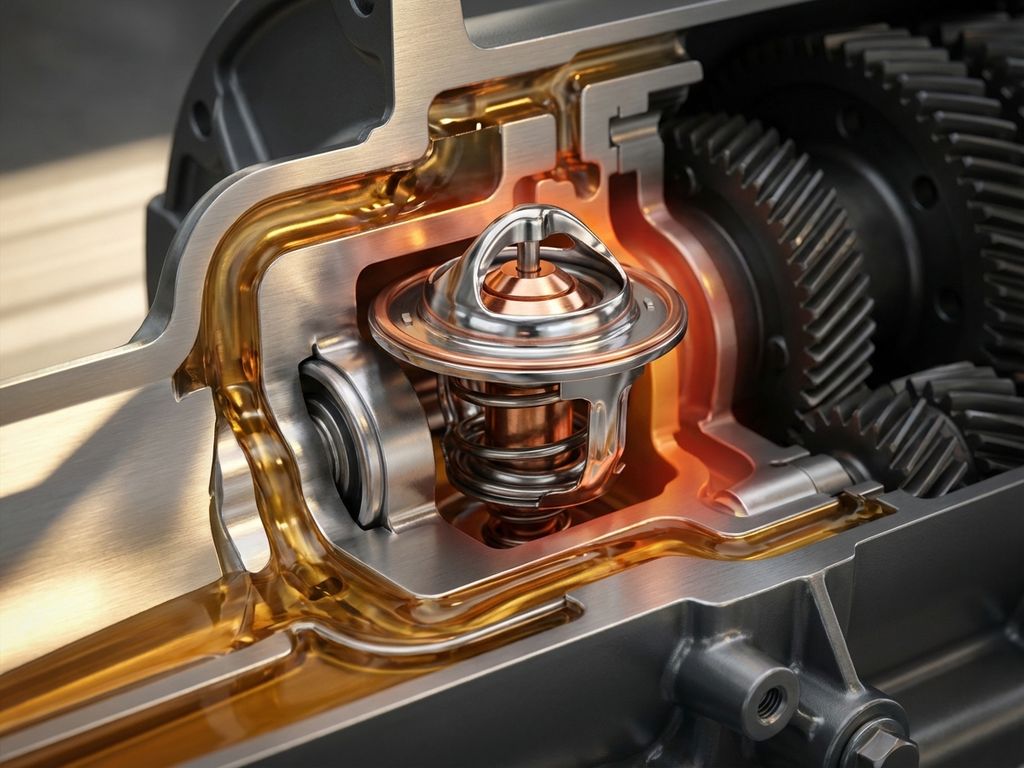
A transmission oil thermostat protects automatic gearboxes by regulating fluid temperature through controlled cooling circuits. This temperature-controlled valve automatically opens when transmission fluid exceeds safe operating temperatures, preventing component damage and extending gearbox lifespan. Understanding how these critical components work helps maintain optimal automatic transmission performance and avoid costly repairs.
What is a transmission oil thermostat and how does it work?
A transmission oil thermostat is a temperature-controlled valve that regulates automatic transmission fluid flow through cooling circuits to maintain optimal operating temperatures. This essential component monitors ATF temperature and automatically adjusts fluid flow to keep the gearbox within its ideal temperature range.
The thermostat contains a wax-filled element that expands when heated. As transmission fluid temperature rises, this thermal expansion pushes against a valve mechanism, gradually opening the cooling circuit. When temperatures drop, the wax contracts and the valve closes, reducing fluid flow. This continuous cycle ensures your automatic gearbox maintains consistent operating temperatures regardless of driving conditions.
Modern transmission thermostats typically begin to open between 85–95°C (185–203°F) and are fully open around 105–110°C (221–230°F). The precise opening temperature varies based on transmission design and manufacturer specifications, ensuring optimal gearbox thermal management for different vehicle applications.
Why do automatic transmissions need temperature control?
Automatic transmissions require temperature control because excessive heat damages internal components, degrades fluid performance, and significantly reduces gearbox lifespan. Transmission temperature control prevents costly failures and maintains smooth shifting performance throughout the vehicle’s operational life.
Heat affects transmission fluid viscosity, causing it to become thinner and less effective at lubricating moving parts. This leads to increased wear on clutches, bands, and valve bodies. Additionally, high temperatures cause rubber seals to deteriorate, resulting in leaks and pressure loss that compromise shifting quality.
Optimal ATF temperature typically ranges between 80–90°C (176–194°F) during normal operation. Temperatures exceeding 120°C (248°F) can cause rapid fluid degradation and component damage. Every 10°C increase above the optimal temperature can halve transmission fluid life, making effective thermal management crucial for automatic gearbox protection.
How does a transmission thermostat prevent gearbox overheating?
A transmission thermostat prevents gearbox overheating by automatically opening cooling circuits when ATF temperature exceeds safe thresholds. The thermostat valve function relies on thermal expansion principles to provide precise temperature regulation without external controls or electrical systems.
When transmission fluid reaches the thermostat’s opening temperature, the internal wax element expands and pushes against a spring-loaded valve. This action opens passages that allow hot ATF to flow through external cooling circuits, typically involving the radiator or a dedicated transmission cooler. The cooled fluid then returns to the gearbox, maintaining safe operating temperatures.
The system operates continuously during vehicle operation, with the valve position constantly adjusting based on fluid temperature. During cold starts, the closed thermostat allows rapid warm-up, while under heavy loads or high ambient temperatures, the fully open valve maximizes cooling capacity. This automatic ATF temperature regulation protects transmission components without driver intervention.
What happens when a transmission oil thermostat fails?
When a transmission oil thermostat fails, it typically becomes stuck either open or closed, disrupting normal temperature regulation and potentially causing transmission overheating or inefficient operation. Both failure modes create distinct symptoms that affect gearbox performance and longevity.
A stuck-closed thermostat prevents fluid flow through the cooling circuit, causing a rapid temperature rise during operation. This leads to overheating, harsh shifting, transmission slipping, and potential catastrophic internal damage. Warning signs include a burning fluid smell, erratic shifting patterns, and transmission warning lights.
A stuck-open thermostat allows constant cooling, preventing the transmission from reaching optimal operating temperature. This results in poor fuel economy, delayed engagement, sluggish shifting, and increased wear due to thick, cold fluid. The transmission may take excessive time to warm up and never reach peak efficiency, which is particularly noticeable during cold-weather operation.
How do you maintain transmission oil thermostats for optimal performance?
Automatic transmission maintenance includes regular thermostat inspection and proper fluid care to ensure optimal gearbox thermal management. Preventive maintenance extends thermostat life and maintains reliable temperature control throughout the transmission’s service life.
Regular ATF changes according to manufacturer schedules keep the thermostat clean and functioning properly. Contaminated fluid can cause thermostat valve sticking and reduced thermal efficiency. Monitor transmission temperature during operation, particularly under heavy loads or in extreme weather conditions.
Key maintenance practices include:
- Changing transmission fluid every 30,000–60,000 miles as recommended
- Inspecting cooling system components during regular service
- Monitoring for signs of overheating or delayed warm-up
- Replacing thermostats during major transmission service
- Checking coolant levels and quality in integrated cooling systems
Replace thermostats showing signs of failure immediately to prevent transmission damage. Professional diagnosis can determine thermostat condition and recommend appropriate service intervals based on operating conditions and vehicle usage patterns.
How BTT Solutions helps with transmission thermal management
We provide advanced thermostat technology specifically engineered for transmission applications, delivering precise temperature control that protects automatic gearboxes across automotive, industrial, and marine sectors. Our precision-manufactured components ensure reliable gearbox oil temperature regulation under demanding operating conditions.
Our transmission thermal management solutions include:
- High-precision thermostats with accurate opening temperatures for optimal ATF regulation
- Robust valve designs engineered for extended service life in harsh environments
- Custom temperature specifications tailored to specific transmission requirements
- Advanced materials that resist contamination and maintain consistent performance
- Comprehensive testing and quality assurance for reliable operation
Our expertise in thermal management extends beyond standard automotive applications to industrial machinery, marine vessels, and specialized equipment requiring precise transmission cooling. Contact our technical team to discuss your specific transmission thermal management requirements and discover how our advanced thermostat solutions can protect your gearbox investment.


