
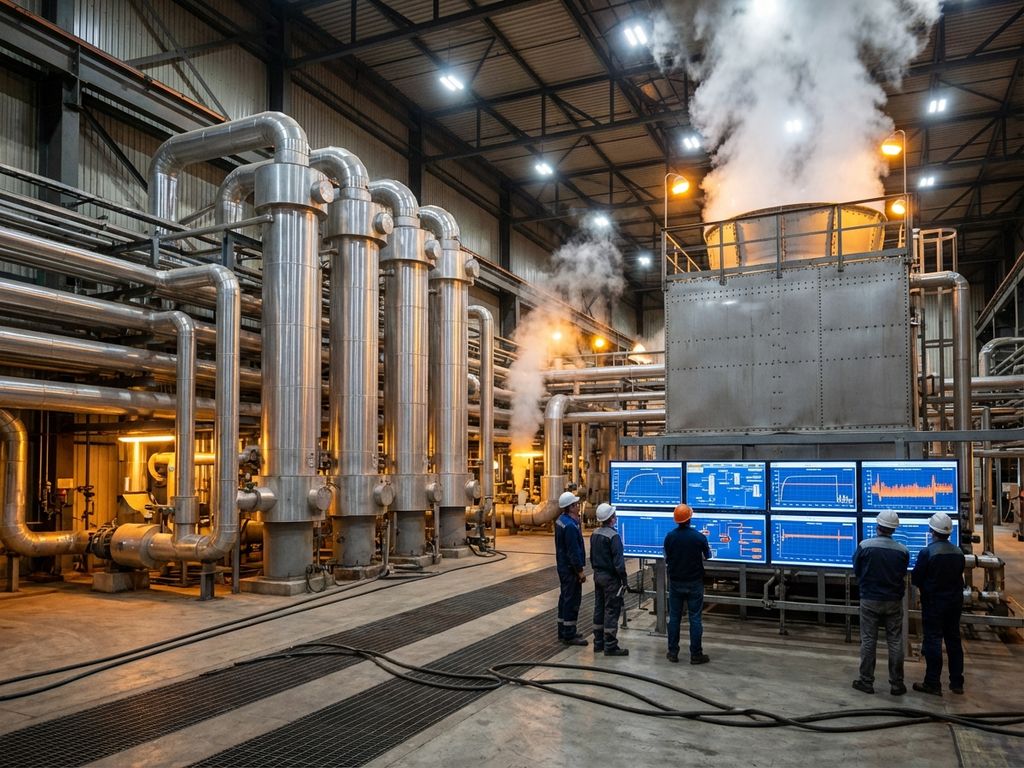
Implementing thermal management in large-scale industrial operations involves strategic planning, comprehensive assessment, and phased deployment of advanced thermal control systems. Success requires understanding your facility’s unique thermal loads, selecting appropriate technologies, and developing a systematic implementation approach. The process typically includes thermal auditing, technology selection, staff training, and ongoing optimisation to achieve effective industrial temperature control.
What is thermal management and why is it critical for large-scale industrial operations?
Thermal management is the systematic control of heat generation, distribution, and removal within industrial facilities to maintain optimal operating temperatures. It encompasses cooling systems, heat exchangers, temperature monitoring, and control technologies that regulate thermal conditions across manufacturing processes, equipment, and work environments.
Large-scale industrial operations generate substantial heat through manufacturing processes, heavy machinery, electrical systems, and chemical reactions. Steel production facilities, automotive plants, chemical processing centres, and data centres all face significant thermal challenges. Without proper industrial thermal control, equipment operates inefficiently, experiences accelerated wear, and consumes excessive energy.
Poor thermal control directly impacts productivity and profitability. Overheating causes equipment shutdowns, reduces processing speeds, and increases maintenance requirements. Workers in excessively hot environments experience decreased productivity and safety risks. Energy costs soar when cooling systems work harder to compensate for inadequate thermal efficiency planning.
What are the main challenges of implementing thermal management in large industrial facilities?
Scale-related complexities dominate thermal management challenges in large facilities. Managing temperature across thousands of square metres requires coordinated systems, extensive infrastructure, and significant capital investment. Industrial heat management becomes exponentially more complex as facility size increases, requiring sophisticated monitoring and control networks.
Equipment diversity creates varying thermal requirements throughout facilities. Manufacturing areas may need precise temperature control, while storage zones require different conditions. Welding stations generate intense localised heat, while computer-controlled systems need consistently cool environments. Each area demands tailored thermal solutions that integrate effectively.
Integration with existing systems presents substantial challenges. Retrofitting thermal management into operational facilities requires careful planning to avoid production disruptions. Legacy equipment may lack modern thermal monitoring capabilities, requiring creative solutions to achieve comprehensive temperature control without complete system replacement.
Budget considerations often limit implementation scope. Large-scale thermal systems require significant upfront investment, though they typically provide excellent long-term returns through energy savings and equipment protection. Maintenance and monitoring across extensive facilities demand ongoing resource allocation and skilled personnel.
How do you assess thermal management needs for large-scale industrial operations?
Conducting comprehensive thermal audits provides the foundation for effective implementation. Begin by mapping your facility’s heat sources, including manufacturing equipment, lighting systems, HVAC units, and process-related thermal loads. Document current temperature zones, identifying areas with excessive heat generation or inadequate cooling capacity.
Evaluate existing system performance through temperature monitoring and energy consumption analysis. Install temporary sensors throughout the facility to gather baseline data on thermal patterns, peak load periods, and system inefficiencies. These data reveal priority areas requiring immediate attention and help quantify potential improvements.
Identify thermal loads by categorising heat sources according to intensity, duration, and criticality. Manufacturing processes typically generate the highest thermal loads, followed by electrical systems and ambient factors. Understanding load patterns enables proper sizing of large-scale thermal systems and ensures adequate capacity during peak operations.
Map temperature zones to understand thermal distribution across your facility. Create detailed floor plans showing heat generation areas, cooling requirements, and airflow patterns. This mapping exercise reveals opportunities for improved thermal efficiency and guides equipment placement decisions.
What technologies and systems are most effective for large-scale industrial thermal management?
Advanced cooling systems form the backbone of effective industrial thermal control. Chilled water systems, precision air conditioning, and evaporative cooling technologies provide reliable temperature regulation for large spaces. Modern systems incorporate variable-speed drives and intelligent controls that adjust cooling capacity based on real-time thermal loads.
Smart thermal control technologies enable automated temperature management through sensors, controllers, and software integration. These systems continuously monitor thermal conditions, predict cooling requirements, and adjust operations automatically. Programmable logic controllers coordinate multiple cooling zones, optimising energy consumption while maintaining precise temperature control.
Energy-efficient heat exchangers capture and redirect waste heat for productive uses. Plate heat exchangers, shell-and-tube designs, and heat recovery ventilators reduce overall energy consumption by utilising thermal energy that would otherwise be wasted. These systems often provide attractive returns on investment through reduced heating and cooling costs.
IoT integration and predictive maintenance technologies enhance system reliability and efficiency. Connected sensors provide real-time thermal data, enabling proactive maintenance scheduling and performance optimisation. Predictive analytics identify potential equipment failures before they occur, preventing costly downtime and maintaining consistent thermal control.
How do you develop an implementation strategy for industrial thermal management systems?
Planning phases progress from assessment through design, procurement, installation, and commissioning. Begin with detailed engineering studies that specify equipment requirements, infrastructure modifications, and integration approaches. Develop comprehensive project timelines that coordinate thermal system installation with ongoing operations to minimise production disruptions.
Budget considerations should include equipment costs, installation expenses, infrastructure modifications, and ongoing operational costs. Calculate return on investment through energy savings, reduced maintenance costs, and improved productivity. Many organisations find that thermal management implementation pays for itself within two to four years through operational improvements.
Phased implementation approaches reduce risk and financial burden while providing immediate benefits. Start with the most critical areas or highest-impact improvements, then expand systematically. This approach allows you to refine processes, train staff gradually, and demonstrate value before full-scale deployment.
Staff training requirements encompass system operation, maintenance procedures, and troubleshooting techniques. Ensure operators understand thermal control principles, safety protocols, and emergency procedures. Ongoing training keeps staff current with system updates and best practices for optimal performance.
How does BTT Solutions help with large-scale industrial thermal management implementation?
We provide comprehensive thermal management solutions specifically designed for large-scale industrial applications. Our expertise spans automotive manufacturing, chemical processing, and heavy industry, where precise temperature control directly impacts production quality and operational efficiency.
Our approach includes:
- Complete thermal audits and system design tailored to your facility’s unique requirements
- Advanced thermostat components and control systems engineered for industrial environments
- Integration services that connect new thermal management systems with existing infrastructure
- Ongoing optimisation support to maximise energy efficiency and system performance
- Comprehensive training programmes for your maintenance and operations teams
We specialise in creating thermal management solutions that reduce energy consumption while improving operational reliability. Our industrial-grade components withstand demanding environments and provide precise temperature control across large facilities. Contact us to discuss how our thermal management expertise can optimise your industrial operations and reduce energy costs, backed by our extensive experience in industrial temperature control solutions.


