
Your engine’s warm-up strategy plays a bigger role in long-term reliability than many drivers realize. When you start your car on a cold morning, the first few minutes of operation set the stage for how well your engine performs over its entire lifespan. Modern engines face increasing demands for efficiency and performance, making proper thermal management more important than ever.
Understanding the connection between temperature control and engine longevity helps you make better decisions about maintenance and driving habits. The way your engine reaches its optimal operating temperature affects everything from oil circulation to component wear patterns, ultimately determining whether your vehicle serves you reliably for years to come.
Why Engine Warm-up Directly Impacts Long-term Reliability
Cold engines operate under significantly more stress than their warmed-up counterparts. When metal components haven’t reached their designed operating temperatures, they expand and contract at different rates, creating gaps and tight spots that weren’t part of the original engineering specifications. This thermal mismatch leads to increased friction, uneven wear patterns, and reduced efficiency across all engine systems.
Oil viscosity changes dramatically with temperature, affecting how well it protects moving parts during startup. Cold oil flows like thick syrup, taking longer to reach critical components and leaving them temporarily underlubricated. Meanwhile, fuel combustion becomes less efficient in cold chambers, leading to incomplete burning that can deposit carbon buildup on valves and pistons over time.
The relationship between warm-up time and component lifespan becomes clear when you consider that most engine wear occurs during the first few minutes of operation. Engines that consistently reach their optimal temperature quickly and smoothly experience less cumulative damage than those subjected to prolonged cold running or rapid temperature swings.
How Modern Thermal Management Systems Optimize Warm-up
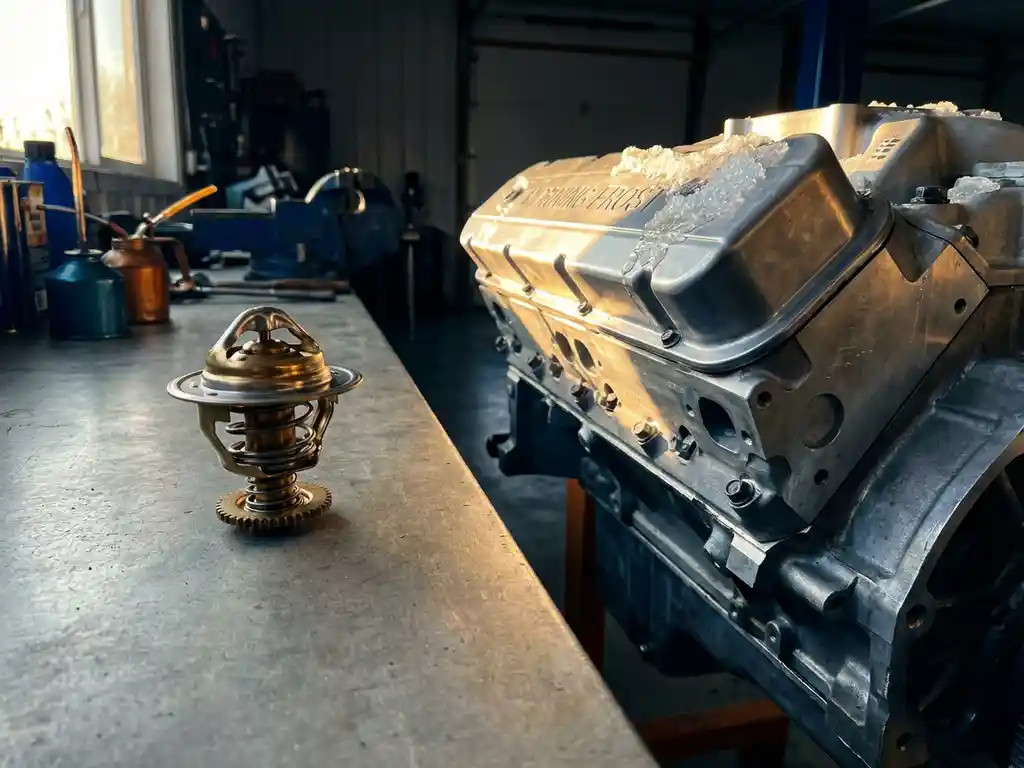
Today’s automotive thermal systems use sophisticated thermostat technology to control coolant flow with remarkable precision. These systems keep coolant circulation minimal during startup, allowing the engine block to reach operating temperature faster while preventing hot spots that could cause damage. Once the optimal temperature range is achieved, the thermostat opens gradually to maintain consistent conditions.
Advanced thermal management goes beyond simple temperature control. Modern systems coordinate multiple heating and cooling circuits, managing everything from transmission fluid temperature to cabin heating without compromising engine warm-up efficiency. This integrated approach ensures that auxiliary systems don’t draw heat away from the engine during the critical warm-up phase.
Smart Temperature Regulation
Electronic thermostats can adjust their opening temperatures based on operating conditions, engine load, and ambient temperature. This adaptability means your engine reaches its ideal operating range faster in winter conditions while maintaining optimal cooling during summer driving or under heavy loads.
What Happens During Improper Engine Warm-up Cycles
Rushing the warm-up process by revving a cold engine or immediately driving at high speeds creates a cascade of problems. Rapid temperature changes cause thermal shock in engine components, leading to microcracks in cylinder heads and warped surfaces that affect sealing. These issues often don’t manifest immediately but accumulate over time, eventually requiring expensive repairs.
Conversely, extended idling during warm-up wastes fuel and can actually harm modern engines. Prolonged idling prevents the engine from reaching proper operating temperature efficiently and can lead to carbon buildup in the intake system. The optimal approach involves gentle driving that allows gradual temperature increases while providing the load necessary for complete combustion.
Inconsistent warm-up patterns confuse adaptive engine management systems, which rely on predictable temperature curves to optimize fuel injection, ignition timing, and emissions control. When these systems can’t establish reliable baselines, overall engine performance and efficiency suffer throughout the vehicle’s life.
Proven Strategies for Extending Engine Life Through Temperature Control
The most effective warm-up strategy involves starting your engine and letting it idle for just 30-60 seconds before driving gently. This brief idle period allows oil pressure to build and initial circulation to begin without wasting fuel or extending the warm-up process unnecessarily. Modern engines are designed to warm up most efficiently under light-load conditions.
During the first few miles of driving, keep engine speeds moderate and avoid heavy acceleration or high RPMs until the temperature gauge shows the engine has reached its normal operating range. This typically takes 5-10 minutes of normal driving, depending on ambient conditions and engine design.
Seasonal Considerations
Winter driving requires extra attention to warm-up strategy. Consider using engine block heaters in extremely cold climates to reduce startup stress. In summer, be aware that hot weather can cause engines to reach operating temperature more quickly, but cooling system efficiency becomes more important for preventing overheating during extended operation.
Regular maintenance of your cooling system components supports optimal warm-up performance. Clean radiators, fresh coolant, and properly functioning thermostats ensure that your engine’s thermal management system operates as designed, protecting your investment over the long term.
How BTT Solutions Supports Optimal Engine Temperature Control
We specialize in developing precision thermostat technology and thermal management components that optimize engine warm-up cycles for maximum reliability. Our advanced thermal systems help engines reach their ideal operating temperatures efficiently while preventing the temperature fluctuations that cause long-term damage.
Our solutions include:
- High-precision thermostats that respond accurately to temperature changes
- Integrated thermal management systems for coordinated temperature control
- Custom temperature sensors for precise monitoring and control
- Durable components designed for extended service life
Ready to improve your engine’s thermal management and extend its operational life? Contact us to discuss how our thermal solutions can optimize your specific applications, or explore our complete range of thermal management products to find the right components for your needs.


