
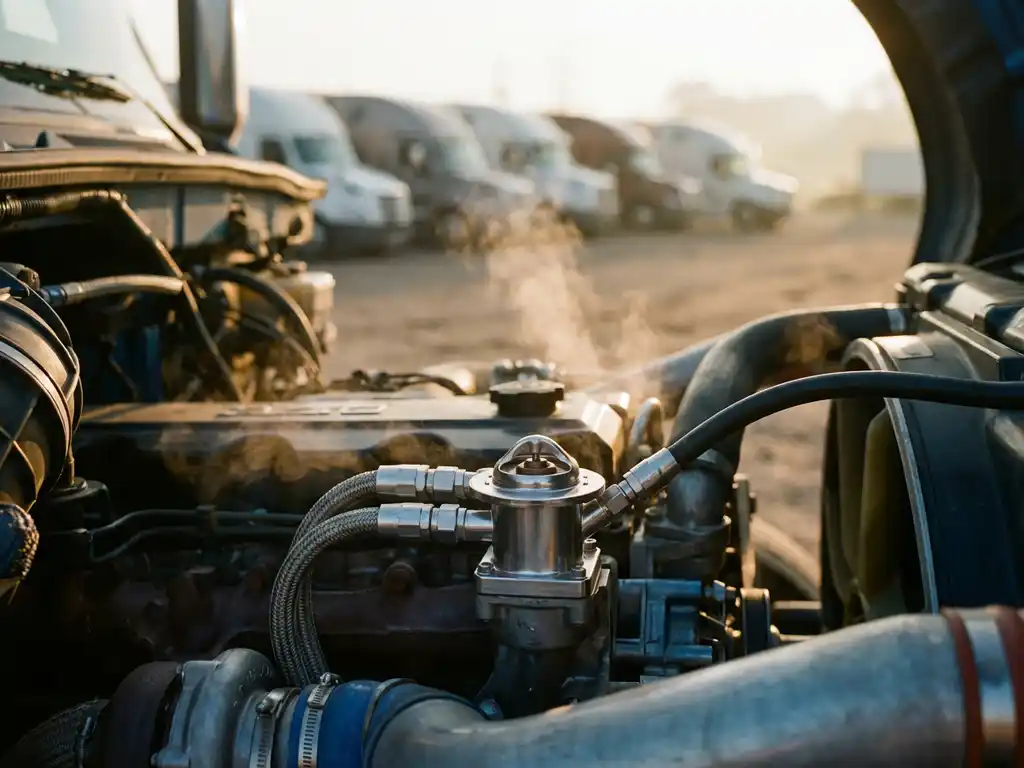
Fleet managers constantly seek ways to reduce operational costs while maintaining vehicle performance. One often overlooked factor significantly affects both fuel consumption and long-term engine health: how quickly engines reach their optimal operating temperature. When engines warm up faster, they operate more efficiently, consume less fuel, and produce fewer harmful emissions that can lead to costly maintenance issues down the road.
Understanding the relationship between engine warm-up time and fuel costs can transform your fleet’s bottom line. Modern thermal management solutions offer practical ways to accelerate this process, delivering measurable savings across your entire vehicle lineup.
Why Cold Engine Performance Impacts Fleet Budgets
Cold engines consume significantly more fuel than those operating at an optimal temperature. During the initial startup phase, engines require richer fuel mixtures to compensate for incomplete combustion, directly increasing fuel consumption by 15–25% compared to warmed-up engines. This inefficiency extends beyond the first few minutes of operation.
The financial impact multiplies across fleet operations where vehicles frequently start cold throughout the day. Delivery trucks, service vehicles, and equipment that sit idle between jobs face this challenge repeatedly. Poor thermal management also accelerates engine wear, leading to higher maintenance costs and shorter vehicle lifespans that strain fleet budgets over time.
How Advanced Thermostat Technology Accelerates Warm-Up
Modern thermostat systems use precision-engineered components that respond more quickly to temperature changes than traditional designs. These advanced systems open and close at exact temperature thresholds, ensuring coolant flows at precisely the right moment to optimize heat distribution throughout the engine block.
Smart thermostat technology incorporates multiple temperature sensors that monitor different engine zones simultaneously. This comprehensive monitoring enables more responsive temperature control, reducing warm-up time by up to 30% compared to conventional single-point systems. The result is faster achievement of optimal operating temperatures and immediate improvements in fuel efficiency.
Strategic Engine Block Heating Solutions for Fleets
Engine block heaters provide direct thermal input before startup, dramatically reducing the time needed to reach operating temperature. For fleet applications, programmable heating systems can activate automatically before scheduled departures, ensuring engines start warm rather than cold.
Investing in block-heating infrastructure pays dividends through reduced fuel consumption and decreased engine wear. Fleet managers report fuel savings of 10–15% in cold-weather operations when implementing comprehensive preheating strategies. These systems also reduce harmful emissions during startup, helping fleets meet environmental compliance requirements.
Optimizing Coolant Flow for Faster Heat Distribution
Efficient coolant circulation accelerates the distribution of heat throughout the engine system. Advanced coolant management involves both proper fluid selection and optimized flow patterns that ensure even temperature distribution across all engine components.
High-performance coolant formulations transfer heat more effectively than standard mixtures, while precision-designed flow channels direct heated coolant to critical engine areas first. This targeted approach ensures that temperature-sensitive components reach optimal operating conditions quickly, reducing the overall warm-up period and improving fuel efficiency from the moment of startup.
Measuring ROI from Thermal Management Investments
Calculating return on investment for thermal management upgrades requires tracking both fuel consumption data and maintenance costs over time. Fleet managers should establish baseline measurements before implementing improvements, then monitor fuel usage patterns, engine performance metrics, and maintenance intervals to quantify savings.
Most thermal management investments show positive returns within 12–18 months through reduced fuel costs alone. Additional savings from decreased maintenance requirements and extended engine life often double the total return on investment. Comprehensive tracking systems help fleet managers identify which thermal solutions have the greatest impact for their specific operating patterns.
How BTT Solutions Helps with Fleet Thermal Management
We specialize in developing precision thermal management components that directly address fleet fuel-efficiency challenges. Our advanced thermostat technology and temperature control systems help fleet operators achieve faster engine warm-up times and measurable fuel savings across their vehicle lineups.
Our solutions include:
- High-precision thermostat systems designed for rapid response and optimal temperature control
- Custom thermal management solutions tailored to specific fleet requirements
- Comprehensive temperature sensors that provide real-time monitoring capabilities
- Expert consultation on implementing thermal-efficiency improvements across fleet operations
Ready to reduce your fleet fuel costs through better thermal management? Contact our team to discuss how our thermal management solutions can deliver measurable savings for your specific fleet operations.
Related Articles
- How are thermostat components manufactured at scale?
- Can thermostat components be customized for non-standard temperature ranges?
- What is the difference between engine efficiency and fuel economy?
- How does engine backpressure reduce overall efficiency?
- How do automotive thermostats compare to industrial temperature control systems?


