
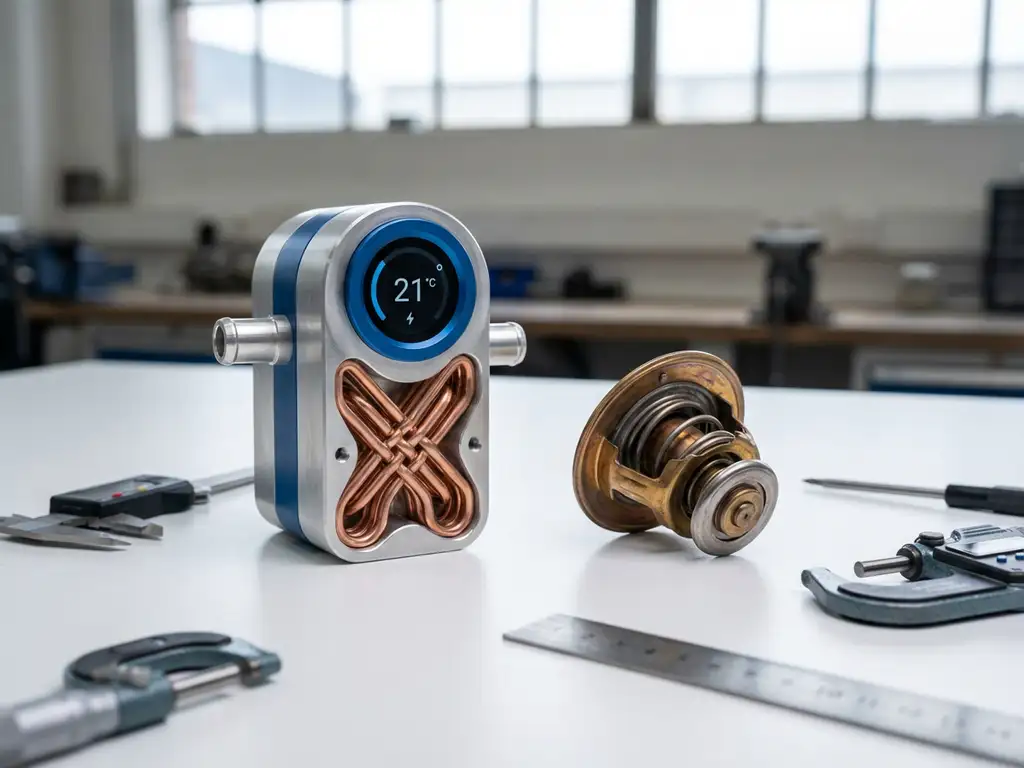
The shift from traditional gasoline engines to electric vehicles has brought about significant changes in automotive technology, including how we manage temperature control. While both systems need to maintain optimal operating temperatures, the way they achieve this differs dramatically. Understanding these differences helps engineers and automotive professionals make informed decisions about thermal management solutions for modern vehicles.
Electric vehicle thermostats represent a completely different approach to temperature regulation compared with their gasoline-engine counterparts. As the automotive industry continues its transition toward electrification, these thermal management systems are becoming increasingly sophisticated to meet new performance demands.
What is the main difference between electric vehicle and gas engine thermostats?
Electric vehicle thermostats manage multiple thermal zones simultaneously, while gasoline-engine thermostats primarily control a single coolant circuit. EVs require precise temperature control for batteries, power electronics, and motors, whereas traditional engines focus mainly on preventing overheating and maintaining optimal combustion temperatures.
In gasoline engines, thermostats operate relatively simply. They open and close based on coolant temperature, typically around 85–95°C (185–203°F), allowing coolant to flow through the radiator when the engine gets too hot. This system has worked reliably for decades because internal combustion engines generate consistent heat patterns.
Electric vehicles face a more complex challenge. The battery pack needs to stay within a narrow temperature range for optimal performance and longevity, usually between 20–40°C (68–104°F). Power electronics generate heat spikes during acceleration, while electric motors have different thermal characteristics than combustion engines. This means EV thermostats must coordinate multiple cooling circuits and respond to varying heat loads across different components.
How do electric vehicle cooling systems work differently than gas engines?
Electric vehicle cooling systems use multiple independent circuits with electronically controlled thermostats, unlike gasoline engines, which rely on single-circuit, mechanically operated thermostats. EV systems actively manage temperatures across battery packs, inverters, and motors using sophisticated control algorithms.
Traditional gasoline engines produce abundant waste heat that needs to be removed consistently. The cooling system design reflects this straightforward need. Coolant flows through the engine block, absorbs heat, and passes through a radiator, where air removes the excess thermal energy. A mechanical thermostat opens when coolant reaches a predetermined temperature.
Electric vehicles take a different approach entirely. They use what engineers call thermal management systems rather than simple cooling systems. These systems can both heat and cool components as needed. During cold weather, the system might warm the battery pack to improve performance while simultaneously cooling power electronics that generate heat during operation.
The control strategy also differs significantly. While gasoline-engine thermostats respond purely to local temperature, EV thermal management systems use data from multiple sensors, vehicle speed, ambient conditions, and even driving patterns to predict thermal needs and adjust accordingly.
Why do electric vehicles need more complex thermal management?
Electric vehicles require complex thermal management because their components have vastly different optimal temperature ranges and thermal behaviors. Battery performance degrades rapidly outside narrow temperature windows, while power electronics need protection from heat spikes that can cause permanent damage.
Battery chemistry drives much of this complexity. Lithium-ion batteries lose capacity and lifespan when they operate too hot or too cold. At low temperatures, batteries cannot deliver full power, reducing vehicle range and performance. At high temperatures, chemical reactions accelerate, leading to permanent capacity loss and safety concerns.
Power electronics present another challenge. Inverters and DC-DC converters generate intense heat during rapid acceleration or charging. Unlike engines that produce relatively steady heat, these components create sudden thermal spikes that require an immediate response. Traditional mechanical thermostats simply cannot react quickly enough.
Range anxiety also plays a role in thermal system complexity. Every bit of energy used for heating or cooling reduces driving range. EV thermal systems must balance component protection with energy efficiency, often using waste heat from one component to warm another or preconditioning the cabin while plugged in to preserve battery power.
What are the key components in EV thermal management systems?
Key components in EV thermal management systems include electronic thermostats, heat pumps, thermal interface materials, and integrated control units. These work together to manage multiple cooling circuits, heat exchangers, and temperature sensors throughout the vehicle.
Electronic thermostats form the heart of modern EV thermal systems. Unlike mechanical versions, these can open and close rapidly in response to electronic signals. They often include multiple valves that can direct coolant flow between different circuits, allowing the system to prioritize cooling for the most critical components at any given moment.
Heat pumps have become increasingly common in EVs because they can both heat and cool efficiently. During winter, they can warm the cabin and battery pack using less energy than traditional resistance heaters. In summer, they provide air conditioning while also cooling vehicle components.
Thermal interface materials help transfer heat between components and cooling systems. These specialized materials ensure efficient heat transfer from batteries and electronics to the coolant, maximizing the effectiveness of the thermal management system.
Integrated controllers tie everything together, processing inputs from dozens of temperature sensors and adjusting system operation in real time. These controllers can predict thermal needs based on driving patterns and adjust the system proactively rather than reactively.
How BTT Solutions Helps with Electric Vehicle Thermal Management
We understand the unique challenges that electric vehicle thermal management presents. Our advanced automotive thermostats are specifically designed to handle the complex, multi-circuit cooling requirements that EVs demand. Rather than offering one-size-fits-all solutions, we work closely with automotive manufacturers to develop customized thermal management components that optimize both performance and energy efficiency.
Our EV thermal management solutions include:
- Electronically controlled thermostats for rapid response times
- Multi-zone temperature regulation systems
- Integrated sensors for precise thermal monitoring
- Energy-efficient components that minimize range impact
Ready to discuss how our thermal management expertise can support your electric vehicle development projects? Contact us today to explore how we can help optimize your EV thermal systems for maximum performance and efficiency.
