
Choosing the right thermostat can feel overwhelming, with so many options available today. Whether you’re looking for something simple to control your home’s temperature or need precise control for automotive applications, understanding what makes a thermostat user-friendly is important for making the right choice.
Modern thermostats range from basic manual units to sophisticated smart devices that learn your preferences. The “best” thermostat depends on your specific needs, your technical comfort level, and the application you’re using it for. Let’s explore what makes thermostats easy to use and help you find the perfect match for your situation.
What makes a thermostat easy to use?
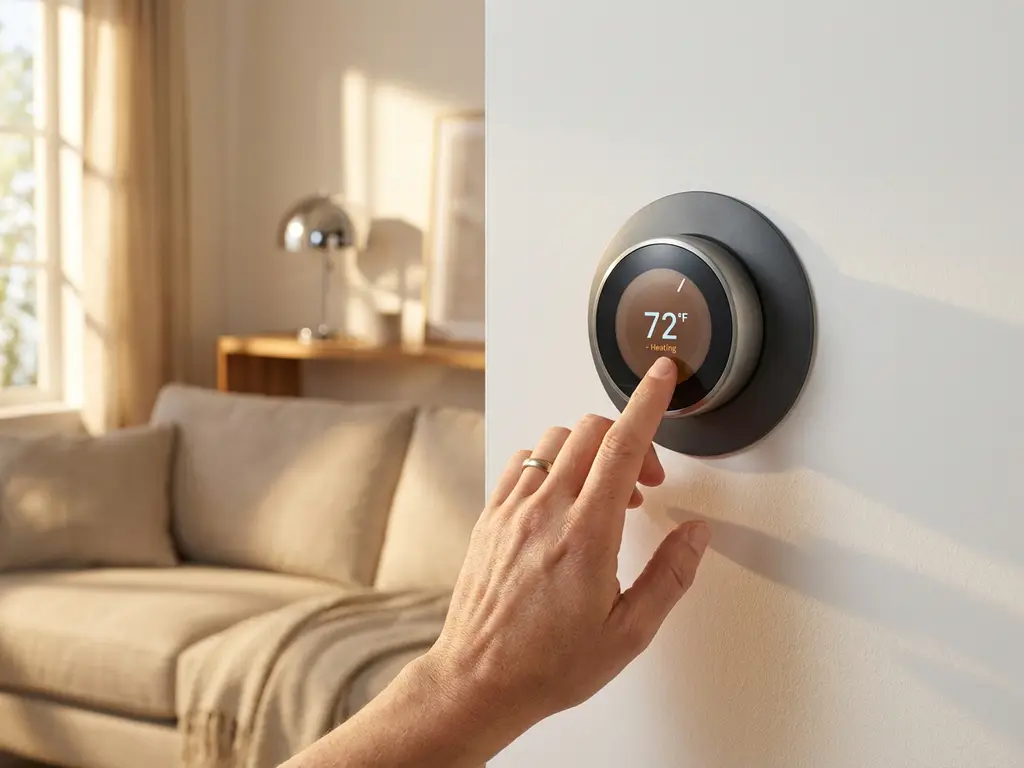
An easy-to-use thermostat features intuitive controls, clear displays, and straightforward programming options that don’t require extensive technical knowledge. The most user-friendly thermostats have large, readable screens with simple button layouts or touch interfaces that respond quickly to your inputs.
Several factors contribute to a thermostat’s ease of use. First, the display should show the current temperature, the set temperature, and system status clearly, without cluttering the screen with unnecessary information. Second, the menu structure should be logical and shallow, meaning you shouldn’t have to navigate through multiple layers to change basic settings.
Physical design matters, too. Buttons should be well spaced and clearly labeled, while touchscreens should be responsive without being overly sensitive. Many users prefer thermostats with backlighting for easy reading in low-light conditions. For automotive thermostats, precision and reliability become even more important, as they directly affect engine performance and efficiency.
What’s the difference between programmable and smart thermostats?
Programmable thermostats allow you to set temperature schedules in advance, while smart thermostats connect to Wi-Fi and can be controlled remotely through smartphone apps, often featuring learning capabilities and advanced automation.
Programmable thermostats represent the middle ground between basic manual units and smart technology. You can set different temperatures for different times of day and different days of the week, which helps save energy when you’re away from home. Most programmable units offer 7-day scheduling with multiple temperature periods per day.
Smart thermostats take convenience to the next level. They learn your habits over time, can detect when you’re home or away using geofencing technology, and allow remote control from anywhere with internet access. Many integrate with voice assistants and home automation systems. However, they typically cost more and require a stable Wi-Fi connection to function optimally.
For beginners, programmable thermostats often provide the best balance of features and simplicity, while smart thermostats suit tech-savvy users who want maximum control and automation.
Which thermostat is best for beginners?
Basic programmable thermostats with simple 5-2 day scheduling (weekdays and weekends) are typically best for beginners, offering energy savings without overwhelming complexity. Look for models with large displays and clearly marked buttons.
When starting out, avoid thermostats with too many advanced features that you won’t use. A good beginner thermostat should have these characteristics: a clear temperature display in large numbers (showing both Celsius and Fahrenheit, with Celsius as the primary reading), simple up and down arrows for temperature adjustment, and basic programming for weekday and weekend schedules.
Many beginners find success with thermostats that have preset energy-saving programs. These eliminate the guesswork of creating schedules from scratch. Some models include helpful features like temporary hold buttons for overriding the schedule without losing your programmed settings.
Consider your household routine when choosing. If your schedule varies significantly, a smart thermostat might actually be easier, despite being more advanced, as it can adapt automatically rather than requiring manual schedule programming.
How do you install a thermostat without professional help?
Most thermostat installations involve turning off the power, removing the old unit, connecting matching wires to the new thermostat’s terminals, and mounting the new device. Always photograph wire connections before removal, and follow the manufacturer’s wiring diagram carefully.
Start by turning off power to your heating and cooling system at the circuit breaker. Remove the old thermostat’s cover and take a clear photo of the wire connections before disconnecting anything. Most residential systems use standard wire colours: red for power, white for heating, yellow for cooling, and green for the fan.
Install the new thermostat’s mounting plate level on the wall, then connect wires to the corresponding terminals on the new unit. Most modern thermostats use push-in terminals or clearly labelled screw terminals that make connections straightforward.
After connecting all wires and mounting the thermostat, restore power and test both heating and cooling functions. If something doesn’t work correctly, double-check your wire connections against both your photo and the installation manual. When in doubt, consulting a professional ensures safety and proper operation.
How BTT Solutions helps with automotive thermostats
We specialise in developing high-precision automotive thermostats that deliver optimal engine performance while remaining straightforward for manufacturers to integrate. Our advanced thermostat technology reduces energy consumption through efficient coolant management, ensuring heat is stored only when needed for maximum fuel efficiency.
Our comprehensive automotive thermostat solutions include:
- Precision-engineered thermostats for optimal engine temperature control
- Advanced temperature sensors for accurate monitoring
- Custom solutions tailored to specific automotive applications
- End-to-end support from design to implementation
As a global leader in thermal management components, we understand that the best automotive thermostats combine precision engineering with reliable operation. Our products help automotive manufacturers achieve better fuel efficiency and reduced emissions while maintaining the simplicity that engineers value. Ready to explore how our thermal management solutions can benefit your automotive applications? Contact us to discuss your specific requirements with our expert team.
Related Articles
- Why do fleet operators prioritize engine longevity over short-term savings?
- What factors should OEMs consider when selecting a thermostat supplier?
- How do temperature sensors work in thermal systems?
- How do coolant regulators differ from standard thermostats?
- How do thermostats reduce engine warm-up time?

