
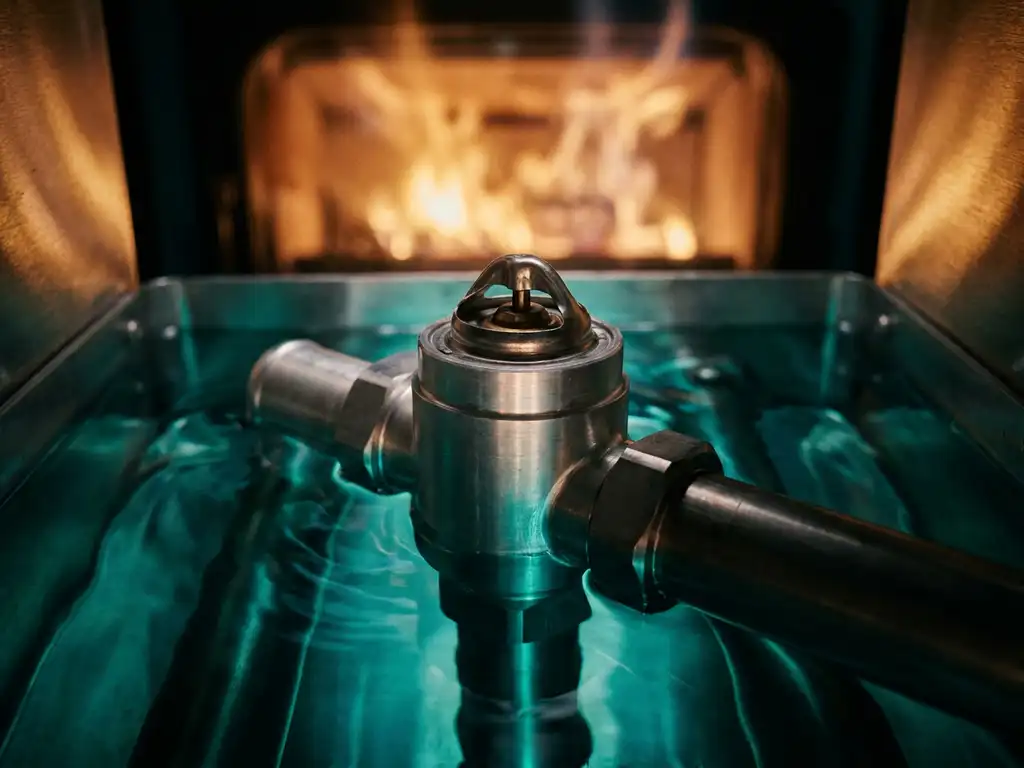
Coolant temperature directly affects combustion efficiency by controlling how well the engine reaches and maintains its ideal operating temperature. When engine coolant runs too cold, fuel does not atomize or burn completely, which wastes energy and increases emissions. When it runs too hot, it risks detonation, component damage, and a sharp drop in power output. The sections below walk through each stage of that relationship, from cold starts to thermostat technology.
What happens inside an engine when coolant is too cold?
When coolant temperature is too low, the engine cannot sustain efficient combustion. Cold cylinder walls cause fuel droplets to condense rather than vaporize, meaning the air-fuel mixture burns incompletely. The engine control unit compensates by injecting extra fuel, which increases consumption, raises hydrocarbon emissions, and leaves unburned residue on cylinder walls and exhaust components.
Beyond the combustion chamber itself, cold engine coolant keeps oil viscosity high, which increases internal friction across the crankshaft, camshaft, and valvetrain. More energy goes toward overcoming that friction rather than driving the wheels. Cold starts are unavoidable, but prolonged low-temperature operation, often caused by a stuck-open thermostat or excessive idling in cold climates, means the engine spends far too long in this inefficient state.
There is also a less obvious consequence: catalytic converters need heat to activate. A cold-running engine delays that activation window, so exhaust gases pass through largely untreated for longer than they should. This is one of the main reasons short urban trips tend to produce disproportionately high emissions per kilometer compared to highway driving.
What is the optimal coolant temperature range for combustion?
The optimal coolant temperature for most petrol and diesel engines sits between 85°C and 105°C. Within this range, the engine reaches what engineers call thermal equilibrium: fuel atomizes cleanly, combustion is complete, oil flows freely, and thermal expansion of metal components reaches the tolerances the engine was designed around. Operating within this window consistently is one of the simplest ways to protect both efficiency and longevity.
The precise target varies by engine design. High-performance engines and some modern turbocharged units are calibrated toward the lower end of that range to manage charge air temperatures and reduce knock risk. Heavy-duty diesel engines, particularly in commercial vehicles, often run slightly higher to maximize combustion completeness and reduce particulate output. The key point is that the range is narrow, and deviations in either direction carry real costs in fuel and emissions.
How does overheating coolant damage combustion efficiency?
When coolant temperature climbs above its design threshold, combustion efficiency drops because the engine enters a self-protective mode and because the physics of combustion change. Excessively hot intake air and cylinder walls reduce the density of the air-fuel charge, meaning less oxygen enters each cycle. The engine management system retards ignition timing to prevent knock, which directly reduces thermal efficiency and power output.
Sustained overheating also causes pre-ignition, where the air-fuel mixture ignites before the spark plug fires. This uncontrolled combustion generates pressure spikes that stress pistons, connecting rods, and head gaskets. Even short episodes of severe overheating can warp cylinder heads or damage piston rings, leading to compression loss that permanently degrades combustion quality. Coolant that has been overheated repeatedly also degrades chemically, losing its ability to transfer heat efficiently and protect metal surfaces from corrosion.
How does a thermostat regulate coolant temperature for efficiency?
A thermostat regulates engine coolant temperature by acting as a gatekeeper between the engine block and the radiator. When the engine is cold, the thermostat stays closed, trapping coolant inside the engine so it heats up quickly. Once coolant reaches the thermostat’s opening temperature, typically around 87°C to 92°C, the valve opens progressively, allowing hot coolant to flow to the radiator where it releases heat before returning to the engine.
This regulation is not binary. A well-designed thermostat modulates continuously, opening wider as temperature rises and closing slightly if the engine cools, maintaining the coolant within a narrow operating band. That precision is what makes the thermostat one of the most consequential components in the entire thermal management system. A thermostat that sticks open keeps the engine cold and inefficient. One that sticks closed allows dangerous overheating. Either failure has immediate consequences for both fuel efficiency and engine health.
What’s the difference between a standard and an electronic thermostat?
The key difference is how each thermostat receives its opening signal. A standard wax-element thermostat responds purely to the physical temperature of the coolant around it, expanding a wax pellet to push the valve open at a fixed calibration point. An electronic thermostat, by contrast, receives commands from the engine control unit and can adjust its opening point dynamically based on load, speed, and operating conditions.
Standard wax-element thermostat
The wax-element design is reliable, simple, and requires no electrical input. The wax pellet expands at a precisely calibrated temperature, mechanically opening the valve. This makes it robust and low-cost, which is why it remains standard in many vehicles. Its limitation is inflexibility: it always opens at the same temperature regardless of whether the engine is under light urban load or full motorway load.
Electronic thermostat
An electronic thermostat allows the engine management system to raise the target coolant temperature during light-load cruising, which improves thermodynamic efficiency and reduces friction losses, and then lower it under high load to protect against knock and overheating. This dynamic control can meaningfully improve fuel economy across a real-world driving cycle. It also enables faster warm-up strategies and tighter integration with emissions control systems, which is increasingly important as regulatory standards tighten in 2026 and beyond.
How does coolant temperature management reduce vehicle emissions?
Precise coolant temperature management reduces vehicle emissions by ensuring the combustion process runs at peak efficiency for as much of the driving cycle as possible. Complete combustion produces primarily carbon dioxide and water. Incomplete combustion, which happens when the engine is cold or thermally unstable, produces carbon monoxide, unburned hydrocarbons, and particulate matter. Keeping coolant temperature stable and within its optimal range minimizes those incomplete combustion events.
There is also a direct link to catalytic converter performance. The converter only reaches light-off temperature, the point where it begins converting harmful gases, when exhaust temperatures are high enough. A faster engine warm-up, driven by a well-functioning thermostat that keeps coolant from circulating prematurely, raises exhaust temperatures more quickly and shortens the window during which the catalyst operates below its effective range.
Modern emissions regulations, including Euro 7 standards now shaping vehicle development in 2026, require manufacturers to demonstrate low emissions across a much wider range of real-world conditions than earlier test cycles demanded. That makes precise thermal management not just a performance consideration but a compliance requirement for any vehicle entering regulated markets.
How BTT Solutions supports your coolant temperature management
Getting coolant temperature right depends entirely on the precision and reliability of the components doing the regulation. That is where we come in. At BTT Solutions, we design and manufacture thermostat components built specifically for applications where thermal precision is non-negotiable, whether that is a passenger car, a commercial vehicle, or an industrial system requiring consistent temperature control at scale.
Our product advisory service helps engineering and procurement teams select the right components for their specific requirements. Here is what that looks like in practice:
- Wax elements: the core actuating component inside a thermostat, calibrated to precise opening temperatures for your application
- Thermostat inserts: ready-to-integrate assemblies that combine the wax element with the valve mechanism, reducing assembly complexity for OEM customers
- Engineered housings: custom-designed housings that integrate the thermostat into your specific coolant circuit layout, built for durability and sealing performance
- Application-specific guidance: our engineering team advises on optimal opening temperatures, flow characteristics, and compatibility with electronic control systems
We work directly with technical decision-makers, engineers, and procurement leads across the automotive, industrial, and building technology sectors. As a focused, mid-sized specialist, we offer the kind of individual attention and fast response that larger suppliers rarely can. If you are evaluating thermostat components for a new platform or looking to improve the thermal performance of an existing one, we would be glad to help. Get in touch with our team to start the conversation.


