
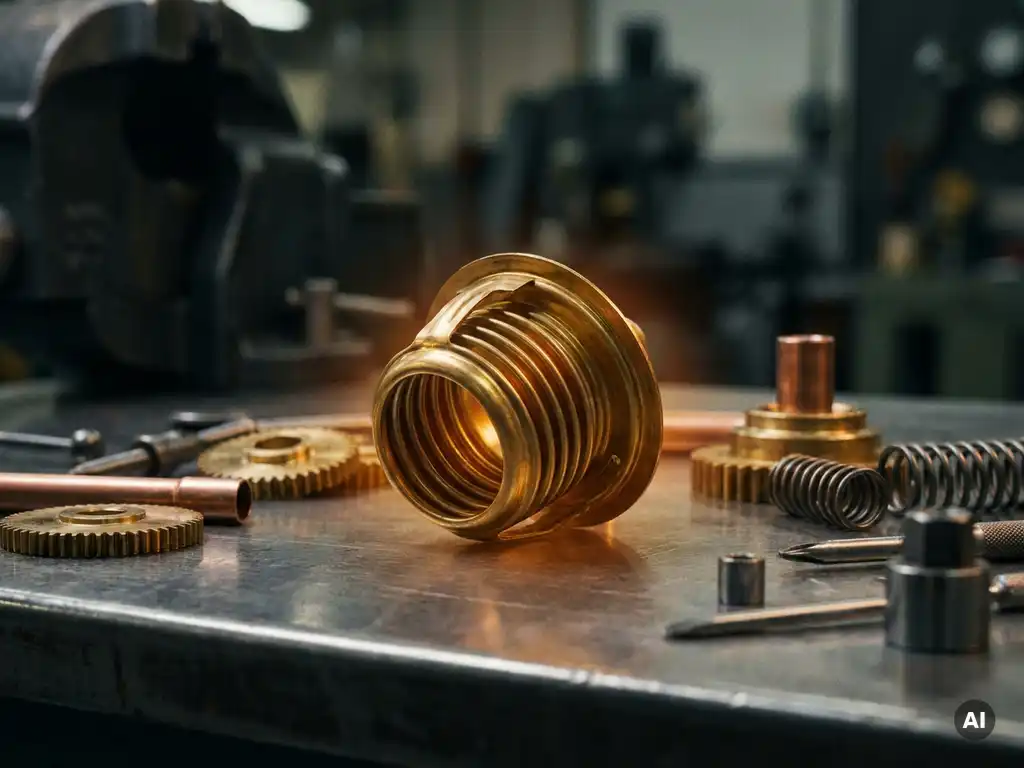
A thermostat bellows responds to temperature changes by expanding when heated and contracting when cooled, using the physical properties of a sealed, flexible metal capsule filled with a volatile fluid or gas. As the surrounding coolant or fluid temperature rises, the substance inside the bellows vaporizes or expands, pushing the capsule outward and mechanically actuating the thermostat valve. The sections below unpack exactly how this works, how it compares to other thermostat designs, and where bellows-type thermostats still earn their place today.
What makes bellows expand and contract inside a thermostat?
The expansion and contraction of a thermostat bellows is driven by a phase-change or thermal expansion reaction inside a sealed, corrugated metal capsule. The bellows is filled with a carefully chosen volatile fluid, typically a blend with a low boiling point calibrated to the target operating temperature. When heat from the surrounding coolant raises the temperature to that threshold, the fluid vaporizes, pressure builds inside the capsule, and the corrugated walls of the bellows push outward with measurable force. When the temperature drops, the vapor condenses back into liquid, pressure falls, and the bellows contracts.
The corrugated or accordion-like structure of the bellows is not just for appearance. Those folds allow the capsule to flex repeatedly over thousands of thermal cycles without cracking or losing its sealed integrity. The mechanical stroke produced by the expanding bellows is what physically opens or closes the thermostat valve, regulating fluid flow through the system. The precision of the response depends heavily on the quality of the fill fluid, the consistency of the metal walls, and how tightly the calibration was controlled during manufacturing.
What’s the difference between a bellows thermostat and a wax element thermostat?
The key distinction is the actuating medium and the direction of force. A bellows thermostat uses a sealed capsule filled with a volatile fluid or gas that expands under vapor pressure, while a wax element thermostat uses a solid-to-liquid phase change in a wax pellet to push a piston outward. Both convert temperature into mechanical movement, but they do so through fundamentally different physical processes.
How a wax element thermostat works
In a wax element design, a specially blended wax sits inside a sealed housing. As temperature rises, the wax melts and expands in volume, forcing a rubber sleeve to compress and push a metal piston outward. This piston directly moves the thermostat valve. Wax elements generate a high actuating force in a compact form, which is one reason they became dominant in automotive engine cooling systems over the past several decades.
Why bellows designs remain relevant
Bellows thermostats respond faster to temperature changes because vapor pressure builds almost instantly compared to the thermal mass of a wax pellet. They also tend to perform more predictably at lower temperature ranges, which makes them well suited to applications where fine control matters more than raw force. In heating systems, radiators, and certain industrial circuits, the bellows mechanism’s sensitivity is genuinely valuable. Understanding the thermostat mechanism behind each design helps engineers choose the right component for the right job.
How accurately does a bellows thermostat sense temperature?
A well-manufactured bellows thermostat can achieve opening accuracy within one to two degrees Celsius of its rated setpoint under stable conditions. This level of precision comes from the consistent physical behavior of the fill fluid and the controlled geometry of the corrugated capsule. The accuracy is highly repeatable over many thermal cycles when the component is manufactured to tight tolerances.
That said, accuracy in real-world applications depends on more than just the bellows itself. The position of the thermostat within the fluid circuit, the rate at which temperature changes, and the thermal conductivity of the surrounding housing all influence how quickly and accurately the bellows registers the actual fluid temperature. In applications where temperature swings are gradual and the thermostat is well positioned in the flow path, bellows designs deliver impressively consistent performance. In high-turbulence or rapidly fluctuating environments, response lag can introduce small deviations from the ideal setpoint.
Why does a thermostat bellows sometimes fail to open or close fully?
A thermostat bellows fails to open or close fully when the sealed capsule loses its integrity, the fill fluid degrades, or mechanical wear prevents the valve from traveling its full stroke. Each of these failure modes produces a distinct symptom, and identifying which one is at fault usually requires either a bench test in a temperature-controlled fluid bath or a close physical inspection of the component.
- Capsule perforation or micro-leaks: If the corrugated metal walls develop a pinhole, the volatile fill fluid escapes. The bellows loses pressure and can no longer generate enough force to open the valve fully, even at the correct temperature.
- Fill fluid contamination or degradation: Over time, certain fill blends can degrade or absorb contaminants from the surrounding fluid circuit. This changes the boiling point of the fill, shifting the thermostat’s opening temperature away from its original calibration.
- Mechanical binding: Corrosion, scale buildup, or debris in the valve seat can physically prevent the thermostat valve from completing its stroke, even when the bellows itself is functioning correctly.
- Thermal fatigue: Repeated expansion and contraction cycles can eventually cause metal fatigue in the corrugated walls, reducing the range of motion the bellows can achieve over time.
Regular inspection of the thermostat housing and the fluid circuit for signs of corrosion or contamination is the most practical way to extend the service life of a bellows-type thermostat in demanding applications.
Where are bellows-type thermostats still used today?
In 2026, bellows-type thermostats remain actively used in residential and commercial heating systems, radiator controls, floor heating circuits, and certain industrial process applications where fast, sensitive temperature response matters more than high actuating force. They are less common in modern automotive engine cooling, where wax element designs dominate, but they hold a strong position wherever precise low-to-medium-temperature control is the priority.
Specific applications where bellows thermostats continue to perform well include:
- Hydronic radiator valves in building heating systems
- Underfloor and wall heating circuits
- Marine and shipboard cooling systems where rapid response to changing load conditions is critical
- Industrial process lines managing coolant or oil temperature in moderate ranges
- Specialty HVAC equipment requiring tight temperature differentials
The longevity of bellows technology in these sectors comes down to its simplicity and reliability. With no electronic components and a purely mechanical thermostat mechanism, a well-made bellows thermostat requires minimal maintenance and continues to function predictably in environments where electronics would be vulnerable to moisture, vibration, or heat. For anyone sourcing components in these sectors, it is worth understanding both the design’s strengths and its limitations before specifying it in a new system.
How BTT Solutions supports your thermostat component needs
We at BTT Solutions design and manufacture high-precision thermostat components for exactly the kinds of applications described throughout this article. Whether you are engineering a heating system, an industrial cooling circuit, or a specialized fluid management application, we bring decades of accumulated expertise from the automotive and industrial thermal management world to every component we produce.
Here is what working with us looks like in practice:
- Precision-calibrated components: Our thermostat valves and bellows-based elements are manufactured to tight tolerances, ensuring opening accuracy and repeatable performance across the full service life of the component.
- Application-specific engineering: We do not take a one-size-fits-all approach. Our engineering team works with you to match the right thermostat mechanism to your specific temperature range, flow requirements, and operating environment.
- Cross-industry expertise: From automotive and marine to building technology and industrial process systems, we understand the demands of each sector and can advise on the most appropriate component design.
- Responsive, direct collaboration: As a focused, mid-sized company, we offer the kind of individual attention and fast turnaround that larger suppliers often cannot match. You work with people who know the product deeply.
If you are evaluating thermostat components for an upcoming project or want to understand which design fits your application best, get in touch with our team and we will be glad to help you find the right solution.
Related Articles
- What is the relationship between warm-up strategy and long-term engine reliability?
- What is the business impact of failing to meet emission targets for OEMs?
- How does engine temperature affect emission levels?
- What is a map-controlled thermostat and how does it improve performance?
- When should you upgrade thermal management systems?


