
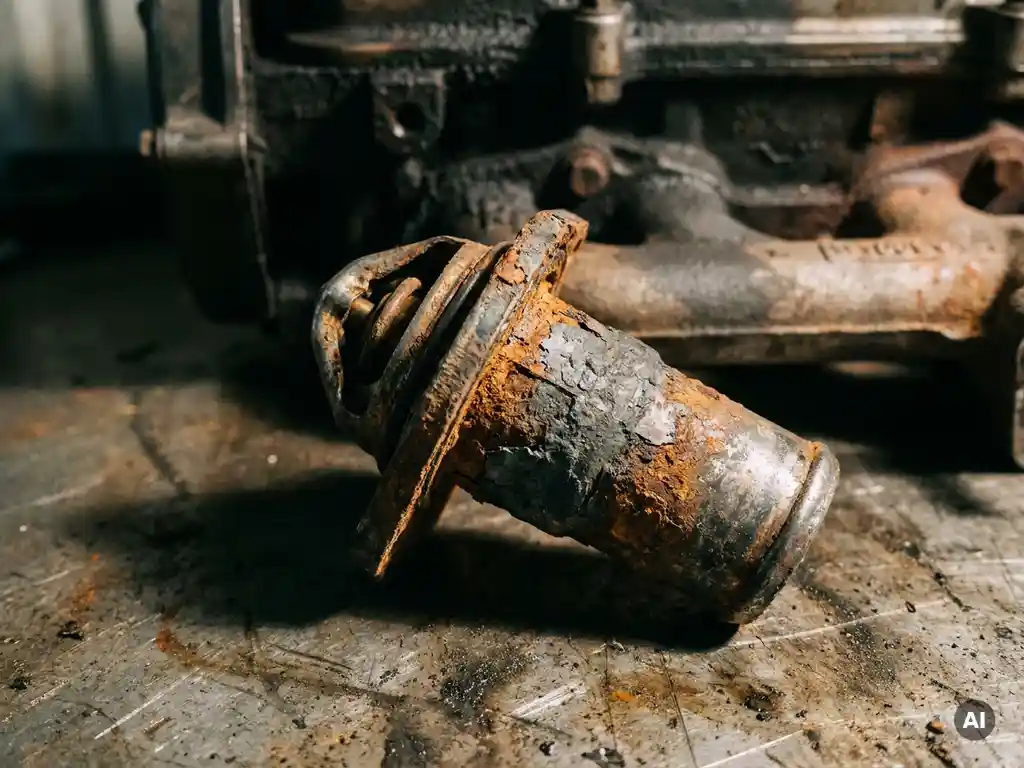
Yes, a faulty thermostat mechanism can directly increase vehicle emissions. When the thermostat fails to regulate engine temperature correctly, the engine runs outside its optimal thermal range, causing incomplete combustion and a measurable rise in harmful exhaust gases. The sections below walk through exactly how this happens, what warning signs to watch for, and what to do about it.
How does a thermostat mechanism control engine temperature?
A thermostat mechanism regulates engine temperature by controlling the flow of coolant between the engine and the radiator. It stays closed while the engine warms up, allowing coolant to circulate internally and reach operating temperature faster. Once the target temperature is reached, the thermostat valve opens progressively, routing hot coolant through the radiator to shed excess heat.
At the heart of this process is the thermostat bellows or wax element, a small but critical component that expands and contracts in response to temperature changes. As coolant temperature rises, the wax inside the element melts and expands, pushing the thermostat valve open. When the engine cools, the wax contracts and the valve closes again. This continuous cycle keeps the engine within a narrow, efficient temperature band.
Modern engines are designed to perform best within a specific temperature window, typically between 85°C and 105°C. The thermostat mechanism ensures the engine reaches that window quickly and stays there under varying load conditions. Without this precise control, the engine cannot burn fuel cleanly or efficiently.
Why does engine temperature directly affect exhaust emissions?
Engine temperature affects exhaust emissions because combustion efficiency depends heavily on heat. When an engine runs too cold, fuel does not vaporize or ignite as completely as it should, which produces higher concentrations of unburned hydrocarbons and carbon monoxide in the exhaust. When an engine runs too hot, nitrogen oxides (NOx) emissions rise sharply.
The catalytic converter, which is responsible for breaking down many harmful exhaust gases, also requires a minimum operating temperature to function properly. If a faulty thermostat keeps the engine too cool for too long, the catalytic converter stays below its light-off temperature and cannot neutralize pollutants effectively. This compounds the emission problem significantly.
In short, the thermostat mechanism is not just a cooling component. It is a direct contributor to how cleanly an engine burns fuel and how effectively the exhaust aftertreatment system does its job.
What are the signs of a failing thermostat in a vehicle?
A failing thermostat typically shows several recognizable symptoms. The most common signs include the temperature gauge reading unusually low or high, the heater blowing cold air even after the engine has warmed up, and the engine taking significantly longer than normal to reach operating temperature. In some cases, the engine may overheat if the thermostat valve sticks in the closed position.
Other signs worth paying attention to include:
- Erratic temperature gauge fluctuations during normal driving
- Reduced fuel economy without any obvious cause
- A check engine light triggered by temperature-related fault codes
- Coolant leaks around the thermostat housing
- A noticeable drop in cabin heating performance in colder weather
A thermostat that is stuck open is particularly deceptive because the engine never overheats, so drivers often ignore the problem. However, running continuously below optimal temperature causes just as much damage to emissions performance and fuel efficiency as overheating does.
Can a faulty thermostat cause a vehicle to fail an emissions test?
Yes, a faulty thermostat can cause a vehicle to fail an emissions test. If the thermostat mechanism keeps the engine below its optimal operating temperature, the catalytic converter will not reach the temperature it needs to reduce hydrocarbons, carbon monoxide, and nitrogen oxides effectively. This leads to elevated pollutant readings that exceed legal limits during testing.
Many modern emissions tests also include an OBD (on-board diagnostics) scan. A thermostat that is performing poorly will often trigger fault codes related to engine temperature or coolant temperature sensor readings, which can result in an automatic failure even before tailpipe emissions are measured.
Replacing a faulty thermostat before an emissions test is one of the most straightforward steps a vehicle owner or fleet manager can take to improve test outcomes, and it is often far less expensive than investigating more complex emission system faults.
How does thermostat failure affect fuel consumption alongside emissions?
Thermostat failure and increased fuel consumption go hand in hand. When the thermostat valve fails in the open position and the engine runs too cool, the engine management system compensates by injecting more fuel to maintain performance. This enriched fuel mixture burns less efficiently, raising both fuel consumption and exhaust emissions at the same time.
The relationship between temperature and efficiency is straightforward. A cold engine experiences greater internal friction because engine oil is more viscous at lower temperatures. It also relies more heavily on the fuel injection system to compensate for poor combustion conditions. Both factors push fuel consumption upward.
For fleet operators and commercial vehicle managers, this is a meaningful cost issue. A single vehicle running with a failed thermostat can consume noticeably more fuel over a year of regular operation, and across a fleet, that adds up quickly. Addressing thermostat health is therefore both an environmental and a financial consideration.
When should a vehicle thermostat be replaced to prevent emission issues?
A vehicle thermostat should be replaced as soon as symptoms of failure appear, or proactively as part of a scheduled cooling system service. Most manufacturers recommend inspecting the thermostat during major coolant system services, typically every four to five years or at significant mileage intervals. However, any symptom of poor temperature regulation is a reason to inspect the component sooner.
There is no universal lifespan for a thermostat because operating conditions vary widely. Vehicles that frequently run in extreme temperatures, tow heavy loads, or experience coolant quality issues may see thermostat wear accelerate. Equally, thermostats in vehicles that sit unused for long periods can develop issues with the wax element or thermostat bellows seizing in one position.
The key principle is not to wait for a breakdown. A thermostat is a relatively inexpensive component, and replacing it preventively costs far less than dealing with a failed emissions test, increased fuel bills, or damage to the catalytic converter caused by prolonged operation outside the correct temperature range.
How BTT Solutions supports precise engine temperature management
At BTT Solutions, we design and manufacture the thermostat components that sit at the core of this entire system. Our thermostats, thermostat valves, and thermostat bellows are built to the tolerances that modern engines and emissions standards demand, and we supply them to automotive manufacturers, industrial operators, and vehicle system integrators around the world.
Here is what working with us looks like in practice:
- High-precision components: Our thermostat mechanisms are engineered for consistent, repeatable performance across the full temperature range, reducing the risk of drift and sticking that leads to emission problems.
- End-to-end solutions: We develop complete thermomanagement assemblies, not just individual parts, so our customers get components that are designed to work together from the start.
- Flexibility and responsiveness: As a focused, mid-sized company, we give our customers direct access to our engineering teams and fast response times when specifications change or new applications arise.
- Cross-industry expertise: Our thermostat products serve automotive, industrial, and building technology applications, which means our engineering knowledge runs deep across a wide range of thermal challenges.
If you are sourcing thermostat components for a vehicle platform, an industrial system, or a building heating application and want to speak with a team that has built its entire business around this technology, we would be glad to hear from you. Get in touch with us to discuss your requirements, and find out more about who we are and what drives our approach to thermomanagement.
Related Articles
- What causes a thermostat bellows to fail prematurely?
- How does consistent temperature control reduce engine wear?
- What is the relationship between warm-up strategy and long-term engine reliability?
- Why do hybrid vehicles require faster engine warm-up strategies?
- How do oil temperature regulators work in hydraulic systems?


