
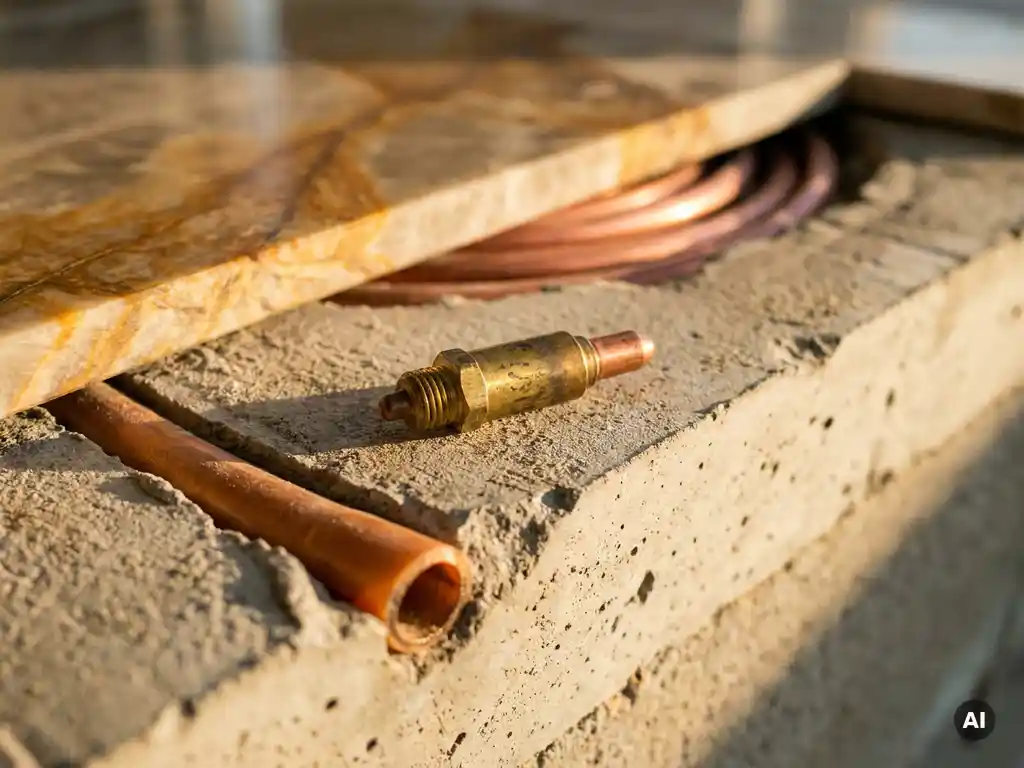
A wax pellet thermostat is used in floor heating systems to automatically regulate the flow of hot water through the underfloor circuit by opening and closing a valve in response to temperature changes. When the floor reaches the desired temperature, the wax element inside the thermostat expands, pushing the valve shut and stopping further heat input. Below, we cover the most common questions people have about how this technology works in practice.
How does a wax pellet thermostat actually control floor temperature?
A wax pellet thermostat controls floor temperature through a straightforward physical process: as the surrounding water temperature rises, the wax element material inside a sealed chamber heats up, expands, and mechanically pushes a valve or actuator to restrict or stop flow. When the temperature drops, the wax contracts and the valve reopens, allowing hot water to circulate again.
The beauty of this mechanism is that it requires no electricity to function. The wax thermal expansion process is entirely self-regulating. The thermostat is calibrated to respond at a specific temperature range, so it continuously cycles between open and closed positions to maintain a steady floor temperature without any external signal or controller telling it what to do.
This makes the technology particularly reliable in underfloor heating applications, where consistent, gradual temperature control matters far more than rapid switching. The slow, predictable nature of wax thermal expansion actually suits radiant floor heating perfectly, since the floor itself acts as a large thermal mass that changes temperature slowly anyway.
What are the advantages of wax pellet thermostats in underfloor heating?
The main advantages of wax pellet thermostats in underfloor heating are their mechanical simplicity, long service life, and energy-passive operation. Because the wax element material does all the work without electricity, there are no circuit boards, sensors, or actuator motors that can fail. This translates directly into lower maintenance requirements and fewer points of failure across the system.
Here are the key benefits that make this technology well suited to floor heating:
- No power required: The wax thermal expansion mechanism operates entirely on heat energy, so the thermostat functions even during power outages.
- Smooth, proportional control: Rather than switching abruptly on and off, the valve opens and closes gradually as wax expands and contracts, which reduces thermal stress on pipes and fittings.
- High precision: Quality wax pellet thermostats respond consistently within a narrow temperature band, keeping floor surface temperatures stable and comfortable.
- Low total cost of ownership: Fewer components mean fewer repairs, and the passive design means no ongoing energy draw from the thermostat itself.
- Compact form factor: The self-contained design fits easily into manifold assemblies and distribution units without adding bulk to the installation.
For building engineers and system designers, these characteristics also simplify zone control. Each circuit in a multi-zone floor heating layout can have its own wax thermostat component operating independently, without requiring a central controller to coordinate them.
Where exactly is the wax pellet thermostat installed in a floor heating system?
In a floor heating system, the wax pellet thermostat is typically installed at the manifold, which is the central distribution point where hot water from the boiler or heat pump is divided into individual floor circuits. The thermostat sits in the return line of each circuit, sensing the temperature of water coming back from the floor loop before deciding whether to restrict or allow further flow.
Some installations place the thermostat at the mixing valve, where it regulates how much hot boiler water is blended with cooler return water before being sent into the floor circuits. This approach controls the supply temperature rather than the individual circuit flow and is common in systems where the boiler runs at higher temperatures than the floor can safely handle.
The exact placement depends on the system design, but in both cases the thermostat is always positioned where it can accurately sense the water temperature that reflects what the floor is actually doing. Placing it too close to the heat source would give a misleading reading and cause the system to overshoot or undershoot the target temperature.
What’s the difference between a wax pellet thermostat and an electronic thermostat for floor heating?
The key difference is that a wax pellet thermostat responds directly to water temperature using the physical expansion of wax element material, while an electronic thermostat uses sensors, circuits, and an actuator motor to open or close a valve based on a programmed setpoint. One is a passive mechanical device; the other is an active, powered control system.
Wax pellet thermostats
Wax pellet thermostats are fixed to a specific temperature response range determined by the wax formulation used during manufacturing. They cannot be reprogrammed or adjusted remotely, and they do not connect to building management systems or smart home platforms. What they offer instead is extreme reliability, zero power consumption, and a very long operational lifespan. They are the right choice when simplicity and durability matter more than flexibility.
Electronic thermostats
Electronic thermostats offer user-adjustable setpoints, scheduling, remote control, and integration with broader building automation. They can respond to room air temperature rather than just water temperature, which gives occupants more direct comfort control. The trade-off is that they depend on power, contain components that can wear out or fail, and typically cost more to install and maintain. For residential or commercial projects where occupant comfort preferences vary and remote management is valued, electronic control makes sense.
In practice, many professional installations combine both: a wax pellet thermostat handles the hydraulic balancing and protects the floor from overheating, while an electronic room thermostat controls when the heating system runs at all. The two technologies work well together rather than competing.
Can a wax pellet thermostat be used in both radiant and hydronic floor heating?
Yes, a wax pellet thermostat can be used in both radiant and hydronic floor heating systems because both use hot water flowing through underfloor pipes, and the thermostat responds to that water temperature regardless of how the system is classified. The distinction between “radiant” and “hydronic” floor heating largely describes how the heat reaches the room, not how the water circuit is controlled.
In a standard hydronic underfloor system, water is pumped through a closed loop of pipes embedded in or beneath the floor screed. In a radiant system, the heat output is specifically designed to warm surfaces and objects in the room rather than heating the air directly. Both rely on the same fundamental water circuit, so the wax pellet thermostat fits naturally into either configuration at the manifold or mixing valve position.
The one consideration worth checking is the operating temperature range. Some radiant systems are designed to run at lower supply temperatures to maximise comfort and efficiency, so the wax element material in the thermostat should be specified to match that lower range. A thermostat calibrated for a high-temperature system will not respond accurately in a low-temperature radiant setup, and vice versa. Always confirm the temperature rating before selecting a component.
How long does a wax pellet thermostat last in a floor heating system?
A well-made wax pellet thermostat typically lasts between 15 and 25 years in a floor heating system, and in some cases longer, provided the system water is clean and the thermostat is not exposed to pressures or temperatures outside its rated specification. Because there are no electronic components or motorised parts, the main wear mechanism is gradual fatigue of the seals and housing rather than component failure.
Several factors influence how long a wax pellet thermostat lasts in practice:
- Water quality: Corrosive or contaminated system water accelerates seal degradation. Regular inhibitor treatment and system flushing extend thermostat life significantly.
- Operating conditions: Running the system consistently within the thermostat’s rated temperature and pressure range prevents premature wear on the wax element material and housing.
- Installation quality: A correctly installed thermostat that is not over-tightened or mechanically stressed will outlast one that has been fitted under tension or with misaligned connections.
- Cycling frequency: Systems that cycle frequently between high and low temperatures put more cumulative stress on the wax thermal expansion mechanism than systems that run at a steady setpoint.
In practical terms, a wax pellet thermostat in a well-maintained floor heating system is unlikely to need replacement within the normal lifecycle of the building’s heating infrastructure. When replacement is eventually needed, it is a straightforward swap at the manifold, and no special tools or system modifications are required. You can find more about component specifications and thermostat product options to match specific system requirements.
How BTT Solutions supports floor heating thermostat applications
We design and manufacture high-precision wax pellet thermostats and thermal management components specifically built for the demands of underfloor heating, industrial, and building technology applications. Our components are engineered to deliver consistent, reliable temperature control across a wide range of system configurations, whether you are working with hydronic floor heating, radiant systems, or larger district heating networks.
Here is what working with us looks like in practice:
- Application-specific wax element formulations: We develop wax element material calibrated to precise temperature response ranges, so your thermostat performs accurately within the exact operating window your system requires.
- End-to-end component solutions: From individual thermostat elements to complete temperature control assemblies, we supply components that integrate directly into your manifold or mixing valve setup.
- Flexible, responsive partnership: As a focused, mid-sized manufacturer, we offer the technical attention and fast response times that larger suppliers often cannot match. Our team works directly with engineers and procurement leads to find the right solution.
- Global delivery from eight production sites: Our international footprint means we can supply reliably to customers across automotive, industrial, and building technology markets worldwide.
If you are specifying components for a floor heating project or evaluating thermal management solutions for a new application, we would be glad to discuss your requirements. Get in touch with our team to start the conversation, or learn more about who we are and the expertise we bring to every project.
Related Articles
- How do you test whether a wax pellet thermostat is working correctly?
- What is the difference between engine efficiency and fuel economy?
- What are the most common design trade-offs in thermostat component engineering?
- What are common thermostat problems?
- 7 Key Factors When Selecting an Automotive Thermostat Supplier


