
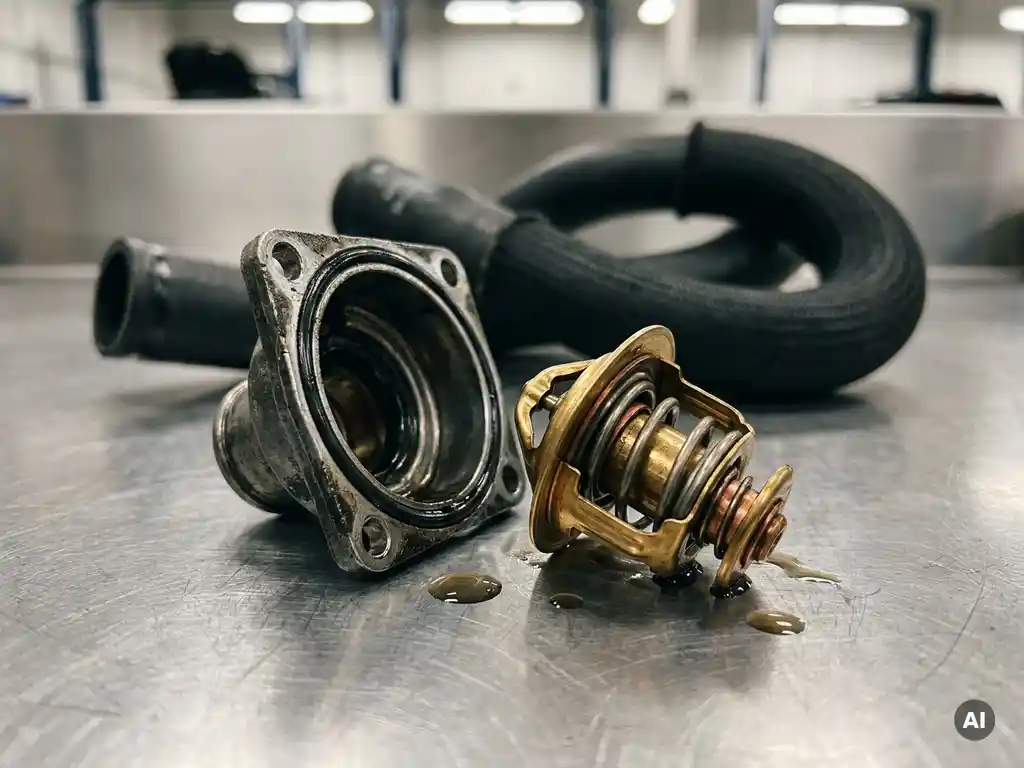
A thermostat frame and a thermostat insert are two distinct components that work together as a system. The frame is the fixed housing that integrates into an engine or heating circuit, while the insert is the replaceable functional core that contains the wax element and valve mechanism. Understanding how they differ matters most when you need to maintain, replace, or specify thermostat components for a particular application.
Below, we walk through the most common questions engineers and procurement teams ask when working with these components for the first time.
What does a thermostat frame actually do?
The thermostat frame is the structural housing that holds the entire thermostat assembly in place within a cooling circuit. It provides the mechanical interface between the thermostat and the surrounding system, whether that is an engine block, a heating manifold, or an industrial fluid circuit. The frame stays fixed in position and is typically designed to match the specific geometry of the application it serves.
In practical terms, the frame channels coolant or fluid into and out of the thermostat assembly. It contains the inlet and outlet ports, sealing surfaces, and the mounting points that keep everything secure under pressure and temperature cycling. Because the frame is permanently integrated into the system, it is usually made from materials that can handle long-term thermal stress without deforming, such as die-cast aluminum, engineering plastics, or brass, depending on the operating environment.
One thing worth noting: the frame itself does not regulate temperature. It creates the conditions that allow the insert to do that job reliably. Think of it as the stable platform that makes precision control possible.
What is a thermostat insert and how does it work?
A thermostat insert is the active, functional core of a thermostat assembly. It contains the wax element, valve, and spring mechanism that physically open and close in response to fluid temperature. When the fluid reaches a set threshold, the wax inside the element expands, pushing the valve open and allowing flow to pass through the larger circuit, typically toward a radiator or heat exchanger.
The insert sits inside the frame and is designed to be removable. This modularity is intentional. The insert experiences the most mechanical wear over time because it is the part that cycles continuously between open and closed positions. By separating the insert from the frame, manufacturers can design systems where only the working element needs to be swapped out rather than the entire assembly.
The precision of the insert matters enormously. A small deviation in the opening temperature or the valve lift can affect fuel efficiency, emission levels, and engine longevity. This is why thermostat insert manufacturing demands tight tolerances and consistent thermostat materials across production runs.
What are the main differences between a thermostat frame and thermostat insert?
The key difference is function: the frame is a passive structural component, and the insert is the active temperature-regulating element. Beyond that, they differ in several practical ways that matter during specification and maintenance.
- Role in the system: The frame provides housing and fluid routing. The insert controls when and how much fluid flows based on temperature.
- Replaceability: Frames are typically designed for long-term installation. Inserts are designed to be replaced when they wear or fail.
- Thermostat materials: Frames are often made from metals or high-grade polymers suited for structural durability. Inserts require materials that respond predictably to heat, including specialized waxes, stainless steel springs, and precision-formed valve seats.
- Customization scope: Frames are application-specific and often custom-engineered to fit a particular housing geometry. Inserts can sometimes be standardized across multiple frame configurations.
- Failure modes: A frame typically fails due to physical damage, corrosion, or seal degradation. An insert fails when the wax element loses responsiveness, the valve sticks, or the spring loses tension.
Understanding these distinctions helps engineers make smarter decisions about maintenance schedules and component sourcing, especially in high-volume or safety-critical applications.
Can a thermostat insert be replaced without changing the frame?
Yes, in most modern thermostat designs, the insert can be replaced independently from the frame. This is one of the main advantages of a modular thermostat system. As long as the frame remains structurally sound and its sealing surfaces are intact, swapping out the insert is a straightforward service procedure that avoids the cost and complexity of replacing the entire assembly.
That said, compatibility is critical. Not every insert fits every frame. The insert must match the frame’s internal diameter, seating geometry, and temperature rating. Using a mismatched insert can result in poor sealing, incorrect opening temperatures, or premature failure. Always verify the original specification before sourcing a replacement.
In industrial and automotive applications where downtime is costly, the ability to replace only the insert is a significant operational advantage. It is also more economical from a thermostat materials standpoint, since you are only replacing the components that actually wear rather than the entire housing.
Which thermostat configuration is right for your application?
The right configuration depends on three factors: the operating temperature range, the fluid type, and whether the application demands a fixed or serviceable design. For high-volume automotive applications, a modular frame-and-insert system is usually the most practical choice because it supports field servicing and reduces lifecycle costs. For sealed industrial systems where access is limited, an integrated thermostat unit might be more appropriate.
Consider these questions when evaluating your configuration:
- What is the expected service life of the system, and will maintenance access be available?
- Does the application involve aggressive fluids, high pressures, or extreme temperature swings that require specific thermostat materials?
- Is standardization across multiple product lines a priority, which might favor a common insert specification across different frames?
- Are there weight or space constraints that affect housing design?
For applications outside the traditional automotive space, such as floor heating systems, marine circuits, or industrial cooling loops, the same frame-and-insert logic applies, but the material choices and temperature thresholds will differ. Matching the configuration to the actual operating conditions is always more important than defaulting to the most common option.
How BTT Solutions supports your thermostat component decisions
We work with engineers and procurement teams across automotive, industrial, and building technology sectors to specify, develop, and supply thermostat frames and inserts that match the exact demands of each application. Whether you need a standard configuration or a fully custom solution, our team brings decades of hands-on experience in thermostat insert manufacturing and precision component design.
Here is what working with us looks like in practice:
- Application-specific engineering: We help you define the right frame geometry, insert specification, and thermostat materials for your operating conditions.
- Modular system design: We design frame-and-insert systems that support long-term serviceability, reducing your total cost of ownership.
- Broad industry coverage: From automotive OEMs to industrial fluid systems and heating technology, we supply components that meet the specific requirements of each sector.
- Direct access to expertise: As a focused, mid-sized company, we offer the kind of individual attention and fast response that larger suppliers often cannot.
If you are specifying thermostat components for a new project or looking to improve an existing design, we would be glad to help. Get in touch with our team and tell us about your application.
Related Articles
- Should you prioritize thermostat frame precision over material cost?
- Why does engine temperature affect component wear?
- How do emission regulations like Euro 7 impact powertrain development?
- How do oil temperature regulators work in hydraulic systems?
- What are the benefits of thermal management systems?


