
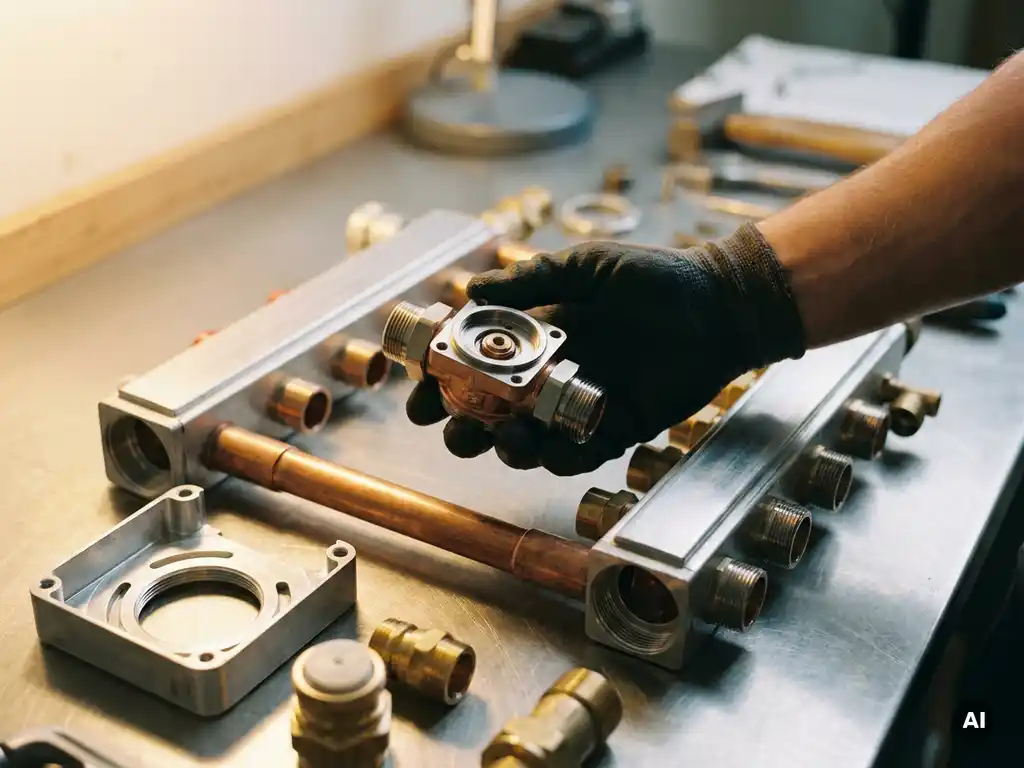
Thermostat frame quality directly affects heating system performance by determining how accurately and reliably coolant flow is regulated. A well-manufactured frame holds the thermostat insert securely in position, ensures a consistent seal, and withstands repeated thermal cycling without warping or cracking. Poor frame quality leads to imprecise temperature control, energy waste, and premature system failure. The sections below explore each dimension of this relationship in detail.
What components make up a thermostat frame?
A thermostat frame is the structural housing that holds the thermostat insert in place within the cooling or heating circuit. It typically consists of the outer casing, a sealing ring or gasket seat, mounting flanges, and the internal channel geometry that directs fluid flow. Together, these elements determine how the thermostat integrates with the surrounding system and how reliably it performs over time.
The outer casing provides mechanical protection and structural rigidity. The gasket seat ensures a leak-free connection with adjacent pipes or manifolds. Mounting flanges secure the assembly to the engine block or heating unit, while the internal channel geometry guides coolant toward or away from the radiator depending on temperature. Each of these components must be dimensionally precise, because even a small deviation in one area can compromise the entire assembly’s performance.
In modern heating and engine cooling systems, the frame also increasingly incorporates sensor ports or electrical connectors to support electronic thermostats. This means the frame is no longer purely a passive housing but an active part of the thermal management architecture.
How does thermostat frame quality affect coolant flow regulation?
Thermostat frame quality affects coolant flow regulation by controlling how precisely the thermostat insert opens and closes in response to temperature changes. A high-quality frame holds the insert in exact alignment, ensuring the valve operates at the correct temperature threshold and moves smoothly without restriction. A poorly manufactured frame can cause the insert to stick, leak, or open at the wrong temperature, disrupting the entire cooling circuit.
When the frame geometry is accurate, coolant follows the intended flow path. The fluid either circulates through the short loop within the engine block during warm-up or is directed to the radiator once the operating temperature is reached. This switching action is only as reliable as the frame allows. If the frame warps under heat or its internal channels are inconsistently shaped, flow resistance changes unpredictably, and the system can neither warm up efficiently nor cool down effectively.
Dimensional tolerances in thermostat insert manufacturing are therefore not just a quality metric for individual parts. They are a direct input into system-level thermal performance. Tighter tolerances mean more repeatable valve actuation, which translates into more stable engine or heating system temperatures across varying load conditions.
What happens to heating efficiency when thermostat frames fail?
When thermostat frames fail, heating efficiency drops because the system loses precise control over fluid temperature. A cracked or warped frame allows coolant to bypass the thermostat insert, meaning the fluid never reaches optimal operating temperature or fluctuates unpredictably. This forces the heating system to work harder, consuming more energy while delivering less consistent warmth.
In practical terms, a failed frame often produces one of two failure modes. In the first, the thermostat becomes stuck open, allowing coolant to circulate continuously through the radiator. The engine or heating circuit never reaches its target temperature, which reduces efficiency and increases fuel or energy consumption. In the second mode, the thermostat becomes stuck closed. Coolant cannot reach the radiator, temperatures climb rapidly, and the risk of overheating or component damage increases significantly.
Both failure modes are costly. Beyond energy waste, they accelerate wear on seals, pumps, and heat exchangers throughout the system. In industrial heating applications, temperature instability can also affect process quality, making frame integrity a concern that extends well beyond the thermostat itself.
What materials are used in high-quality thermostat frames?
High-quality thermostat frames are typically made from engineering-grade plastics, aluminum alloys, or brass, depending on the application’s temperature range, pressure requirements, and chemical environment. Each thermostat material offers a different balance of thermal resistance, mechanical strength, and weight. The right choice depends on where the thermostat operates and what it must withstand over its service life.
Engineering-grade plastics
Glass-fiber-reinforced polyamide (PA66-GF) is widely used in automotive thermostat frames because it combines low weight with strong resistance to coolant chemicals and elevated temperatures. These materials can handle sustained temperatures well above 100 degrees Celsius while maintaining dimensional stability, which is essential for consistent valve alignment.
Aluminum and brass alloys
Aluminum frames are common in high-performance or heavy-duty applications where mechanical loads are greater and heat dissipation from the frame itself is beneficial. Brass is used in industrial and HVAC contexts where corrosion resistance is a priority, particularly when the working fluid contains minerals or additives that would degrade plastic over time. Both metals offer excellent dimensional precision when machined correctly, though they add weight compared to polymer alternatives.
How do you identify a low-quality thermostat frame before installation?
You can identify a low-quality thermostat frame before installation by inspecting it for visible surface defects, checking dimensional consistency, and assessing the fit of the sealing surfaces. Warning signs include sink marks, flash lines, or voids in the material, uneven gasket seats, and loose or imprecise mounting flanges. Any of these defects suggests the frame will not hold its geometry reliably under thermal stress.
A practical pre-installation check involves a few straightforward steps:
- Inspect the gasket seat for flatness and surface finish. A rough or uneven seat will not seal reliably.
- Check the insert fit. The thermostat insert should sit firmly without play, but without requiring force to seat.
- Look for visible material defects such as warping, cracks, or discoloration that may indicate poor molding or improper material handling during production.
- Verify that mounting flanges are square and undamaged. Twisted or bent flanges will cause misalignment once the assembly is bolted in place.
- Compare dimensions against the manufacturer’s specification if available. Even small deviations can affect valve actuation accuracy.
Sourcing frames from manufacturers with documented quality control processes reduces the risk of receiving substandard parts. Consistent thermostat insert manufacturing standards are the most reliable indicator that dimensional tolerances are being maintained across production batches.
When should thermostat frames be replaced in heating systems?
Thermostat frames should be replaced when they show signs of physical damage, when the system exhibits temperature instability, or as part of a scheduled maintenance interval recommended by the equipment manufacturer. In most automotive and industrial heating applications, the frame is replaced together with the thermostat insert because the two components are designed to work as a matched unit.
Specific indicators that replacement is overdue include visible cracks or warping in the frame body, coolant leaks at the gasket seat, erratic temperature readings from the system’s sensors, and slow warm-up times that suggest coolant is bypassing the thermostat. In systems where the frame is made from plastic, prolonged exposure to high temperatures can cause gradual embrittlement, making periodic replacement advisable even in the absence of obvious damage.
For industrial heating systems, replacement intervals often depend on operating hours rather than calendar time. A frame running continuously in a high-temperature environment will age faster than one in intermittent use. Keeping a record of operating hours and scheduling inspections accordingly is a practical way to stay ahead of failures before they affect system output or process reliability.
How BTT Solutions supports your thermostat frame requirements
Getting thermostat frame quality right matters at every stage, from material selection through to dimensional precision and long-term durability. At BTT Solutions, we design and manufacture high-precision thermostat components that address exactly the performance challenges described throughout this article. Our engineering team works directly with B2B clients across the automotive, industrial, and building technology sectors to develop solutions matched to their specific temperature ranges, fluid environments, and system architectures.
Here is what working with us looks like in practice:
- Material expertise: We select thermostat materials based on your application’s actual operating conditions, whether that calls for glass-fiber-reinforced polymers, aluminum, or brass.
- Precision manufacturing: Our thermostat insert manufacturing processes are held to tight dimensional tolerances, ensuring consistent valve actuation and reliable sealing across every production batch.
- End-to-end solutions: We supply complete thermostat assemblies, not just individual components, so frame and insert are engineered to work together from the outset.
- Flexible partnership: As a focused, mid-sized specialist, we offer the individual attention and fast response times that larger suppliers often cannot match.
If you are evaluating suppliers or working through a specific thermal management challenge, we are happy to talk through the details. Get in touch with our team to discuss your requirements and find out how we can support your next project.
Related Articles
- Should thermostat testing procedures differ for industrial versus residential use?
- What equipment is used in professional thermostat performance testing?
- How does thermal management contribute to extended service intervals?
- What are thermal management components?
- When should you consider liquid cooling for thermal management?


