
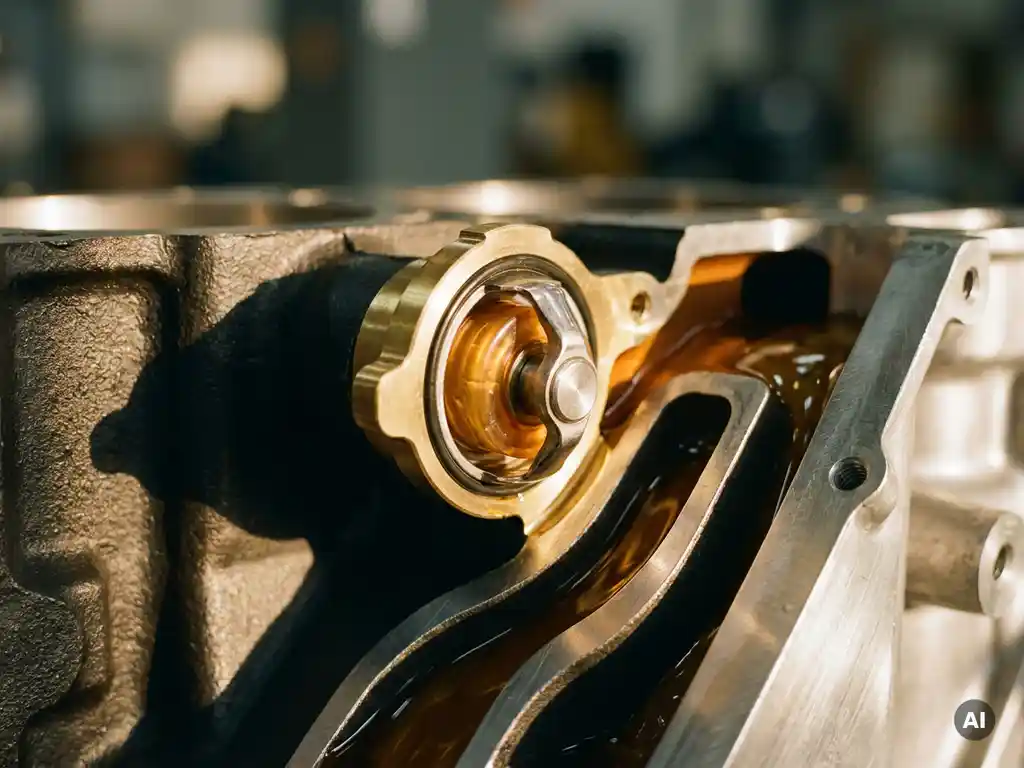
Wax thermal expansion drives fuel efficiency in engines by ensuring the engine reaches and holds its optimal operating temperature as quickly as possible. A wax pellet thermostat responds directly to coolant temperature, opening and closing a valve with remarkable precision to regulate how much coolant flows through the engine. The sections below unpack exactly how this works, why it matters, and what can go wrong when it does not.
How does a wax element actually control engine temperature?
A wax element controls engine temperature by using the physical properties of a specially formulated wax material to translate temperature changes into mechanical movement. As coolant heats up, the wax element material inside the thermostat expands, pushing a piston that opens a valve and allows coolant to circulate through the radiator. When the engine cools, the wax contracts and the valve closes again.
The elegance of this mechanism is its simplicity. There are no sensors sending signals to a control unit, no actuators waiting for a command. The wax itself is the sensor, the actuator, and the feedback loop all in one. The specific wax element material is engineered to begin expanding at a precise temperature, typically between 80 and 95 degrees Celsius, depending on the application, and to complete that expansion within a narrow temperature band. This tight calibration is what makes the system so reliable over hundreds of thousands of engine cycles.
Why does coolant flow timing affect fuel consumption?
Coolant flow timing affects fuel consumption because a cold engine burns significantly more fuel than a warm one. When an engine is cold, the metal components have tighter tolerances, oil viscosity is higher, and the combustion process is less efficient. Every second the engine spends below its optimal temperature translates directly into higher fuel use and greater emissions.
A well-calibrated wax pellet thermostat keeps the coolant circuit closed during cold start, allowing the engine to warm up as fast as possible. Once the target temperature is reached, it opens precisely enough to maintain that temperature without overshooting. This controlled approach prevents the engine from running either too cold or too hot, both of which increase fuel consumption. Premature coolant flow, caused by a thermostat that opens too early, forces the engine to work harder and longer to reach operating temperature, wasting fuel at every start.
What is the ideal engine temperature for peak fuel efficiency?
For most petrol and diesel engines, the ideal operating temperature for peak fuel efficiency falls between 90 and 105 degrees Celsius. Within this range, combustion is most complete, oil flows freely with minimal viscous drag, and the engine management system can operate in its most efficient closed-loop mode.
Running below this range keeps the engine in an enriched fueling mode longer than necessary, increasing consumption and accelerating wear. Running above it risks detonation and places thermal stress on components. The thermostat’s job is to hold the engine precisely within this window regardless of ambient conditions, engine load, or driving style. That precision is only possible when the wax element components are manufactured to tight tolerances and calibrated for the specific engine’s thermal profile.
How does wax thermal expansion compare to electronic thermostats?
Wax thermal expansion thermostats and electronic thermostats both regulate engine temperature, but they do so through fundamentally different mechanisms. A wax pellet thermostat is entirely self-contained and passive, while an electronic thermostat uses an electrically heated element or a motorized valve controlled by the engine management unit.
Advantages of wax-based thermostats
Wax element thermostats are inherently fail-safe. Because they rely on physics rather than electronics, they cannot suffer software faults, wiring failures, or sensor errors. They are also extremely durable, with a proven track record across decades of automotive engineering. Their cost-effectiveness and mechanical reliability make them the dominant choice across the majority of engine applications worldwide.
Where electronic thermostats add value
Electronic thermostats allow the engine management system to vary the target temperature dynamically. Under light load, the engine can run hotter to maximize efficiency. Under heavy load, it can run cooler to protect components. This flexibility offers marginal efficiency gains in highly optimized powertrains. However, electronic systems introduce additional failure modes and complexity that wax-based designs simply do not have. For many applications, the reliability and precision of wax thermal expansion remain the better engineering choice.
What happens to fuel efficiency when a wax thermostat fails?
When a wax thermostat fails, fuel efficiency typically drops noticeably, and the engine may also produce higher emissions. The most common failure mode is a thermostat stuck in the open position, which means coolant circulates continuously through the radiator, preventing the engine from ever reaching its optimal temperature.
An engine running permanently cold compensates by enriching the fuel mixture and operating outside its most efficient calibration window. Drivers often notice increased fuel consumption, a heater that takes much longer to warm up, and in some cases a warning light on the dashboard. A thermostat stuck closed is far more serious and can lead to overheating, but it is less common with well-manufactured wax elements. Either way, a failed thermostat is not a minor inconvenience. It directly undermines the fuel savings and emissions reductions that good thermal management is designed to deliver.
How are wax elements engineered for different engine applications?
Wax elements are engineered for different applications by adjusting the composition of the wax element material to change its opening temperature, stroke length, and response speed. The specific blend of hydrocarbons and additives within the wax determines exactly when expansion begins and how far the piston travels as temperature rises.
A heavy-duty diesel engine running under sustained load needs a thermostat that opens at a higher temperature and handles greater thermal cycling than a small passenger car engine. Marine and industrial applications bring their own requirements around corrosion resistance and operating pressure. Engineers also adjust the physical geometry of the wax pellet thermostat housing to suit different coolant flow rates and packaging constraints. This level of customization means that a thermostat is never a generic off-the-shelf component for demanding applications. It is a precisely matched thermal device, and its accuracy directly determines how well the broader thermal management system performs.
For industrial and building technology applications, similar principles apply. Our engineering heritage spans automotive and non-automotive sectors, and the same precision that optimizes fuel efficiency in an engine translates directly to heating systems, radiators, and floor heating circuits where temperature control is equally critical.
How BTT Solutions supports precision thermal management
At BTT Solutions, we design and manufacture wax pellet thermostats and wax element components for automotive, industrial, and building technology applications. Our products are engineered to deliver the tight temperature calibration that directly translates into fuel efficiency, emissions reduction, and system reliability for our customers’ end products.
Here is what working with us looks like in practice:
- Custom wax element material formulation matched to your specific opening temperature and stroke requirements
- End-to-end development support from initial specification through prototype validation to series production
- Application engineering for automotive, marine, industrial, and building technology environments
- Responsive, flexible collaboration backed by a lean organisation that gives your project direct attention rather than routing it through layers of bureaucracy
- Global supply capability from eight production and engineering sites, ensuring consistent quality and reliable delivery
If you are developing or refining a thermal management system and need a wax element or thermostat component engineered to precise specifications, we would be glad to discuss your requirements. Get in touch with our team to start the conversation.


