
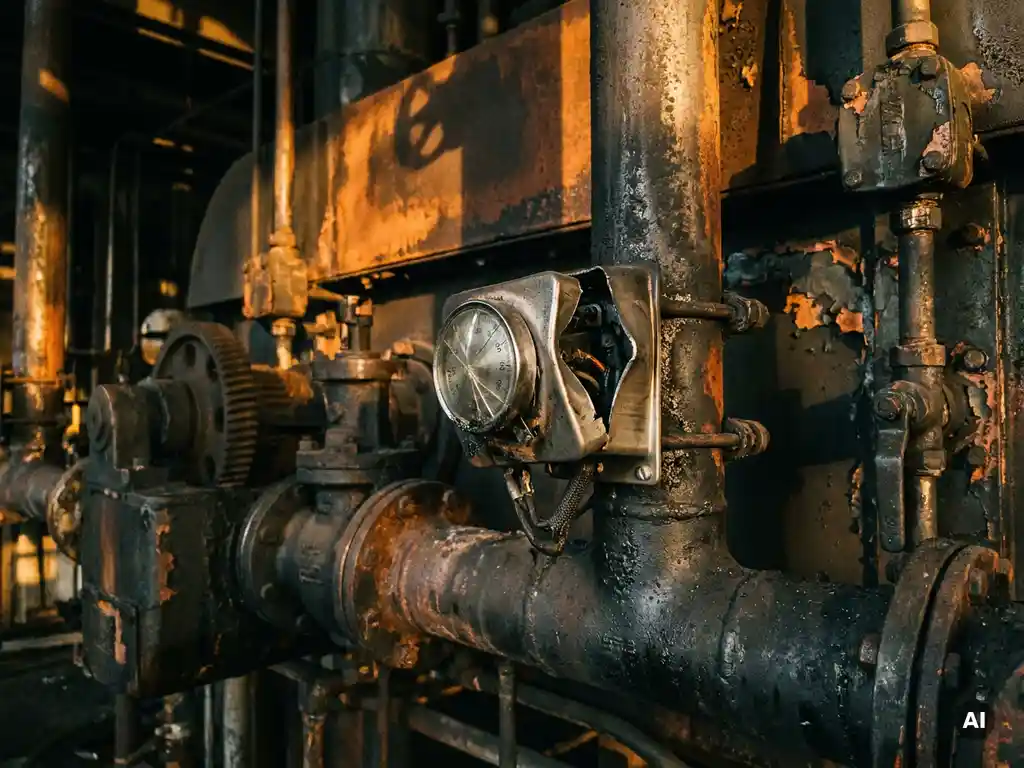
Ignoring thermostat specifications in industrial applications leads to equipment failure, increased energy consumption, safety hazards, and significantly shortened system lifespan. When thermostats operate outside their designed parameters, the entire thermal management chain breaks down. The sections below walk through exactly what goes wrong and when to act before problems escalate.
What happens to industrial equipment when thermostat specs are ignored?
When thermostat specifications are ignored in industrial settings, equipment operates outside its intended thermal range, causing components to overheat, coolant systems to malfunction, and control loops to behave unpredictably. The result is unplanned downtime, damaged machinery, and costly repairs that could have been avoided with proper thermostat calibration from the start.
Industrial systems are designed around tightly defined thermal parameters. Every pump, valve, heat exchanger, and control unit assumes the thermostat will open and close at specific temperatures within specific tolerances. When those assumptions are violated, even slightly, the ripple effects move fast. A thermostat that opens 8 to 10 degrees too late, for example, can allow coolant temperatures to spike well beyond safe operating limits before any corrective action kicks in.
What makes this especially tricky in industrial environments is that the failure is rarely sudden. Equipment tends to degrade gradually, which means teams often attribute early symptoms like rising energy bills or inconsistent output temperatures to other causes. By the time the thermostat is identified as the culprit, secondary damage has already accumulated in surrounding components.
How do incorrect thermostat tolerances affect energy efficiency?
Incorrect thermostat tolerances directly reduce energy efficiency by forcing systems to work harder than necessary to maintain target temperatures. A thermostat that activates too early keeps heating or cooling cycles running longer than needed, while one that activates too late allows conditions to drift so far that recovery requires significantly more energy input.
In practical terms, this plays out in a few distinct ways. Heating systems that rely on wax-element thermostats with poorly calibrated opening points may cycle continuously rather than reaching a stable operating state. Industrial oil temperature management systems face similar problems: if the thermostat does not regulate flow accurately, oil runs either too cool (reducing lubrication effectiveness) or too hot (accelerating degradation and increasing viscosity-related energy losses).
Proper thermostat calibration is not just about hitting the right temperature number. It is about maintaining that temperature with minimal overshoot and minimal correction energy. The tighter the tolerance, the less the system has to compensate, and the more efficiently it runs over time. In large-scale industrial operations, even small deviations from specification compound into meaningful energy waste across thousands of operating hours per year.
What are the safety risks of using non-compliant thermostat components?
Using non-compliant thermostat components in industrial applications creates serious safety risks, including thermal runaway, pressure buildup, fluid leaks, and, in extreme cases, fire or explosion. When a thermostat fails to meet the relevant thermostat testing standards for its application, it cannot be trusted to respond correctly under the thermal and pressure conditions it will actually face in service.
The most immediate risk is thermal runaway, where a system that loses accurate temperature control continues heating beyond safe limits because the thermostat fails to trigger a corrective response. This is particularly dangerous in applications involving flammable fluids, pressurized systems, or environments where personnel are working nearby.
Beyond direct thermal hazards, non-compliant components also introduce reliability risks that are harder to detect. A thermostat that meets most of its specification but fails on cycle durability, for instance, may perform correctly for months before failing at an unpredictable moment. Industrial thermostat testing standards exist precisely to screen out these failure modes before components reach service. Skipping or ignoring those standards does not eliminate the risks; it simply removes the early warning that would have caught them.
How does thermostat spec mismatch shorten system lifespan?
A thermostat spec mismatch shortens system lifespan by subjecting components to thermal stress they were not designed to handle. When temperatures regularly exceed or fall below design parameters, seals degrade faster, metals expand and contract beyond their fatigue limits, and lubricants break down prematurely, all of which accelerate wear across the entire system.
Think of it this way: every industrial component has a thermal envelope within which it performs reliably. Bearings, gaskets, O-rings, and electronic control units are all rated for specific temperature ranges. A thermostat that consistently allows temperatures to run 15 to 20 degrees above specification does not just stress the thermostat itself. It stresses every component downstream of it, simultaneously.
Thermal cycling is another major factor. Systems that cannot maintain stable temperatures due to a poorly specified thermostat cycle more frequently between hot and cold states. Each cycle introduces micro-stresses into metal components, and over time those stresses accumulate into cracks, fatigue failures, and seal failures. Proper thermostat specifications reduce cycling frequency and keep temperatures stable, which is one of the most effective ways to extend service intervals and overall system life.
When should industrial thermostat specifications be re-evaluated?
Industrial thermostat specifications should be re-evaluated whenever operating conditions change, after significant system modifications, when performance data shows unexplained temperature drift, and at regular intervals aligned with the maintenance schedule. Specifications that were correct at installation may no longer be appropriate if the system’s load profile, fluid type, or ambient conditions have shifted.
There are several clear triggers that warrant a full specification review:
- System upgrades or capacity changes: Adding load to a system changes its thermal demands, and the original thermostat specification may no longer be adequate.
- Fluid or medium changes: Switching coolant types, oil grades, or process fluids alters heat transfer characteristics and may require recalibration of thermostat opening points.
- Repeated component failures: If seals, bearings, or heat exchangers are failing earlier than expected, a thermostat spec mismatch is a logical place to investigate.
- Changes in ambient conditions: Industrial environments that experience seasonal temperature extremes or have been relocated may need thermostat specifications adjusted to account for new baseline conditions.
- Regulatory or compliance updates: Thermostat testing standards evolve, and components that were compliant at purchase may need to be reassessed against current requirements.
A proactive approach to thermostat specification review is far less costly than reactive repairs. Building specification checks into regular maintenance cycles, rather than waiting for a failure event, keeps systems running within their designed parameters and catches drift before it becomes damage.
How BTT Solutions supports precision thermostat specification in industrial applications
At BTT Solutions, we work directly with industrial customers to make sure the right thermostat specifications are defined, validated, and maintained throughout the product lifecycle. We understand that a thermostat is not just a component. It is the foundation of a system’s thermal performance, and getting the specification right from the start prevents every downstream problem this article has described.
Here is what we bring to the table for industrial B2B customers:
- Precision-engineered thermostat components manufactured to tight tolerances, with full traceability and compliance with relevant thermostat testing standards
- Application-specific thermostat calibration support, helping customers define the right opening points, hysteresis values, and tolerance bands for their exact operating conditions
- Wax element thermostats and temperature sensors designed for demanding industrial environments, including coolant regulation, oil temperature management, and large-scale heating systems
- Responsive technical support from a lean, expert team that gives each customer individual attention rather than routing them through a generic process
We are a mid-sized, focused business, and that means our customers get direct access to the engineers and specialists who actually understand their applications. If you are dealing with unexplained temperature drift, component wear, or energy inefficiency in your industrial systems, we would be glad to help you work through the specification questions. Get in touch with our team to start the conversation.
Related Articles
- What role do thermostat materials play in floor heating systems?
- What is the difference between single-pole and double-pole thermostat components?
- 7 Factors That Affect Cold Start Emissions in Commercial Vehicles
- What role do thermal components play in meeting real-world driving emission tests?
- What is meant by thermal management in industrial applications?

