
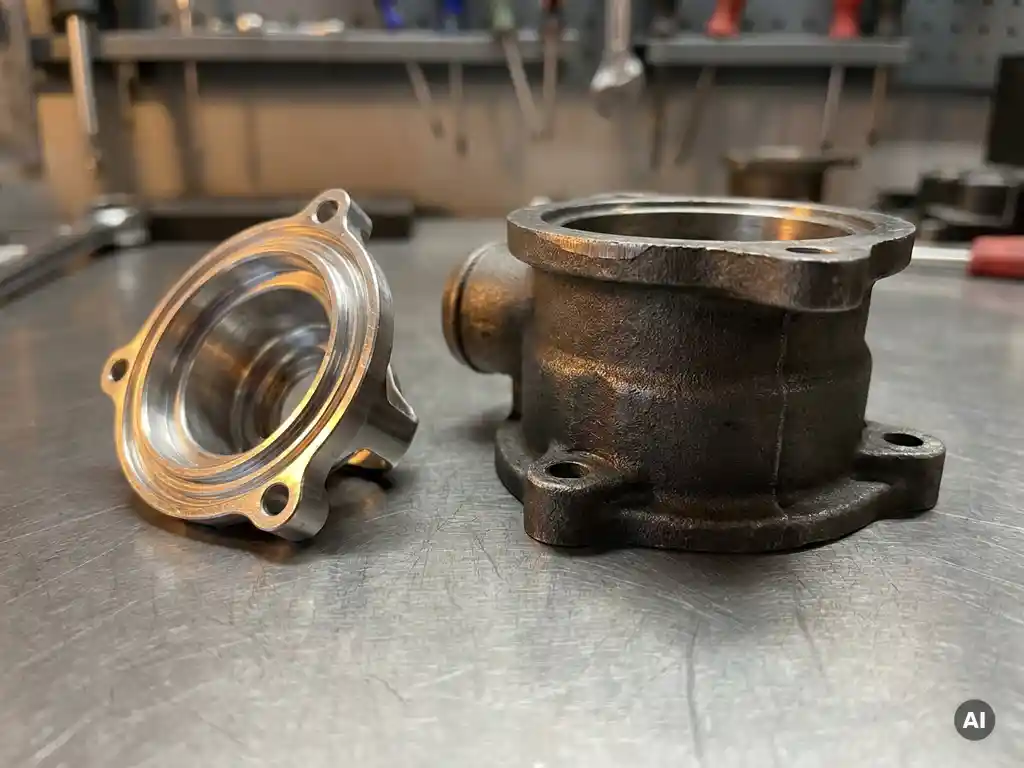
Automotive and industrial thermostat frames differ primarily in their operating conditions, material specifications, and dimensional tolerances. Automotive frames are engineered for compact, high-volume engine cooling applications with tightly controlled thermal cycles, while industrial frames are built to handle more extreme temperatures, corrosive media, and longer service intervals. Understanding these distinctions helps engineers specify the right component from the start, avoiding costly mismatches down the line.
What operating conditions do automotive and industrial thermostat frames face?
Automotive thermostat frames typically operate within coolant temperatures ranging from around 80°C to 110°C, cycling repeatedly as the engine warms up and cools down. Industrial thermostat frames, by contrast, are often exposed to far wider temperature ranges, higher pressures, and chemically aggressive fluids such as oils, glycol mixtures, or industrial coolants. The duty cycles also differ significantly; industrial units may run continuously for months without shutdown.
In automotive applications, the thermostat frame must respond quickly and precisely to small temperature changes to maintain optimal engine efficiency. Even a few degrees of deviation can affect fuel consumption and emissions performance. Industrial applications tend to prioritize durability and resistance to thermal fatigue over rapid response, since the systems they regulate are often larger and slower to change temperature. This means the mechanical demands placed on each frame type are fundamentally different, even when the underlying thermostat function looks similar on paper.
What materials are used in automotive versus industrial thermostat frames?
Automotive thermostat frames are most commonly made from engineering plastics such as polyamide (PA) or glass-fiber-reinforced polymers, chosen for their light weight, corrosion resistance, and compatibility with modern coolant formulations. Industrial thermostat frames, on the other hand, are frequently manufactured from brass, stainless steel, or cast iron, materials that can withstand higher pressures, more aggressive fluids, and prolonged thermal stress.
The choice of thermostat materials is not arbitrary. Automotive manufacturers have moved toward plastic housings to reduce vehicle weight and meet tightening emissions targets, while also benefiting from lower tooling costs in high-volume production. Industrial environments, however, demand metals that maintain structural integrity under sustained mechanical load. In some specialized applications, such as marine or offshore systems, exotic alloys may be specified to resist saltwater corrosion. The material decision ultimately flows from the operating environment, not from personal preference or cost alone.
How do dimensional tolerances differ between automotive and industrial thermostat frames?
Automotive thermostat frames require extremely tight dimensional tolerances, often within fractions of a millimeter, because they must integrate seamlessly into precisely engineered engine housings and cooling circuits. Industrial thermostat frames generally allow for somewhat broader tolerances, though they still demand accuracy, because the surrounding infrastructure is often more adaptable and systems are designed with greater flexibility in mind.
In thermostat insert manufacturing for automotive applications, even minor dimensional variation can cause leakage, poor seating, or inconsistent valve opening temperatures, all of which affect engine performance and emissions compliance. For industrial applications, the tolerance requirements are still meaningful, but the consequences of small deviations are usually less immediate. That said, industrial frames used in precision process control, such as temperature regulation in chemical plants, may actually approach automotive-grade tolerance requirements because consistency in those environments is equally critical.
Which thermostat frame is better suited for high-volume production?
Automotive thermostat frames are better suited for high-volume production. They are designed from the outset with mass manufacturing in mind, using injection-molded plastics and standardized geometries that allow for rapid, repeatable production at scale. Industrial thermostat frames are more often produced in smaller batches, with greater variation in specifications from one customer or application to the next.
The automotive supply chain has refined thermostat insert manufacturing processes over decades, with tooling, quality control, and logistics all optimized for millions of units per year. Industrial components, while no less important, tend to be more bespoke. A manufacturer supplying frames for a district heating network or a large industrial cooling system may produce hundreds or thousands of units rather than millions, and each order may carry unique dimensional or material requirements. This distinction has real implications for pricing, lead times, and the level of engineering support a customer should expect from their supplier.
Can an automotive thermostat frame be used in industrial applications?
In most cases, an automotive thermostat frame is not suitable for direct use in industrial applications. While the core function of regulating fluid temperature is the same, the differences in operating pressure, fluid chemistry, and service life expectations mean that automotive components are typically not rated or validated for industrial environments.
There are occasional exceptions. Some light industrial or building technology applications, such as radiant floor heating systems or small-scale process cooling, operate within temperature and pressure ranges that overlap with automotive specifications. In those cases, a well-specified automotive-grade frame might perform adequately. However, engineers should approach such substitutions carefully, verifying compatibility with the specific fluid, pressure, and duty cycle rather than assuming the overlap is sufficient. Using an under-specified component in a demanding industrial setting risks premature failure, system downtime, and, in some cases, safety incidents. When in doubt, the more conservative choice is to specify a frame designed for the intended environment.
What should engineers consider when specifying a thermostat frame?
When specifying a thermostat frame, engineers should start with four core parameters: the operating temperature range, the system pressure, the fluid type, and the expected service life. These factors together determine whether an automotive or industrial frame is appropriate, and they narrow down the material and tolerance requirements quickly.
- Operating temperature range: Define the minimum and maximum temperatures the frame will experience, including transient peaks, not just steady-state values.
- System pressure: Higher pressures demand more robust housing materials and sealing arrangements.
- Fluid compatibility: Check that the frame material is chemically compatible with the coolant, oil, or process fluid it will contact.
- Duty cycle: Continuous operation places different demands on a component than intermittent cycling.
- Dimensional integration: Confirm that the frame fits the surrounding housing or manifold without requiring costly modifications.
- Regulatory requirements: Some industries, including automotive and marine, have specific certification or validation requirements that the frame must meet.
Beyond the technical parameters, engineers should also consider the supply chain implications. A frame that meets all technical requirements but is available only from a single source with long lead times may create production risk. Discussing manufacturing flexibility and customization options with potential suppliers early in the design process can prevent costly redesigns later.
How BTT Solutions supports your thermostat frame specification
At BTT Solutions, we work directly with engineers, procurement teams, and product developers across the automotive, industrial, and building technology sectors to help them get thermostat frame specifications right the first time. Our experience spans both high-volume automotive thermostat insert manufacturing and more specialized industrial applications, which means we understand the real-world differences between these environments rather than just the theoretical ones.
Here is what we bring to the table:
- Application-specific guidance: We help you match the right frame design, material, and tolerance class to your actual operating conditions.
- Custom thermostat materials and configurations: Our product range covers standard and bespoke solutions for automotive, industrial, and building technology applications.
- Precision manufacturing: We produce components to tight dimensional tolerances, backed by robust quality control processes developed over decades in the thermostat industry.
- Flexible supply: As a focused, mid-sized supplier, we offer the responsiveness and direct communication that larger organizations often cannot.
- End-to-end support: From initial specification through to series production, our team stays involved to make sure the component performs as expected in your system.
If you are working through a thermostat frame specification and want a second opinion or a tailored recommendation, we would be glad to help. Get in touch with our team to start the conversation.
Related Articles
- How does engine efficiency change at high altitude in 2026?
- How do fleet operators measure fuel efficiency improvements?
- Can a faulty thermostat cause transmission overheating in modern cars?
- How to select automotive thermostat components for different applications?
- What is the response time of a wax element thermostat?


