
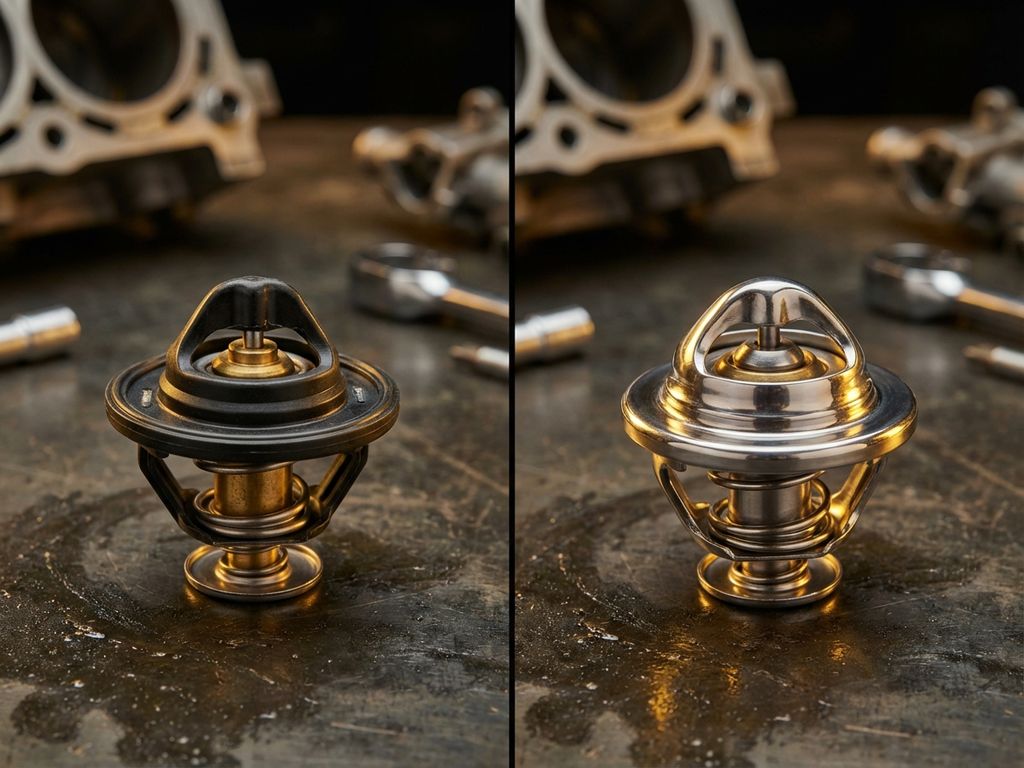
Upgrading to custom-designed thermostat housings depends on your specific application requirements and performance goals. Custom housings offer precise fit, enhanced durability, and optimised thermal management compared to standard options. They are particularly valuable for high-performance automotive thermostats, extreme operating conditions, and applications with unique space constraints or specialised industry needs.
What are custom-designed thermostat housings and how do they differ from standard options?
Custom-designed thermostat housings are engineered components built to exact specifications for specific applications, rather than relying on off-the-shelf solutions. Unlike standard housings that follow generic dimensions and materials, custom designs offer complete flexibility in geometry, material selection, and performance characteristics.
The primary differences lie in precision engineering and application-specific optimisation. Standard housings typically use common materials like aluminium or plastic with universal mounting patterns. Custom housings can incorporate advanced materials such as high-temperature polymers, specialised metal alloys, or composite materials tailored to your operating environment.
Design flexibility extends to mounting configurations, port orientations, and integrated features. Custom housings can include built-in sensors, unique sealing mechanisms, or specialised cooling channels that are not available in standard products. This precise approach ensures optimal fit within your system architecture whilst maximising thermal management efficiency.
Performance characteristics also differ significantly. Custom designs can achieve tighter temperature tolerances, improved flow dynamics, and enhanced durability under specific operating conditions that standard housings cannot match.
When should you consider upgrading from standard to custom thermostat housings?
Consider upgrading to custom thermostat housings when your application demands exceed what standard options can reliably deliver. High-performance requirements, severe space constraints, extreme operating conditions, and specialised industry applications typically justify the investment in custom solutions.
High-performance automotive applications often require custom housings to achieve precise temperature control and optimal coolant flow. Racing vehicles, heavy-duty commercial trucks, and performance engines benefit from housings designed specifically for their thermal management demands.
Space constraints frequently drive the need for custom solutions. When standard housings do not fit your available mounting space or interfere with other components, custom designs can provide compact solutions with optimised geometry. This is particularly common in modern automotive designs where engine bay space is increasingly limited.
Extreme operating conditions—such as very high temperatures, corrosive environments, or unusual pressure requirements—often exceed standard housing capabilities. Industrial applications, marine environments, and specialised machinery may require custom materials and designs to ensure reliable long-term performance.
Specialised industries with unique requirements, such as aerospace, medical equipment, or renewable energy systems, typically need custom housings to meet specific regulatory standards or performance criteria that standard products cannot address.
What are the main benefits of investing in custom thermostat housing design?
Custom thermostat housing design delivers superior performance through optimised thermal management, enhanced durability, and improved system efficiency compared to standard alternatives. These benefits typically result in better overall system reliability and long-term cost-effectiveness despite higher initial investment.
Performance improvements include more precise temperature control, optimised coolant flow patterns, and reduced pressure drops across the housing. Custom designs can incorporate advanced features such as variable-geometry passages or integrated bypass circuits that enhance thermal management efficiency.
Durability enhancements come from material selection tailored to your specific operating environment. Custom housings can use corrosion-resistant alloys, high-temperature polymers, or reinforced composites that significantly extend service life compared to standard materials.
Efficiency gains result from optimised designs that reduce energy consumption and improve system response times. Custom housings can minimise thermal losses, reduce pumping requirements, and enable faster temperature regulation, which is particularly important in automotive thermostats where fuel efficiency matters.
Cost-effectiveness emerges over time through reduced maintenance requirements, extended service intervals, and improved system reliability. Whilst initial costs are higher, custom housings often provide better total cost of ownership through enhanced performance and longevity.
How much more do custom thermostat housings cost compared to standard options?
Custom thermostat housings typically cost two to five times more than standard options initially, with development expenses ranging from several thousand to tens of thousands of pounds depending on complexity. However, volume production and the long-term value proposition often justify the investment for demanding applications.
Development costs include engineering design, prototyping, testing, and tooling expenses. Simple modifications to existing designs might add 50–100% to standard housing costs, whilst completely new designs can increase costs by 300–500% for initial quantities.
Manufacturing considerations significantly impact pricing. Low-volume custom production carries higher per-unit costs due to setup expenses and specialised tooling. Higher volumes reduce unit costs substantially, making custom solutions more economically viable for larger production runs.
Volume pricing breaks typically occur around 1,000–10,000 units annually, depending on design complexity. At these volumes, custom housing costs often approach 150–250% of standard options rather than the 300–500% premium seen in prototype quantities.
Long-term value calculations should include reduced maintenance costs, improved system efficiency, and extended service life. Many custom housing applications achieve payback within two to five years through operational savings and reduced downtime, making the initial investment economically justified.
Budget planning should account for development timelines of three to twelve months and minimum order quantities that may require significant upfront investment in inventory.
What materials and design features should you prioritise in custom thermostat housings?
Prioritise materials with excellent thermal conductivity, corrosion resistance, and dimensional stability under operating temperatures. Key design features should include optimised sealing interfaces, robust mounting configurations, and thermal management characteristics tailored to your specific application requirements.
Essential material properties include thermal expansion compatibility with your system components, chemical resistance to coolants and environmental conditions, and mechanical strength under operating pressures. Aluminium alloys offer excellent thermal properties and moderate costs, whilst stainless steel provides superior corrosion resistance for harsh environments.
Advanced polymers such as PEEK or PPS can provide weight reduction and corrosion resistance whilst maintaining dimensional stability at high temperatures. These materials work particularly well in applications where metal compatibility issues or weight constraints exist.
Sealing requirements demand careful attention to surface finishes, O-ring groove designs, and gasket compatibility. Custom housings should incorporate proven sealing technologies appropriate for your pressure and temperature ranges whilst allowing for thermal expansion.
Mounting configurations must accommodate installation constraints whilst providing secure attachment under vibration and thermal cycling. Consider integrated mounting features, accessibility for maintenance, and compatibility with the existing system architecture.
Thermal management features such as optimised coolant passages, integrated temperature sensors, and heat-dissipation fins can significantly enhance performance. Design these features based on your specific flow requirements and temperature control objectives.
How BTT Solutions helps with custom thermostat housing development
We provide comprehensive custom thermostat housing development from initial concept through to production, combining advanced engineering capabilities with proven manufacturing processes. Our expertise in high-precision thermal management components ensures optimal performance for automotive, industrial, and building applications.
Our custom housing services include:
- Application analysis and requirements specification
- Advanced CAD design and thermal modelling
- Material selection and compatibility testing
- Rapid prototyping and performance validation
- Manufacturing process optimisation
- Quality assurance and testing protocols
We support the complete development cycle with dedicated engineering resources, ensuring your custom housing meets performance specifications whilst being optimised for manufacturability and cost-effectiveness. Our global manufacturing capabilities enable both prototype development and high-volume production.
Contact us today to discuss your custom thermostat housing requirements and discover how our thermal management expertise can enhance your application’s performance.


