
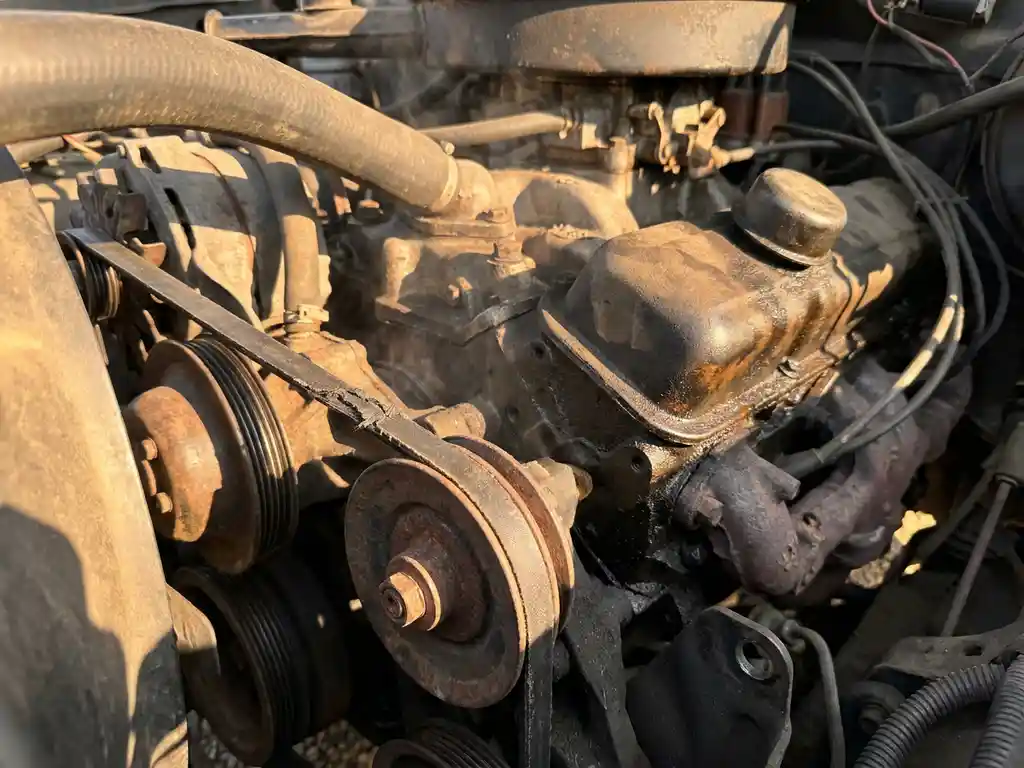
Parasitic drag is the power your engine generates but never delivers to the wheels, because it is consumed internally by the engine’s own accessories and systems. Every time your alternator charges the battery, your water pump circulates coolant, or your power steering pump builds pressure, the engine burns fuel just to keep those components running. The sections below break down where that hidden power loss comes from, how it affects fuel economy, and what modern engineering does to claw it back.
How does parasitic drag actually rob horsepower?
Parasitic drag robs horsepower by forcing the engine to do work that produces no forward motion. Every belt-driven or gear-driven accessory attached to the engine creates a mechanical load, and the crankshaft must overcome that resistance before any remaining torque reaches the drivetrain. The result is a gap between the power the engine theoretically produces and the power that actually moves the vehicle.
Think of it this way: the engine generates a fixed amount of energy from combustion. A portion of that energy is immediately redirected to spin accessories, pump fluids, and maintain electrical systems. Only what is left over gets converted into wheel torque. In a typical passenger car, this overhead can account for a meaningful share of total engine output, and the effect is most noticeable at low speeds and during city driving, where accessories run at full demand while the engine operates at partial load.
What are the main sources of parasitic drag in an engine?
The main sources of parasitic drag in an engine are the alternator, water pump, power steering pump, air conditioning compressor, and internal friction from oil viscosity and bearing resistance. Each of these draws mechanical energy from the crankshaft continuously while the engine is running, regardless of whether the vehicle actually needs that energy at that moment.
- Alternator: Converts mechanical energy into electricity to charge the battery and power onboard electronics. It represents one of the largest single sources of parasitic loss in a conventional drivetrain.
- Water pump: Circulates coolant through the engine and radiator. Mechanically driven pumps run at a fixed ratio to engine speed, meaning they pump more coolant than necessary at high rpm.
- Power steering pump: In hydraulic systems, it builds pressure constantly, even when the steering wheel is not being turned.
- Air conditioning compressor: Places a sudden, significant load on the engine each time the climate system activates.
- Internal friction: Oil viscosity, piston ring tension, and bearing drag all resist crankshaft rotation, adding a baseline level of loss that exists even before any accessories are considered.
How does the cooling system contribute to parasitic drag?
The cooling system contributes to parasitic drag primarily through the mechanical water pump, which is one of the most consistently active engine accessories. Because a traditional belt-driven water pump spins in direct proportion to engine speed, it circulates coolant at maximum flow even when the engine has not yet reached operating temperature, wasting energy that could otherwise reach the wheels.
This is where thermostat components play a central role in engine efficiency. A thermostat controls when coolant actually flows through the radiator, keeping the engine at its optimal temperature window. When a thermostat is sluggish, sticks open, or opens too early, the engine runs cooler than it should. That forces the water pump to circulate cold, thick coolant unnecessarily, increasing the viscous load on the system and extending the warm-up phase during which fuel consumption is highest.
Precise thermal management reduces this waste. When the thermostat opens at exactly the right temperature, the cooling circuit does only the work it needs to do, and the water pump operates efficiently within a narrower, well-controlled range. This is why the quality and accuracy of thermostat components directly affect how much parasitic drag the cooling system generates across a full drive cycle.
What’s the difference between parasitic drag and aerodynamic drag?
Parasitic drag originates inside the engine and drivetrain, consuming power before it reaches the wheels. Aerodynamic drag is an external resistance force that acts on the vehicle’s body as it moves through air, opposing forward motion after power has already been delivered to the wheels. The two types of drag reduce fuel efficiency in different ways and respond to completely different engineering solutions.
Aerodynamic drag increases with the square of vehicle speed, which is why it dominates at highway speeds. A sleeker body shape, a lower ride height, or active grille shutters all reduce aerodynamic drag. Parasitic drag, by contrast, is relatively constant at any given engine speed and is most significant at low speeds and during urban driving cycles, where aerodynamic forces are minimal but accessory loads remain fully active.
Engineers working on engine efficiency must address both types, but the strategies are entirely separate. Reducing parasitic drag requires redesigning or decoupling accessories, improving thermal management, and reducing internal friction. Reducing aerodynamic drag requires changes to the vehicle’s exterior geometry.
How much fuel economy does parasitic drag cost?
Parasitic drag can consume a significant portion of an engine’s output, with estimates from automotive engineering research suggesting that accessory loads and internal friction together account for a noticeable share of fuel consumption in real-world driving conditions. The exact figure varies by engine size, vehicle type, and which accessories are active, but the cooling system and alternator alone can each represent a measurable fraction of total engine load.
The impact is most pronounced during short urban trips. When an engine is cold, coolant is thick, oil viscosity is high, and the alternator is working hard to replenish charge used during starting. All of these factors peak simultaneously, making the first few minutes of a cold start the most parasitically inefficient phase of any journey. Vehicles that spend most of their operating time in urban stop-and-go conditions experience proportionally higher fuel losses from parasitic drag than those driven primarily at steady highway speeds.
From a fleet or commercial vehicle perspective, even modest reductions in parasitic losses translate into tangible fuel savings across thousands of operating hours, which is why engineering teams take these losses seriously during the design phase.
How can parasitic drag be reduced in modern engines?
Parasitic drag can be reduced in modern engines through electrically driven accessories, variable-output components, lower-viscosity lubricants, and precise thermal management systems. The shift away from mechanically coupled accessories toward demand-controlled alternatives is one of the most effective strategies available to engine designers in 2026.
- Electric water pumps: Unlike belt-driven pumps, electric water pumps run only when cooling is actually needed, at the flow rate required, decoupling pump speed from engine speed entirely.
- Electric power steering: Replaces the continuously pressurised hydraulic pump with a motor that activates only when the driver steers, eliminating constant drag.
- Smart alternators: Recover energy during deceleration rather than generating it under load, reducing the burden on the engine during acceleration.
- Low-viscosity engine oils: Reduce bearing and piston friction, lowering the baseline internal drag before accessories are even considered.
- Precision thermostats: Ensure the engine reaches and maintains its optimal temperature as quickly as possible, reducing the extended warm-up period where parasitic losses are at their worst.
The thermostat is often an underappreciated lever in this equation. A thermostat that opens at precisely the right temperature keeps the engine in its most efficient thermal window, reduces the workload on the cooling circuit, and shortens the cold-start phase where fuel consumption spikes. Advances in thermomanagement engineering have made modern thermostat components significantly more accurate and responsive than earlier generations, contributing directly to measurable reductions in parasitic drag across a full drive cycle.
How BTT Solutions helps reduce engine parasitic drag
Precise thermal management is one of the most effective tools available for reducing parasitic drag, and that is exactly where we focus. At BTT Solutions, we develop and manufacture high-precision thermostat components and thermomanagement control units designed to keep engines operating in their optimal temperature range from the earliest possible point in the warm-up cycle. When the cooling circuit responds accurately and quickly, the engine wastes less energy fighting unnecessary thermal loads.
Our product advisory service supports engineering and procurement teams in selecting the right components for their specific application, whether that involves:
- Wax elements engineered for precise opening temperatures and consistent long-term performance
- Thermostat inserts designed for reliable integration into existing cooling system architectures
- Engineered housings built to meet the dimensional and thermal requirements of demanding automotive and industrial environments
We work directly with technical decision-makers, engineers, and procurement leads across the automotive, industrial, and building technology sectors. As a focused, independent company, we offer the kind of individual attention and fast response that larger suppliers rarely can. If you want to discuss how better thermal management can reduce parasitic losses in your application, get in touch with our team and we will find the right solution together.
Related Articles
- Why do fleet operators prioritize engine longevity over short-term savings?
- Can you improve engine efficiency with better thermal management?
- How does thermal management impact engine performance?
- What thermal management solutions are used in building technology?
- How do oil temperature regulators work in hydraulic systems?


