
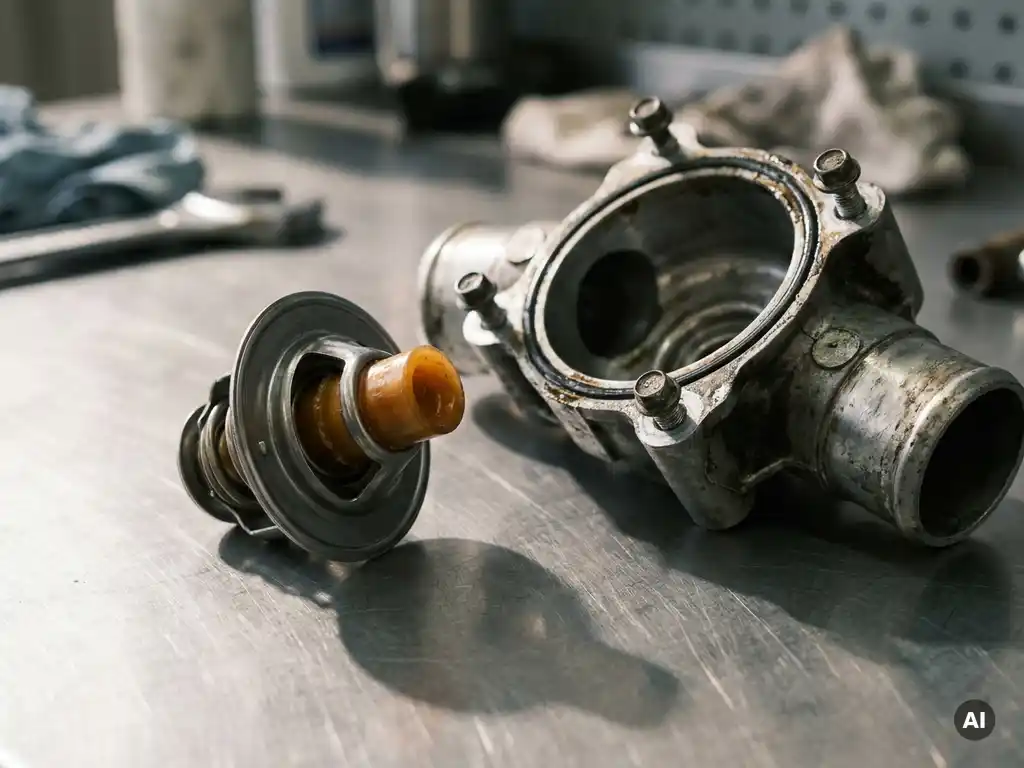
A wax element material in automotive applications typically lasts between 100,000 and 150,000 miles, or roughly 10 years under normal driving conditions. That said, longevity depends heavily on how well the cooling system is maintained, the quality of the wax pellet thermostat itself, and the thermal stress it endures over time. The sections below break down the key factors that influence lifespan and help you spot trouble before it becomes costly.
What factors determine how long a wax element lasts?
The lifespan of a wax element material is shaped by a combination of operating conditions, coolant quality, manufacturing precision, and thermal cycling frequency. A well-maintained system with a high-quality wax pellet thermostat can comfortably reach or exceed the 100,000-mile mark, while neglected systems may see failure much sooner.
Several core factors come into play:
- Coolant quality and chemistry: Degraded or contaminated coolant accelerates corrosion around the thermostat housing and can compromise the wax element seal.
- Operating temperature range: Engines that regularly run at extreme temperatures place greater stress on the wax thermal expansion mechanism.
- Manufacturing tolerances: Precision-engineered wax elements maintain consistent expansion and contraction cycles far longer than lower-grade alternatives.
- Driving patterns: Frequent short trips, where the engine never fully warms up, can cause incomplete thermal cycles that wear the element unevenly over time.
- Coolant flush intervals: Skipping scheduled coolant changes allows acidic byproducts to build up, which degrades the rubber seals surrounding the wax pellet.
Understanding these factors gives engineers and procurement teams a clearer picture of what to specify when sourcing thermostat components for demanding applications.
How does engine temperature cycling affect wax element wear?
Every time an engine starts cold and reaches operating temperature, the wax element inside the thermostat expands and contracts. This repeated wax thermal expansion cycle is the primary mechanical stress the element endures, and over tens of thousands of cycles, even a well-made element will gradually lose its precision.
The wax inside the pellet is carefully formulated to melt at a specific temperature, pushing a piston that opens the thermostat valve. When the engine cools, the wax solidifies and the spring returns the valve to its closed position. Each of these cycles applies pressure to the surrounding rubber sleeve and the metal housing. Over time, the rubber can harden, crack, or develop micro-tears, allowing the wax to leak slightly and reducing the element’s responsiveness.
Engines that spend a lot of time idling in traffic or making short urban runs experience more incomplete cycles, where the wax partially expands and contracts without ever completing a full thermal stroke. Industry experience suggests this type of partial cycling can be harder on the element than steady highway driving, where temperatures stabilize and the wax holds a consistent position for longer periods.
What are the signs that a wax element thermostat is failing?
A failing wax element thermostat typically shows up through engine temperature irregularities before it fails completely. The most common warning signs include overheating, consistently low operating temperatures, poor fuel economy, and a heater that blows cold air when it should be warm.
Here is what to watch for in more detail:
- Engine overheating: If the thermostat is stuck closed, coolant cannot circulate to the radiator, causing rapid temperature spikes.
- Engine running too cold: A thermostat stuck open allows coolant to flow continuously, preventing the engine from reaching its optimal operating temperature.
- Erratic temperature gauge: A needle that swings unpredictably often points to a wax element that is no longer opening and closing at consistent temperatures.
- Reduced fuel efficiency: An engine that cannot maintain its target temperature burns more fuel to compensate, which is a measurable and often overlooked symptom.
- Cabin heater performance drop: Since the cabin heater draws heat from engine coolant, a stuck-open thermostat means less heat reaches the passenger compartment.
Catching these signs early prevents secondary damage to the radiator, water pump, and cylinder head gaskets, all of which are far more expensive to repair than a thermostat replacement.
How does coolant condition impact wax element longevity?
Coolant condition directly affects how long a wax element material survives. Fresh, properly mixed coolant is slightly alkaline and contains corrosion inhibitors that protect metal and rubber components throughout the cooling system. As coolant ages, these inhibitors break down, the fluid becomes acidic, and that acidity attacks the rubber sleeve surrounding the wax pellet thermostat.
Contaminated coolant introduces additional risks. Oil contamination, for instance, can swell or degrade rubber seals, while scale and mineral deposits from hard water can physically restrict thermostat movement. Electrolytic corrosion, which occurs when dissimilar metals in the cooling system create a small electrical current through the coolant, can erode the thermostat housing over time.
The practical takeaway is straightforward: follow the vehicle manufacturer’s coolant change intervals, use the correct coolant specification for the engine, and always top up with distilled water rather than tap water. These simple habits extend the life of every component in the cooling circuit, including the wax element thermostat.
When should a wax element thermostat be replaced?
A wax element thermostat should be replaced when symptoms of failure appear, during major cooling system service, or proactively at high-mileage intervals as part of a planned maintenance schedule. Waiting for complete failure is rarely the right approach, since a stuck thermostat can cause engine damage within minutes of overheating.
As a general guideline for automotive applications:
- Replace immediately if any of the warning signs described above are present, such as overheating or erratic temperature readings.
- Consider proactive replacement when the vehicle reaches the 100,000-mile mark, particularly if the original thermostat has never been changed.
- Replace alongside cooling system work: When a water pump, radiator, or head gasket is being replaced, swapping the thermostat at the same time adds minimal cost and eliminates a future failure point.
- Follow OEM guidance: Some manufacturers specify thermostat replacement intervals in their maintenance schedules, particularly for turbocharged or high-performance engines that operate at higher thermal loads.
For industrial and commercial vehicle fleets, a condition-based monitoring approach, tracking temperature sensor data over time, can flag thermostat degradation before it becomes an unplanned downtime event.
How do high-precision wax elements differ from standard ones?
High-precision wax elements are engineered to tighter manufacturing tolerances than standard alternatives, which means they open and close at more consistent temperatures, maintain accuracy over a greater number of thermal cycles, and degrade more slowly under demanding operating conditions. The wax thermal expansion response is more predictable, which directly benefits engine efficiency and emissions control.
The differences show up in several measurable ways:
- Tighter activation temperature tolerance: A precision wax pellet thermostat may open within plus or minus one or two degrees of its rated temperature, while a standard unit might vary by five degrees or more.
- More consistent stroke length: The distance the piston travels during wax thermal expansion determines how much coolant flow is allowed. Precision elements deliver a more linear and repeatable stroke.
- Better long-term stability: Higher-grade wax formulations and superior rubber compounds resist degradation longer, which translates directly into extended service life.
- Compatibility with modern engine management systems: Today’s engine control units rely on predictable thermostat behavior to optimize fuel injection and ignition timing. A thermostat that drifts out of specification confuses the ECU and reduces overall system efficiency.
For applications where fuel efficiency targets and emissions regulations are non-negotiable, the performance gap between a precision wax element and a standard one is meaningful and worth specifying carefully.
How BTT Solutions supports your wax element thermostat requirements
We at BTT Solutions have built our entire product philosophy around one principle: precision matters. Our wax element thermostats and thermostat components are engineered to meet the tightest tolerances in the industry, giving automotive manufacturers, fleet operators, and industrial customers the reliability and performance consistency they need across demanding applications.
Here is what working with us looks like in practice:
- Patented wax element technology that delivers highly accurate activation temperatures and long-term thermal stability across a wide range of operating conditions.
- End-to-end thermal management solutions, from individual wax pellet thermostat components to complete temperature management assemblies for automotive, industrial, and building technology applications.
- Flexible, responsive collaboration with technical decision-makers and procurement teams, including engineering support to match the right component to your specific application requirements.
- Global manufacturing capability across eight locations, ensuring consistent quality and supply chain reliability for customers worldwide.
Whether you are specifying components for a new vehicle platform, managing a fleet maintenance program, or engineering a custom industrial solution, we bring the expertise and precision manufacturing behind every wax element we produce. Get in touch with our team to discuss your thermal management requirements and find the right solution for your application.
Related Articles
- What is the difference between open-loop and closed-loop thermostat testing?
- What is the relationship between engine temperature and catalytic converter efficiency?
- Which thermostat is mostly used in modern automobiles?
- What is the most reliable thermostat brand?
- How do transmission oil thermostats protect automatic gearboxes?


