
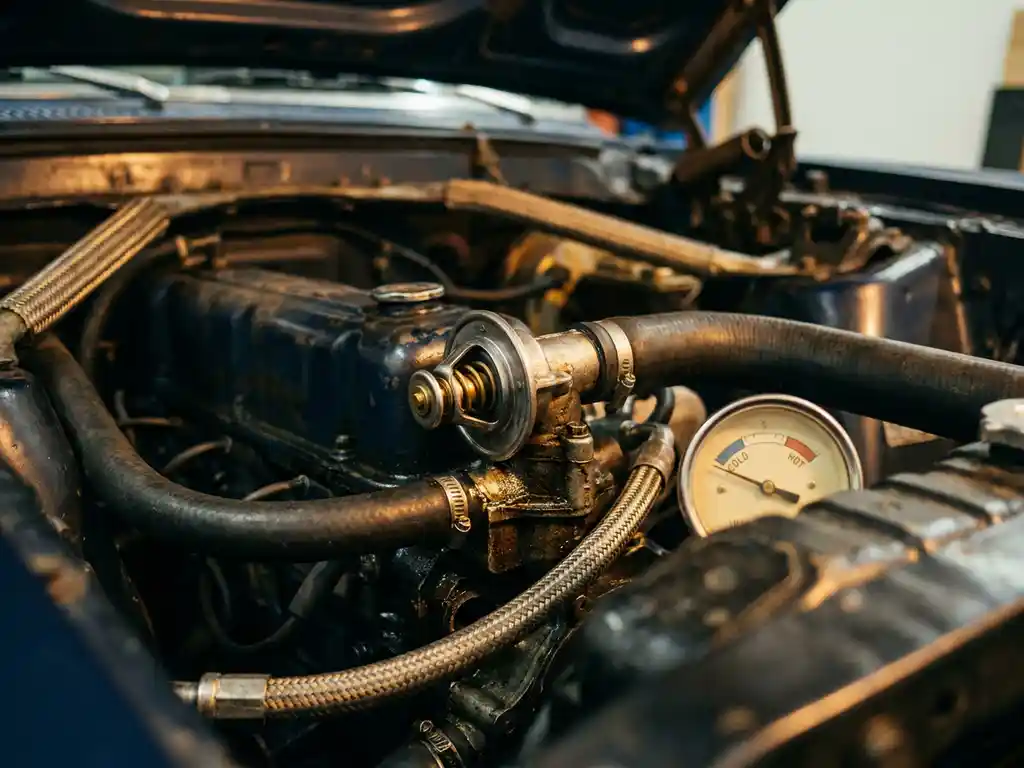
Open-loop thermostat testing applies a fixed input, such as a controlled heat source or fluid temperature, and measures how the thermostat responds without any feedback mechanism adjusting the test conditions in real time. Closed-loop testing, by contrast, continuously monitors the thermostat’s output and uses that data to regulate the test environment dynamically. The choice between these two approaches depends on what you need to learn about a thermostat’s behavior, and each method surfaces different types of performance data. The sections below walk through how each method works, what it reveals, and where it fits best in a validation program.
How does open-loop thermostat testing actually work?
In open-loop thermostat testing, the test system applies a predetermined input, typically a fixed fluid temperature or heat ramp, and records the thermostat’s mechanical or thermal response. There is no feedback path. The test environment does not change based on what the thermostat does. The goal is to observe how the component behaves under a known, repeatable condition.
In practice, this means a test bench heats a fluid to a specific temperature, circulates it past the thermostat, and logs when the valve opens, how far it travels, and at what rate. Because the input is fixed, results from one test run are directly comparable to results from another. This repeatability makes open-loop methods especially useful early in a development cycle, when engineers need a reliable baseline to compare design iterations against each other.
The simplicity of the setup is also an advantage. Fewer variables in the test environment mean fewer sources of measurement noise, which makes it easier to isolate the thermostat’s own behavior from external influences. For component-level validation, where the question is simply “does this thermostat open at the right temperature,” open-loop testing is often the most efficient path to an answer.
How does closed-loop thermostat testing differ in setup?
Closed-loop thermostat testing adds a feedback mechanism to the test environment. Sensors continuously read the thermostat’s output, and a control system uses that data to adjust the test conditions in real time. The result is a dynamic test that can simulate how a thermostat would behave inside an actual operating system, such as an engine cooling circuit or an industrial heat exchanger.
The hardware setup is more complex. A closed-loop bench typically includes a programmable thermal controller, flow regulation equipment, and a data acquisition system that can both read measurements and send corrective signals back to the heat source or pump. This creates a test environment that responds to the thermostat rather than simply presenting it with a fixed condition.
This responsiveness is what makes closed-loop testing valuable for system-level validation. When a thermostat modulates fluid flow in a real application, the fluid temperature itself changes in response. A closed-loop bench can replicate that interaction, giving engineers a much more accurate picture of how the component will perform once it is integrated into a larger thermal system. For thermostat performance testing in late-stage development or production qualification, this fidelity is often essential.
What types of defects does each method detect?
Open-loop testing is best at catching discrete, component-level defects. Closed-loop testing is better suited to finding integration and stability issues that only appear when the thermostat interacts with a dynamic system. The two methods are complementary rather than competitive.
Defects open-loop testing surfaces
Because the input is fixed and controlled, open-loop testing reliably detects problems with opening temperature accuracy, stroke length, response speed, and return behavior. If a thermostat opens too early, too late, or fails to reach its full travel, these deviations show up clearly against the expected response curve. Manufacturing inconsistencies in wax elements, spring preload, and valve geometry are all detectable at this level.
Defects closed-loop testing surfaces
Closed-loop testing reveals a different category of problems: hunting, oscillation, thermal lag, and instability under varying load conditions. These are issues that would never appear on a fixed-input bench because they only emerge when the thermostat’s own output feeds back into the system. A thermostat that passes open-loop validation cleanly can still cause temperature instability in a real circuit if its response characteristics interact poorly with the system’s thermal mass and flow dynamics.
When should open-loop testing be used over closed-loop?
Open-loop thermostat testing is the better choice when the objective is fast, repeatable component characterization rather than system simulation. It is the right method during early development, incoming quality inspection, and high-volume production testing where speed and consistency matter more than dynamic realism.
Specifically, open-loop testing fits well in these situations:
- Comparing multiple design variants against a common baseline
- Verifying that a manufactured batch meets specification before shipment
- Screening for gross defects quickly during incoming inspection
- Establishing reference data for a new thermostat design before system integration begins
Closed-loop testing becomes the right choice once a component has passed initial screening and the question shifts from “does this part meet spec” to “how will this part behave in a real application.” At that stage, the added complexity of a feedback-controlled bench is justified by the richer, more application-relevant data it produces.
Which industries apply each thermostat testing method?
Both open-loop and closed-loop thermostat testing methods are used across automotive, industrial, and building technology sectors, but the balance between them shifts depending on the application’s performance demands and regulatory requirements.
In automotive engineering, both methods are standard. Open-loop testing is used extensively during component development and supplier qualification, while closed-loop validation is typically required before a thermostat is approved for integration into an engine cooling system. The stakes around engine temperature control, fuel efficiency, and emissions make system-level validation non-negotiable for most OEM programs.
Industrial applications, including cooling circuits for machinery, hydraulic systems, and process equipment, tend to rely more heavily on closed-loop testing because operating conditions are rarely constant. A thermostat managing oil temperature in a press or coolant in a compressor faces continuously varying loads, and only dynamic testing can confirm it will remain stable across that range.
In building technology, such as heating systems, radiators, and underfloor heating circuits, open-loop testing often dominates at the component level because the thermal dynamics are slower and more predictable. However, closed-loop validation is increasingly applied in smart building systems where thermostats interact with electronic control units and demand more precise, responsive behavior. You can learn more about the range of applications we cover on our product pages.
What standards govern open-loop and closed-loop thermostat testing?
Thermostat testing is governed by a combination of international standards, industry-specific requirements, and OEM specifications. The applicable standards depend on the thermostat’s application and the market it is sold into.
For automotive thermostats, the most widely referenced standards include those from ISO and SAE that cover engine cooling system components. These specify test parameters such as opening temperature tolerance, full-stroke temperature, and return temperature, which apply directly to open-loop test procedures. OEMs frequently layer additional requirements on top of these, particularly for closed-loop validation, defining acceptable stability margins and response time limits for specific vehicle platforms.
Industrial thermostats may fall under DIN standards or application-specific requirements from machinery directives, depending on the end use. Building technology components in European markets are often subject to EN standards covering heating system components, including thermostatic radiator valves and mixing valves.
What matters in practice is that both open-loop and closed-loop test programs are designed with the relevant standard’s acceptance criteria in mind from the start. Running a thorough open-loop validation against the wrong temperature tolerance, or designing a closed-loop bench that does not replicate the system’s actual thermal mass, produces results that look complete but do not actually confirm compliance. Our background in precision thermostat manufacturing means we understand how these standards translate into real test requirements across different sectors.
How BTT Solutions supports your thermostat validation process
Choosing the right testing approach is only part of the challenge. The other part is making sure the thermostat itself is designed and manufactured to perform reliably under both open-loop and closed-loop conditions. That is where we come in.
At BTT Solutions, we advise customers on thermostat component selection with validation requirements in mind from the very beginning. Our product consultancy covers:
- Wax element selection matched to the opening temperature and stroke performance your test program will verify
- Thermostat inserts and engineered housings designed for consistent, repeatable behavior across production batches
- Application-specific guidance for automotive, industrial, and building technology environments, including advice on which testing approach fits your validation stage
- Support for OEM and standard compliance, helping you align your component choice with the test parameters required by your target market
Whether you are early in a development program and need a reliable component baseline for open-loop screening, or you are preparing for system-level closed-loop qualification, we can help you select the right thermostat component and understand what to expect from it in testing. Get in touch with our team to discuss your specific thermal management testing requirements.
Related Articles
- Can thermostat test results vary between laboratories?
- How do you test a thermostat under thermal cycling conditions?
- Why does engine temperature consistency matter for fuel economy?
- How do automotive thermostats compare to industrial temperature control systems?
- Why do thermostats use wax instead of electronics?


