
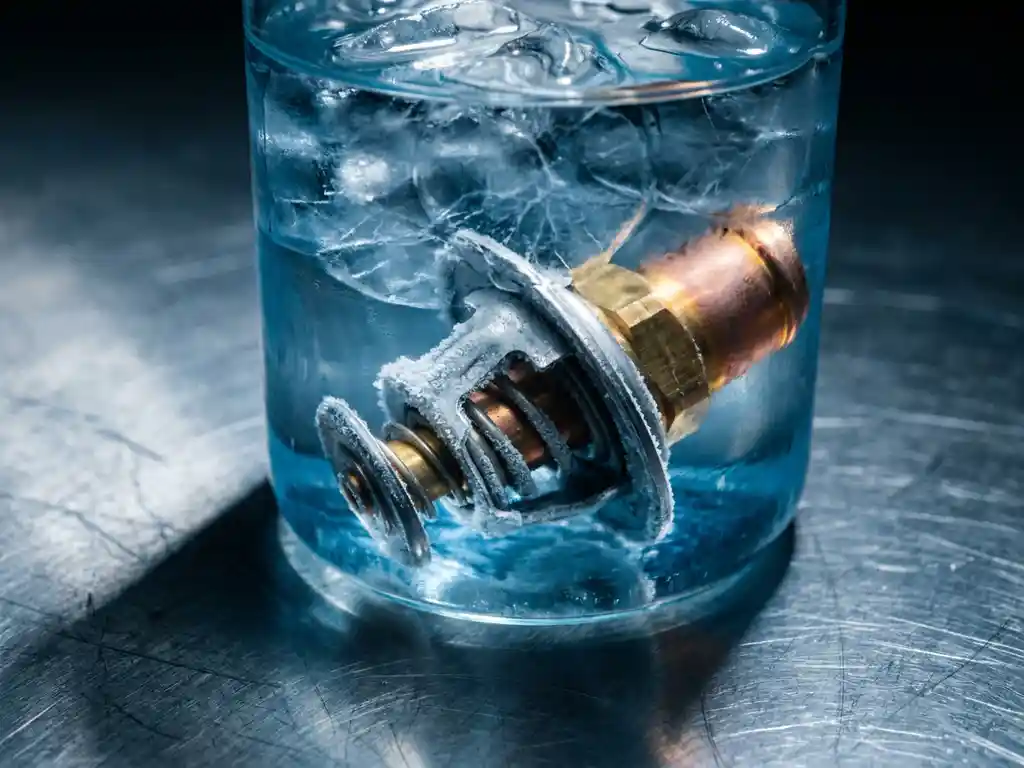
Thermal shock testing is a quality assurance process that exposes components to rapid, extreme temperature changes to evaluate how well they withstand sudden thermal stress without cracking, deforming, or failing. For thermostats, it absolutely applies. Because thermostats sit at the heart of temperature regulation systems, they need to survive the kind of abrupt transitions between hot and cold environments that occur in real-world operation. The sections below walk through how the testing works, what it reveals, and how its results shape the way thermostat components are designed and validated.
How does thermal shock testing actually work?
Thermal shock testing works by moving a component rapidly between two extreme temperature environments, typically a very hot chamber and a very cold one, with the transition happening fast enough to create genuine thermal stress rather than gradual adaptation. The speed of the transfer is what distinguishes it from slower forms of temperature testing. Most setups use either a two-chamber system where the part is mechanically moved between zones, or a single chamber where the temperature changes at a controlled rate far beyond what normal operation would produce.
The goal is to find failure modes that only emerge under sudden stress. When a material heats or cools rapidly, different layers or zones within it expand and contract at different rates. That mismatch generates internal stress. If the stress exceeds what the material or its bonded interfaces can handle, you get cracking, delamination, seal failure, or dimensional distortion. A component can look and function perfectly under steady-state conditions but fail almost immediately once subjected to sharp thermal transitions.
Test cycles are repeated many times, often hundreds or thousands, to simulate the cumulative effect of years of real-world use compressed into a short validation window.
What materials and components are most vulnerable to thermal shock?
Materials with low thermal conductivity, high brittleness, or mismatched coefficients of thermal expansion are the most vulnerable to thermal shock. Ceramics, glass, and certain polymers tend to crack under rapid temperature swings because they cannot redistribute heat quickly enough to avoid steep internal gradients. Metals generally handle thermal shock better, but bonded assemblies involving multiple materials are particularly at risk because each material expands and contracts at its own rate.
In practical terms, the components most likely to show early failure during thermal shock testing include:
- Seals and gaskets made from rubber or elastomers, which can harden, crack, or lose their sealing properties
- Wax elements, where the wax-to-housing interface may degrade under repeated rapid cycling
- Plastic housings and carriers bonded to metal inserts, where differential expansion creates stress at the joint
- Solder joints and electrical connections in sensor-integrated thermostat assemblies
- Coatings and surface treatments that can delaminate when the substrate beneath them moves faster than the coating can follow
Understanding which materials are in a given assembly helps engineers decide how aggressive the test profile needs to be and which failure modes to monitor most closely.
How is thermal shock testing applied to thermostat components?
For thermostat components, thermal shock testing is applied to validate that the core functional parts, including wax elements, thermostat inserts, housings, and seals, can survive the temperature extremes and rapid transitions they will encounter across their intended service life. The test profiles are designed to reflect the actual operating environment, whether that is an automotive cooling circuit, an industrial fluid management system, or a building heating network.
In automotive applications, a thermostat may experience rapid transitions when a cold engine starts and coolant temperature rises quickly, or when a vehicle moves from a hot operating state into a cold environment. The test replicates these transitions at an accelerated rate. Engineers monitor for changes in opening and closing temperature accuracy, stroke length, leakage past seals, and any visible cracking or deformation in the housing or wax element body.
For thermostat components used in industrial or building applications, the test parameters shift to match different fluid types, pressure ranges, and duty cycles, but the underlying logic remains the same: confirm that the component performs reliably after being stressed in ways that mirror real service conditions.
What standards govern thermal shock testing for automotive thermostats?
Thermal shock testing for automotive thermostats is governed primarily by OEM-specific validation requirements and broader industry standards that define acceptable test conditions, cycle counts, and pass/fail criteria. The most widely referenced frameworks in the automotive sector include standards from organizations such as SAE International, ISO, and individual OEM supplier quality manuals, which often specify their own temperature ranges and transition speeds based on the specific thermal environment of the vehicle platform.
Common elements across these standards include:
- Defined high and low temperature limits, often ranging from well below freezing to temperatures exceeding normal operating peaks
- Maximum transfer time between temperature zones, typically a few seconds to prevent the component from equilibrating during the transition
- Minimum dwell time at each extreme to ensure the part reaches the target temperature throughout its mass
- Number of cycles required before post-test functional evaluation
- Acceptance criteria covering dimensional stability, leakage, and functional performance after the test sequence
Because thermostat components are safety-relevant parts of engine cooling and thermal management systems, OEMs often layer additional requirements on top of base standards. Suppliers working across multiple automotive customers therefore need to maintain flexibility in their validation processes to meet different but overlapping sets of requirements.
What’s the difference between thermal shock testing and thermal cycling?
The key difference between thermal shock testing and thermal cycling is the rate of temperature change. Thermal shock testing involves near-instantaneous transitions between temperature extremes, deliberately creating steep thermal gradients inside the component. Thermal cycling moves through temperature changes more gradually, allowing the part to adjust more evenly and testing a different set of failure mechanisms, primarily fatigue from repeated expansion and contraction rather than sudden stress fractures.
In practical terms, thermal shock testing is better suited to finding brittle fracture, seal failure, and delamination that occur when a material cannot redistribute heat fast enough. Temperature cycling, by contrast, is more effective at revealing fatigue-driven failures such as solder joint cracking, metal fatigue in spring elements, or gradual degradation of the wax element’s response characteristics over many cycles.
Both test types are often used together in a complete thermostat durability validation program. Thermal shock testing tends to come earlier in the development cycle to screen for obvious material or design vulnerabilities, while thermal cycling runs over longer periods to simulate cumulative wear. Treating them as alternatives rather than complements would leave significant gaps in the validation picture.
How do thermal shock test results affect thermostat design decisions?
Thermal shock test results directly influence material selection, joint design, seal geometry, and housing construction in thermostat development. When a component fails a thermal shock test, the failure mode points engineers toward a specific design change rather than a general revision. A cracked wax element housing suggests a material substitution or wall thickness adjustment. A leaking seal suggests a change in elastomer compound or compression geometry. A delaminated coating suggests a process or adhesion issue rather than a structural one.
Results also inform tolerance decisions. If testing reveals that a component’s opening temperature drifts after repeated thermal shock cycles, the design team may tighten manufacturing tolerances on the wax element, change the wax formulation, or add a recalibration step in the production process. The test essentially acts as an accelerated mirror of long-term field performance, giving engineers actionable data before a product reaches production.
Beyond individual components, thermal shock data feeds into system-level decisions. If a particular thermostat insert consistently outperforms alternatives under aggressive test conditions, that data supports its selection for high-demand applications such as turbocharged engines, industrial cooling loops, or systems with high duty cycles. The test results become part of the engineering record that justifies design choices to customers and regulators alike.
How BTT Solutions supports thermostat component validation
At BTT Solutions, we work closely with customers across automotive, industrial, and building technology sectors to ensure that the thermostat components they specify are built to survive exactly the kind of thermal stress described above. Our product advisory service helps technical teams and procurement managers identify the right components for their specific application requirements, including environments where thermal shock resistance is a critical selection criterion.
When you work with us on component selection, we bring the following to the table:
- Deep application knowledge across wax elements, thermostat inserts, and engineered housings designed for high thermal durability
- Guidance on matching component specifications to the temperature ranges, transition speeds, and cycle counts your application demands
- Flexibility to support both standard configurations and customized solutions where off-the-shelf components do not meet the full requirement
- Direct access to our engineering team without the delays that come with larger organizational structures
If you are evaluating thermostat components for a demanding thermal environment or need support understanding how our products perform under thermal shock conditions, we would be glad to help. Get in touch with our team to start the conversation, or learn more about who we are and the expertise we bring to every project.
Related Articles
- What is a thermostat housing and what does it do?
- How do thermostat components perform under extreme temperature cycling?
- How do fleet operators measure fuel efficiency improvements?
- How do thermal management systems control coolant temperature?
- 5 Reasons Why OEMs Choose Wax Element Thermostats Over Electronic Alternatives


