
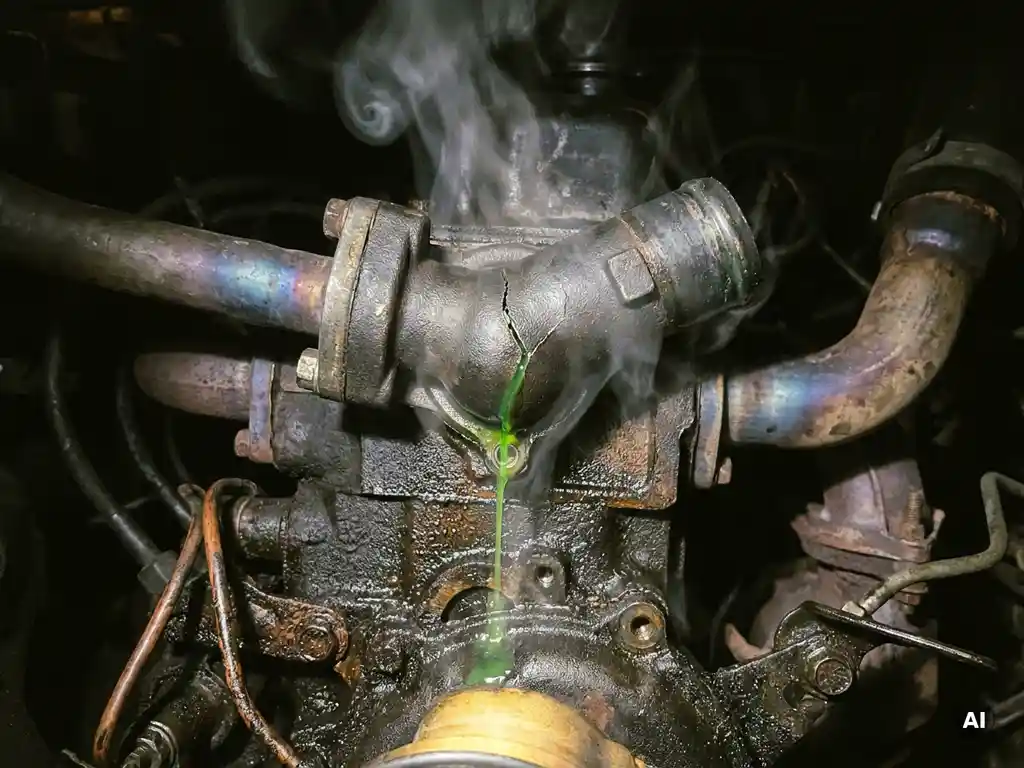
Yes, a cracked thermostat housing can absolutely cause engine overheating. When the housing fractures, coolant leaks out of the system, reducing the fluid level needed to absorb and carry heat away from the engine. Even a small crack can escalate quickly into a serious overheating problem if left unaddressed. Below, we walk through the key questions around cracked thermostat housings so you know exactly what to look for and what to do.
What happens to coolant flow when a thermostat housing cracks?
When a thermostat housing cracks, the sealed coolant circuit is broken. Coolant begins to leak out, either in a slow seep or a more dramatic drip depending on the size and location of the crack. As the coolant level drops, the engine loses its primary means of shedding heat, and temperatures can climb rapidly.
The thermostat housing sits at a critical junction in the cooling system, connecting the engine block, the thermostat itself, and the radiator hose. A crack in this component means coolant may never reach the radiator to be cooled and recirculated. In some cases, air enters the system in place of the escaping coolant, creating air pockets that further disrupt heat transfer. The result is an engine that runs hotter than it should, sometimes dangerously so.
What are the symptoms of a cracked thermostat housing?
The most common symptoms of a cracked thermostat housing include visible coolant leaks, a rising temperature gauge, the smell of hot coolant, and white or sweet-smelling steam from under the hood. You may also notice a low coolant warning light or find a puddle of greenish, orange, or pink fluid beneath the vehicle after it has been parked.
Some cracks are hairline fractures that only leak under pressure, meaning the drip may only appear when the engine is warm and the cooling system is fully pressurized. This can make the problem easy to miss during a cold visual inspection. Other signs worth watching for include:
- Coolant residue or crusty buildup around the housing itself
- An engine that takes longer than usual to reach operating temperature
- Intermittent overheating that resolves when the engine cools down
- A heater that blows cold air due to low coolant circulation
What causes a thermostat housing to crack?
Thermostat housings crack primarily due to thermal stress, physical impact, or material degradation over time. The housing expands and contracts with every heat cycle, and over thousands of cycles, this fatigue can cause fractures to develop, particularly around bolt holes, sealing surfaces, and thin-walled sections.
The material of the housing plays a significant role here. Plastic housings, which became common as manufacturers looked to reduce weight and cost, are more susceptible to cracking from both thermal cycling and accidental impact during servicing. Brass thermostat housings and aluminum thermostat housings tend to be more durable alternatives, though aluminum can still crack if overtightened during installation or exposed to corrosive coolant that has not been changed at recommended intervals.
Other contributing causes include:
- Overtightening bolts during a previous repair, which stresses the housing material
- Using the wrong coolant type, which can accelerate corrosion from the inside
- Freezing temperatures when the coolant mixture is too diluted with water
- Physical impact from road debris or accidental tool contact during maintenance
How serious is a cracked thermostat housing if ignored?
Ignoring a cracked thermostat housing is genuinely risky. What starts as a minor coolant leak can progress to severe engine overheating, which in turn can warp the cylinder head, damage head gaskets, or, in extreme cases, cause catastrophic engine failure. The repair cost for those downstream problems is dramatically higher than replacing a housing early.
Beyond the engine itself, low coolant levels reduce the effectiveness of the heater core, affect cabin heating, and can trigger warning lights that make the vehicle unreliable for daily use. In a commercial or industrial setting, an overheating engine can mean unexpected downtime and lost productivity. The crack will not heal on its own, and the stress on the housing tends to worsen with continued heat cycling, meaning the fracture typically grows over time rather than staying stable.
Can a cracked thermostat housing be repaired, or does it need replacing?
In most cases, a cracked thermostat housing should be replaced rather than repaired. Epoxy sealants and stop-leak products are sometimes used as temporary fixes, but they rarely hold reliably under the pressure and temperature fluctuations of a working cooling system. A patch that fails while the engine is running can leave you in the same situation, often at a worse time.
Replacement is the only permanent solution, and it is generally straightforward and affordable compared to the cost of ignoring the problem. When choosing a replacement, it is worth considering the housing material. An aluminum thermostat housing offers a good balance of weight and durability, while a brass thermostat housing provides excellent corrosion resistance and longevity in demanding environments. Upgrading from a plastic original to a metal housing is a popular choice for vehicles that have already experienced a failure, since it addresses the root cause rather than repeating the same weak point.
How is a cracked thermostat housing diagnosed and replaced?
Diagnosing a cracked thermostat housing typically starts with a visual inspection of the housing and surrounding area for coolant residue, staining, or active drips. A pressure test of the cooling system is the most reliable method, as it reveals cracks that only open under operating pressure and may not be visible during a cold inspection.
Replacing the housing is a manageable job for a competent mechanic and involves the following general steps:
- Allow the engine to cool completely before starting any work
- Drain the coolant to a level below the housing to avoid spillage
- Disconnect the radiator hose and any sensors attached to the housing
- Remove the mounting bolts carefully to avoid breaking them in the block
- Clean the mating surface thoroughly before fitting the new housing
- Install the new housing with a fresh gasket or O-ring and torque the bolts to specification
- Refill with the correct coolant mixture, bleed any air from the system, and check for leaks once the engine reaches operating temperature
It is also good practice to replace the thermostat itself at the same time, since the housing must be removed anyway and the thermostat is an inexpensive component that experiences the same heat stress as the housing.
How BTT Solutions supports your thermostat housing needs
At BTT Solutions, we specialize in high-precision thermostat components built for exactly the kind of demanding conditions that cause lesser housings to crack and fail. Whether you are sourcing parts for automotive, industrial, or building technology applications, we offer solutions designed for durability and long service life.
Here is what working with us looks like in practice:
- Material expertise: We produce brass thermostat housings and aluminum thermostat housings engineered to withstand thermal cycling, pressure, and corrosion over the long term
- Precision manufacturing: Our components are built to tight tolerances, reducing the risk of sealing failures and stress fractures from improper fit
- End-to-end solutions: From thermostats and temperature sensors to complete housing assemblies, we cover the full thermal management picture
- Flexible, responsive service: As a focused mid-sized company, we give our B2B partners direct access to technical expertise and fast turnaround, without layers of bureaucracy
- Cross-industry capability: Our technology applies across automotive, industrial, marine, and building systems, so we understand the specific demands of your application
If you are dealing with recurring thermostat housing failures or looking to upgrade to a more robust solution, we would love to help. Get in touch with our team to discuss your requirements, or explore our product range to see what we can offer for your specific application.
Related Articles
- Can wax element material be used in industrial thermostat applications?
- What is the difference between mechanical and solid-state thermostat components?
- Why is preventing overheating more complex in modern turbocharged engines?
- What are the most common automotive thermostat component failures?
- What are the latest thermostat technologies for automotive in 2026?


